Straight Lines and Gradients (AQA GCSE Maths): Revision Notes
📚Revision Notes
Straight lines and gradients
Recognising straight line equations
When working with graphs, it's important to identify different types of straight line equations. A straight line equation contains only x and y terms without any higher powers (like or ).
Note
The key feature of straight line equations is that they contain no powers higher than 1. This means you won't see terms like , , or in a straight line equation.
Vertical and horizontal lines
Vertical lines have the equation , where 'a' is any number. These lines run straight up and down, passing through the same x-value at every point.
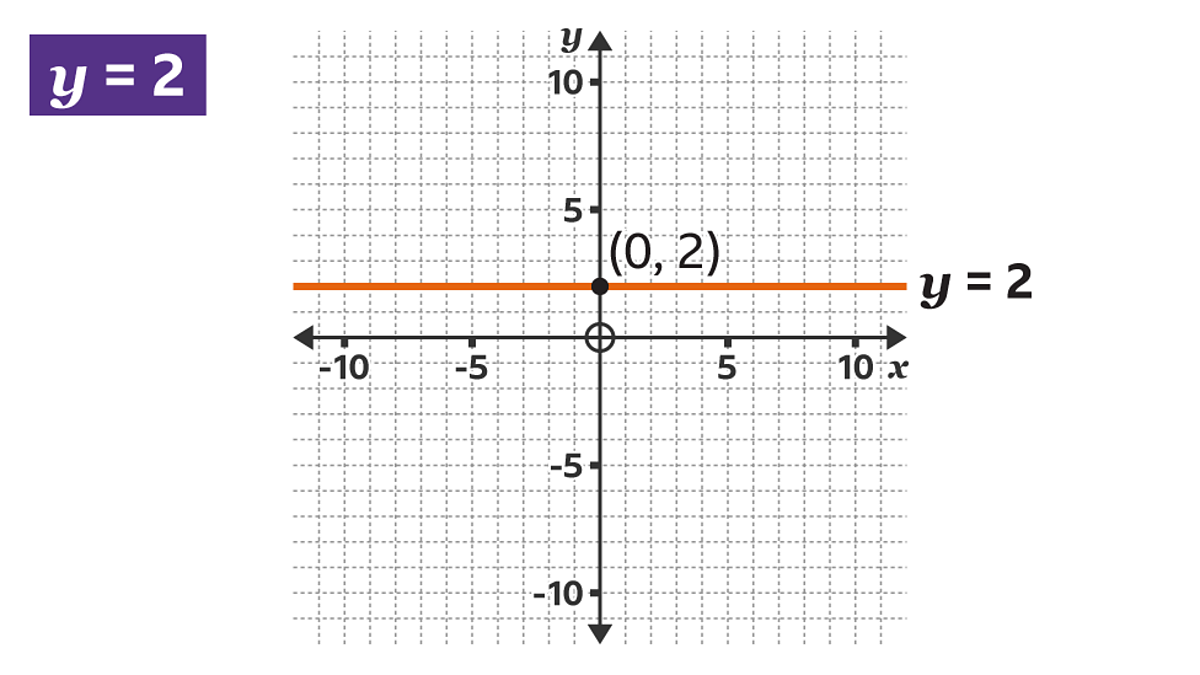
Horizontal lines have the equation , where 'a' is any number. These lines run straight across, passing through the same y-value at every point.
Important
Remember the difference: creates vertical lines (up and down), while creates horizontal lines (left and right). A common mistake is to confuse these two!
The main diagonal
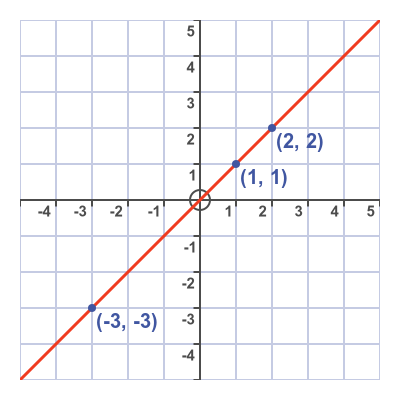
The equation creates a special line called the main diagonal. This line slopes uphill from left to right, passing through the origin at a 45-degree angle.
Other sloping lines through the origin
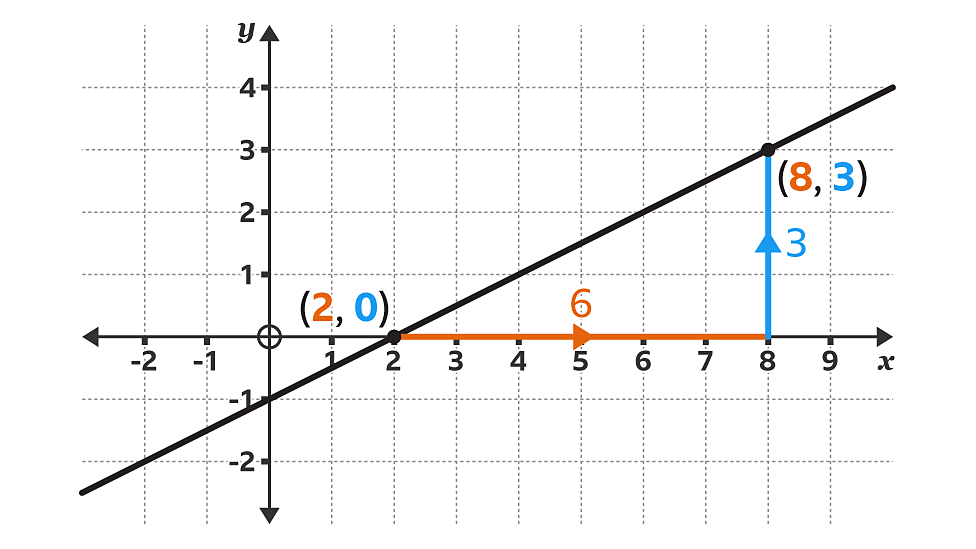
Lines with the equation (where 'a' is any number) also pass through the origin but have different slopes. The value of 'a' determines how steep the line is - this is called the gradient.
Understanding gradients
The gradient is a measure of how steep a line is. Think of it as the 'steepness' of the slope - the larger the gradient value, the steeper the line appears.
Calculating the gradient
To find the gradient of any straight line, we use this fundamental formula:
Note
Gradient Formula
This tells us how much the y-value changes for every unit change in the x-value.
Step-by-step gradient calculation
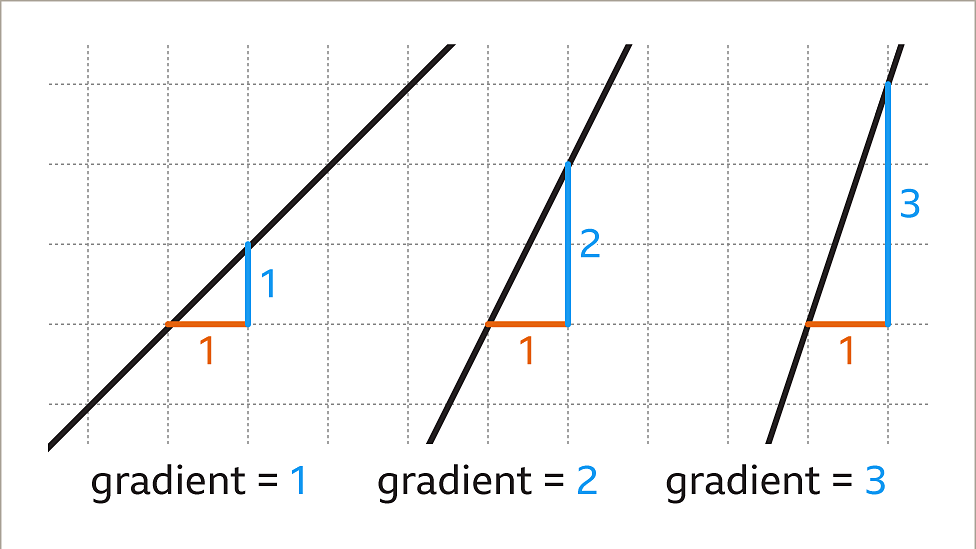
Here's the systematic approach to calculating a gradient using two points on a line:
Example
Worked Example: Calculating Gradient
Step 1: Choose two clear points on the line that you can read accurately from the graph
Step 2: Find the change in y and change in x
- Change in y = difference between the y-coordinates
- Change in x = difference between the x-coordinates
- Make sure you subtract the coordinates in the same order
Step 3: Apply the formula
- Divide the change in y by the change in x
- This gives you the gradient value
For points A and B:
- Change in y =
- Change in x =
- Gradient =
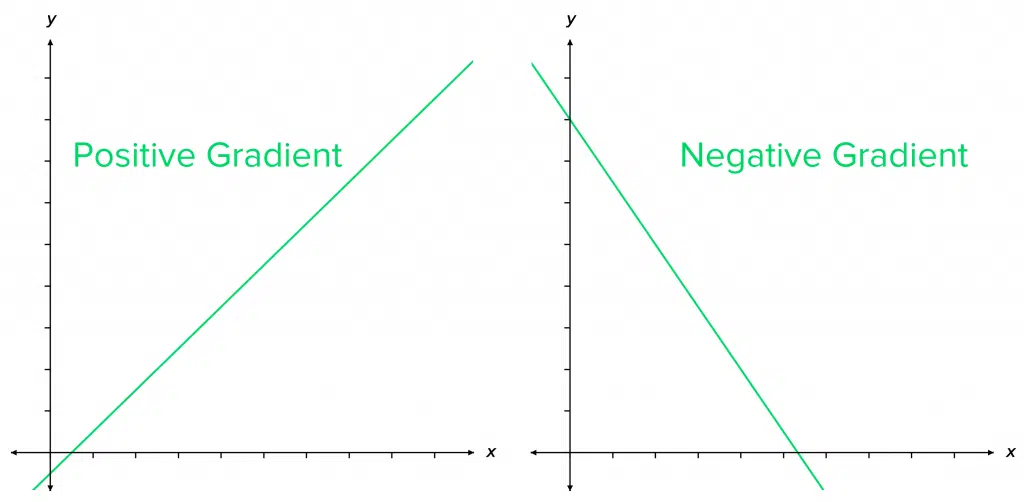
Positive and negative gradients
The sign of your gradient tells you about the direction of the line:
- Positive gradient: The line slopes uphill (rises from left to right)
- Negative gradient: The line slopes downhill (falls from left to right)
Important
Always check whether your line goes uphill or downhill to verify that your gradient calculation has the correct sign. This is a crucial step that many students forget!
Always choose clear, accurate points when calculating gradients from graphs to ensure your calculations are as precise as possible.
Summary
Key Points to Remember:
- Straight line equations only contain x and y terms, no higher powers
- Vertical lines have equation , horizontal lines have equation
- The gradient measures the steepness of a line using:
- Positive gradients slope uphill, negative gradients slope downhill
- Always choose clear, accurate points when calculating gradients from graphs