Problem-solving practice 2 (AQA GCSE Maths): Revision Notes
📚Revision Notes
Problem-solving practice 2
This revision note covers three different types of problem-solving questions that combine various mathematical skills. Each problem requires you to show your working clearly and use a systematic approach.
Understanding fractions with shapes
Fraction problems often involve finding unknown parts when you know information about other parts.
When working with shapes divided into equal parts, you can use what you know about some shapes to find information about others. If shapes are identical, the same fraction represents the same actual area in each shape.

Note
When shapes are identical, the same fraction represents the same actual area in each shape. This is a fundamental principle that helps you work between different parts of the problem.
Method for finding unknown fractions
- Identify what you know - Write down the given fractions clearly
- Work out the known areas - Calculate what the given fractions represent
- Find the unknown - Use subtraction or other operations to find the missing fraction
Important
Key tip: Always show your strategy step by step. This means you need to show all your working so it is clear how you have tackled the problem.
Multi-step problems with fractions
Real-world fraction problems often require several calculations and careful organisation of your working.
These problems typically involve:
- Converting between different units
- Working with fractions in practical contexts
- Using multiplication and division together

Problem-solving approach
- Extract the key information - List what you know and what you need to find
- Plan your steps - Work out what calculations you need to do
- Keep track of your working - There are lots of steps, so make sure you stay organised
- Check your answer makes sense - Does your final answer seem reasonable?
Important
If your working becomes messy or hard to follow, write it out clearly and cross out your original working. Clear presentation is essential for gaining full marks.
HCF and LCM in practical contexts
Highest Common Factor (HCF) and Lowest Common Multiple (LCM) help solve problems involving patterns and repetition.
When objects of different sizes need to be arranged together, you often need to find the LCM to determine the shortest possible arrangement.
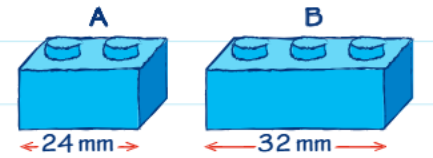
Finding the shortest possible length
- Identify the measurements - Write down the dimensions you're working with
- Find the LCM - This gives you the shortest length that both measurements divide into exactly
- Use whole numbers of blocks - The length of each row must be a multiple of each individual block length
Note
Top tip: If you're not sure how to start, try drawing a sketch or scale diagram. This might help you see that the lengths are multiples of the original measurements.

Exam guidance
Showing your working
Demonstrating your method clearly is crucial for maximising your marks in problem-solving questions.
- Always demonstrate your method - Even if you get the wrong answer, you can still gain marks for using the correct method
- Write clearly - Make sure your working is easy to follow
- Label your steps - Show what each calculation represents
Common mistakes to avoid
Important
Critical mistakes that cost marks:
- Not showing enough working - You must show all your working, especially in multi-step problems
- Rushing through calculations - Take time to check each step
- Forgetting units - Include appropriate units in your final answer
Summary
Key Points to Remember:
- Show your strategy clearly - Always demonstrate your problem-solving approach step by step
- Keep your working organised - Multi-step problems need careful tracking of each stage
- Use the information given - Extract key facts and plan your method before starting calculations
- Check your answers - Make sure your final answer makes sense in the context of the problem
- Practice different problem types - Fractions, real-world contexts, and HCF/LCM problems all require slightly different approaches