Petersen capture-recapture formula (AQA GCSE Statistics): Revision Notes
📚Revision Notes
Petersen capture-recapture formula
What is the capture-recapture method?
The Petersen capture-recapture formula is a statistical technique used by scientists to estimate the population size of animals in large areas where it would be impossible to count every individual. This method is particularly useful for studying wildlife populations such as fish in lakes, birds in forests, or marine mammals in oceans.
Note
The basic principle relies on the idea that if you capture a sample of animals, mark them in some way, release them back into the population, and then capture another sample later, the proportion of marked animals in your second sample should reflect the proportion of marked animals in the entire population.
The two-step process

Step 1: Initial capture and marking Scientists capture a sample of animals from the population and mark them in a way that doesn't harm them or affect their behaviour. For example, fish might have a small tag attached, or birds might have a coloured ring placed on their leg. The exact number of marked animals is recorded before they are released back into their natural environment.
Step 2: Recapture and counting After allowing time for the marked animals to mix back into the general population, scientists capture a second sample. In this recapture sample, they count both the total number of animals caught and how many of these show the marking from the first capture.
Using ratios to estimate population
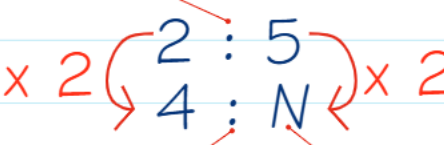
The mathematical foundation of this method relies on setting up equivalent ratios. The key insight is that the ratio of marked animals to total animals in your recapture sample should be the same as the ratio of marked animals to the total population.
This can be expressed as: Marked animals in recapture sample : Total in recapture sample = Total marked animals : Total population
Using mathematical notation:
Where the ratios are equivalent, we can cross-multiply to solve for the unknown population size.
The Petersen formula
Important
The standard formula for calculating population size is:
Where:
- N = the total population size (what we're trying to find)
- M = number of animals marked in the first capture and released
- n = total number of animals captured in the second sample (recapture)
- m = number of marked animals found in the recapture sample
This formula assumes that the proportion of marked animals in the recapture sample accurately represents the proportion of marked animals in the entire population.
Essential assumptions
Important
For the Petersen capture-recapture method to give accurate results, several critical assumptions must be met:
1. Closed population The population must remain stable between the marking and recapture periods. This means no animals should migrate into or out of the study area.
2. Equal survival rates Marked and unmarked animals must have the same probability of surviving between captures. The marking process should not make animals more vulnerable to predators or disease.
3. Equal catchability Both marked and unmarked animals must be equally likely to be caught in the recapture sample. Marked animals shouldn't become more wary or more attracted to capture methods.
4. Marks remain visible All marks applied during the first capture must still be clearly visible during the recapture period. Tags shouldn't fall off or become obscured.
5. Representative sampling The recapture sample must be large enough and randomly distributed to accurately represent the entire population.
Worked example
Example
Worked Example: Estimating Mouse Population
A scientist studying mice on an island wants to estimate the total mouse population. Here's how she applies the capture-recapture method:
Initial capture: She captures 60 mice, marks them safely, and releases them back onto the island.
Recapture phase: One week later, she captures 40 mice. Of these 40 mice, 6 are found to have marks from the original capture.
Applying the formula:
- M (originally marked) = 60
- n (recapture sample size) = 40
- m (marked animals in recapture) = 6
- N (total population) = ?
Therefore, the estimated mouse population on the island is 400 mice.
Key assumptions the scientist must make:
- The marked mice had the same survival rate as unmarked mice during the week between captures
- The probability of catching marked and unmarked mice was equal in both capture sessions
Exam tips and common mistakes
Note
Common exam traps to avoid:
- Don't confuse which values go where in the formula - remember that M and n are multiplied together first
- Always check that your answer makes logical sense - the total population should be larger than either of your sample sizes
- Be careful with units and make sure you're using the same units throughout your calculation
Problem-solving approach:
- Identify what each variable represents in the context of the question
- Substitute the values carefully into the formula
- Perform the calculation step by step
- Check your answer is reasonable
- Include appropriate units in your final answer
Remember!
Summary
Key Points to Remember:
- The Petersen capture-recapture formula estimates population sizes when direct counting isn't possible
- The method requires two sampling events: initial capture with marking, followed by recapture
- The formula is , where you multiply the originally marked number by the recapture sample size, then divide by marked animals found in recapture
- Five key assumptions must be met: closed population, equal survival, equal catchability, visible marks, and representative sampling
- Always check your final answer makes biological sense - the population should be larger than your sample sizes