Random sampling (AQA GCSE Statistics): Revision Notes
📚Revision Notes
Random sampling
What is random sampling?
Random sampling ensures that each person in the population has exactly the same probability of being chosen for your sample. This type of sampling is considered fair and unbiased because no individual has a better chance of selection than anyone else.
When a random sample is large enough, it becomes much more likely to accurately represent the characteristics of the entire population you're studying. This makes your findings more reliable and trustworthy.
Important
The key principle of random sampling is equal probability - every member of the population must have exactly the same chance of being selected. Without this equal probability, your sampling method is not truly random.
Methods for random sampling
To create a random sample, you first need to give each person or item in your population a unique identification number. This creates what we call a sampling frame. Once you've done this, you can use several different methods to randomly select your sample:
Note
A sampling frame is a complete list of all members of your population, each assigned a unique identification number. This forms the foundation for any random sampling method.
Using a random number table Random number tables contain sequences of digits that have been generated without any pattern. You can use these tables to pick the identification numbers for your sample.
Using a random number generator Modern calculators and computers have built-in random number generators that can produce random numbers for you. This is often the most practical method for larger populations.
Drawing from a hat Write each identification number on separate pieces of paper, put them in a container, and draw out the numbers you need for your sample without looking.
Rolling fair dice Use fair 10-sided dice to generate random digits from 0 to 9, which you can combine to create the identification numbers you need.

Advantages and disadvantages of random sampling
Advantages: Random sampling offers two main benefits. Firstly, when your sample size is sufficiently large, the sample becomes much more likely to reflect the true characteristics of your entire population. This means your conclusions will be more accurate and reliable. Secondly, because the selection process is completely unbiased, you avoid accidentally favouring certain types of people or introducing personal preferences into your sample.
Disadvantages: However, random sampling does come with some practical challenges. You need access to a complete list of everyone in your population before you can start, which isn't always possible or practical to obtain. Additionally, you typically need quite a large sample size for random sampling to work effectively, which can make your study more expensive and time-consuming.
Important
Common Challenge: The biggest practical limitation of random sampling is requiring a complete sampling frame. In many real-world situations, obtaining a full list of every member of your population can be difficult or impossible.
Worked examples
Example
Worked Example 1: Understanding the definition
When asked to explain what is meant by a random sample, remember that you need to focus on the equal probability aspect. A random sample means that every single member of the population has exactly the same chance of being selected. Avoid using vague terms like 'random' or 'no pattern' in your explanation - be specific about equal chances.
Example
Worked Example 2: Selecting houses for a survey
Imagine Amina wants to randomly select 200 houses from the 4000 houses in her town. Here's how she could do it:
Step 1: Create a sampling frame by listing all the street names and house numbers in numerical order. Assign each house a unique number from 1 to 4000.
Step 2: Generate 200 random numbers between 1 and 4000. She can do this using her calculator's random number generator (RanInt function), or by using random number tables. For example, she might get numbers like 2160, 572, 1708, 97, 220, and so on.
Step 3: Select the houses that correspond to these randomly generated numbers for her sample.
Using your calculator: To generate random whole numbers between 1 and 4000, use the RanInt function on your calculator by inputting RanInt(1, 4000). This will give you one random number at a time within your specified range.
Example
Worked Example 3: Using decimal random numbers
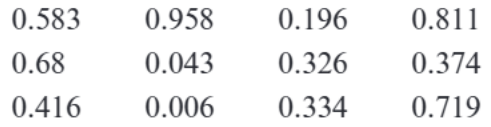
Sometimes you'll be given random numbers in decimal form (like 0.583, 0.958, 0.196, etc.). To use these for selecting from a population of 750 people:
Step 1: Multiply each decimal by the population size
- 0.583 × 750 = 437.25
Step 2: Round to get whole numbers
- 437.25 rounds to 437
Step 3: Select the corresponding person
- You'd select person number 437
The reliability of your sample depends on how well these random numbers truly represent the entire population, and whether your sample size is large enough to capture the population's characteristics.
Summary
Key Points to Remember:
- Equal chances: Random sampling means every member of the population has exactly the same probability of being selected
- Unbiased selection: Random methods eliminate personal preferences and systematic patterns that could skew your results
- Large samples work better: The bigger your random sample, the more likely it is to accurately represent your population
- You need a complete list: Random sampling requires access to a full sampling frame of your entire population
- Multiple methods available: You can use random number tables, calculators, physical drawing methods, or dice to create your random selection