Seasonal variations (AQA GCSE Statistics): Revision Notes
📚Revision Notes
Seasonal variations
What are seasonal variations?
Seasonal variations are regular patterns that repeat at specific times throughout a cycle, such as yearly quarters or terms. In time series analysis, we use seasonal variations to understand how actual values differ from the general trend at predictable intervals.
For example, ice cream sales typically peak in summer and drop in winter, whilst heating costs show the opposite pattern. By identifying these seasonal patterns, businesses can make better predictions and plan more effectively.
Note
Seasonal patterns are everywhere in business and economics. Think about retail sales during holiday seasons, electricity usage during different weather periods, or even website traffic patterns throughout the week. Understanding these patterns helps organisations allocate resources more efficiently and set realistic targets.
Key formulas you need to know
There are three essential formulas for working with seasonal variations that form the foundation of seasonal analysis:
Important
Essential Formulas for Seasonal Variation Analysis:
1. Seasonal variation at a point:
2. Estimated mean seasonal variation:
3. Predicted value:
These formulas work together to help you analyse patterns and make forecasts based on historical data.
Understanding the calculation process
The process of calculating seasonal variations involves several steps that build upon each other. First, you identify the actual values from your data and the corresponding trend values from your trend line. The difference between these gives you the seasonal variation for each data point.
Once you have seasonal variations for the same season across multiple cycles, you can calculate the mean seasonal variation for that particular season. This average represents the typical seasonal effect you can expect.
Note
Think of the trend line as showing the general direction your business is heading, while seasonal variations show the regular ups and downs that happen around that trend. The combination of both gives you a complete picture of your data's behaviour.
Worked example: football boot sales
Let's examine how seasonal variations work using real sales data from a sports shop.
Example
Worked Example: Football Boot Sales Analysis
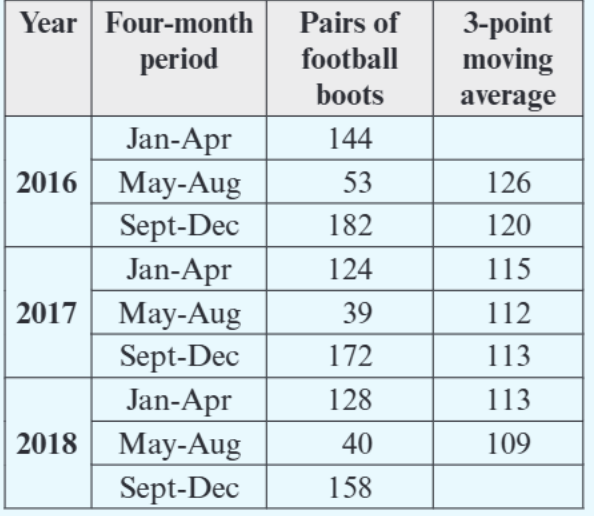
The table shows football boot sales over three years, broken down into four-month periods. Notice how sales consistently drop during May-August (summer months) and peak during other periods when football is more popular.
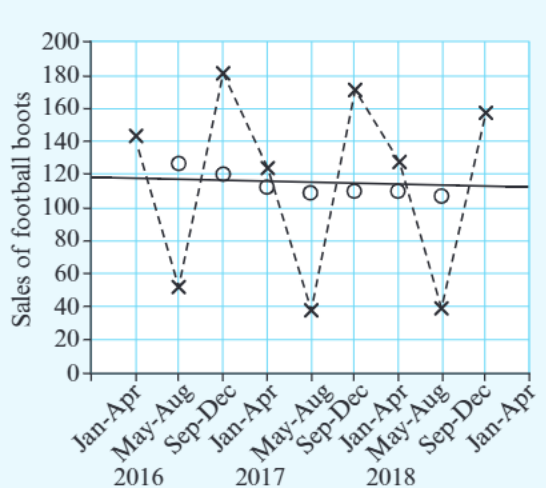
This graph clearly shows the seasonal pattern, with the jagged line (marked with X) representing actual sales and the smoother line (marked with circles) showing the trend.
Step-by-step calculation walkthrough
Example
Worked Example: Calculating Mean Seasonal Variation
Let's calculate the seasonal variation for January-April periods using the data provided:
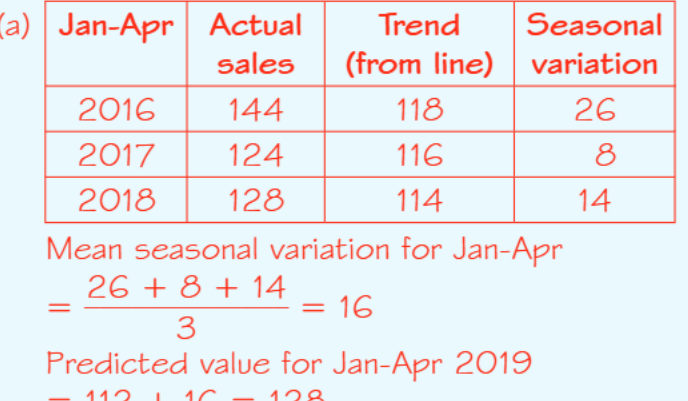
Step 1: Identify actual sales and trend values for Jan-Apr periods:
- 2016: Actual = 144, Trend = 118
- 2017: Actual = 124, Trend = 116
- 2018: Actual = 128, Trend = 114
Step 2: Calculate seasonal variation for each year using the formula:
- 2016:
- 2017:
- 2018:
Step 3: Calculate the mean seasonal variation for Jan-Apr:
Step 4: Make a prediction for Jan-Apr 2019: From the trend line, the trend value for 2019 is 112
Making predictions using seasonal variations
Once you have calculated the mean seasonal variation for each season, you can make predictions for future periods. The key is to follow a systematic approach:
Note
The Prediction Process:
- Extend your trend line to the future period you want to predict
- Read off the trend value for that period
- Add the appropriate mean seasonal variation
- This gives you your predicted actual value
This method works because it combines the overall direction of the business (the trend) with the predictable seasonal effects.
Limitations and considerations
Important
Critical Limitations to Remember:
While seasonal variation analysis is powerful, it has important limitations. The main concern is that trends may not continue indefinitely into the future. Economic conditions, market changes, or external factors can alter both the trend and seasonal patterns.
For this reason, predictions become less reliable the further into the future you go. It's generally more appropriate to make short-term predictions (one or two cycles ahead) rather than long-term forecasts.
Practice example: student enrolment
Example
Practice Example: Student Enrolment Analysis
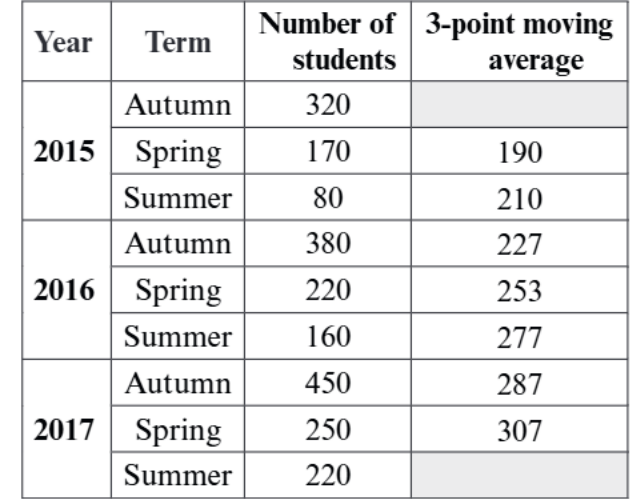
This enrolment data shows another example of seasonal variations. Notice how student numbers consistently drop during summer terms and peak during autumn terms. You could apply the same calculation process to:
- Calculate seasonal variations for each term
- Find mean seasonal variations by term type
- Predict future enrolment numbers
- Help the institution plan resources and staffing
The same principles apply whether you're analysing sales data, enrolment figures, or any other time series with seasonal patterns.
Remember!
Summary
Key Points to Remember:
- Seasonal variation = Actual value - Trend value - this measures how much a specific point differs from the general trend
- Mean seasonal variation is calculated by averaging all seasonal variations for the same season across multiple cycles
- Predictions combine trend and seasonal effects: Predicted value = Trend value + Mean seasonal variation
- Seasonal patterns repeat cyclically - what happened in previous summers/winters tends to happen again
- Don't extrapolate too far - predictions become unreliable when projecting many cycles into the future