Endothermic and exothermic reactions (Edexcel GCSE Chemistry Combined Science): Revision Notes
📚Revision Notes
5.1.1 Energy Transfer in Reactions
Note
Energy transfer is a key concept in chemical reactions, where energy moves between the system (the reaction itself) and the surroundings (everything outside the reaction). According to the principle of conservation of energy:
Energy cannot be created or destroyed; it can only be transferred from one form to another.
Note
This means that during a chemical reaction, energy within the system will either be absorbed from or released to the surroundings. If the reaction loses energy, that energy is transferred to the surroundings, often causing a change in temperature.
Understanding the System and Surroundings
- System: The specific chemical reaction being studied.
- Surroundings: Everything outside the reaction, like the reaction container and the air around it. In chemistry, the universe is seen as a combination of both the system and the surroundings. The total energy of the universe remains constant, even as energy moves between the system and the surroundings during a reaction.
Types of Energy Transfer
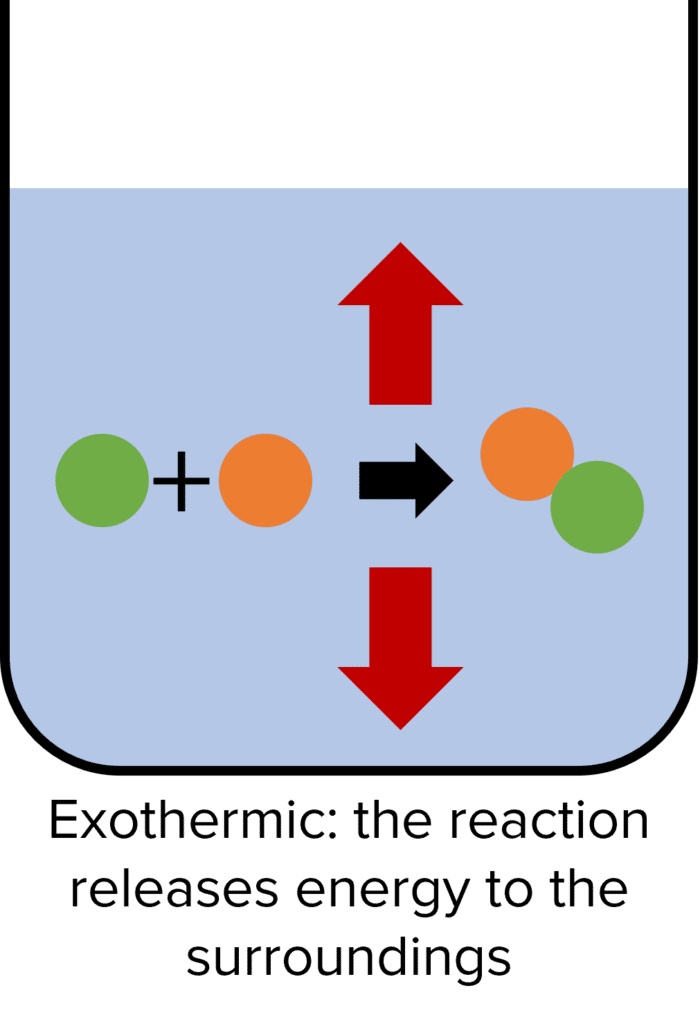
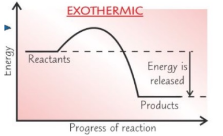
- Exothermic Reactions: These reactions release energy to the surroundings, usually causing the temperature around the reaction to go up.
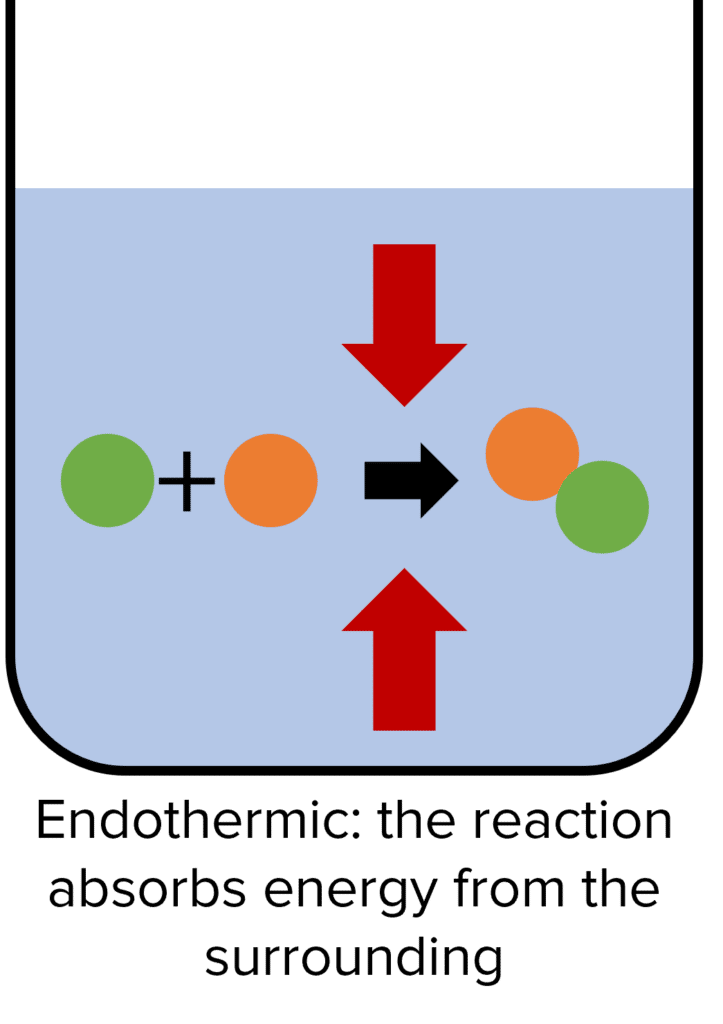
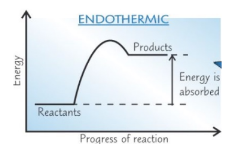
- Endothermic Reactions: These reactions absorb energy from the surroundings, usually causing the temperature around the reaction to go down.
Note
By measuring how the temperature changes, we can tell whether a reaction is exothermic or endothermic.
Note
Activation energy The minimum amount of energy needed for bonds to break
- On a reaction profile, it's the difference between reactants and the highest point on the curve.
- (If energy is less than activation energy then there's not enough energy to start, so the reaction so doesn't happen).