Depositional landforms (Edexcel GCSE Geography A): Revision Notes
📚Revision Notes
Depositional landforms
What are depositional landforms?
Depositional landforms are distinctive coastal features that develop when sediment (such as sand, pebbles, and shingle) is dropped by waves and currents. The process of deposition works together with erosion and transportation to create recognisable landscape features including beaches, spits, and bars along our coastlines.
Beaches
Beaches form when waves deposit accumulated sand and shingle along the shoreline. These landforms are constantly being shaped and reshaped by the ongoing processes of erosion, transportation, and further deposition.
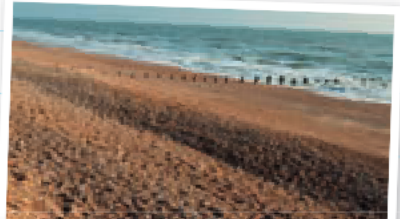
Beach characteristics and formation
Beaches display several important features that help us understand how they develop:
Shape variations: Beaches can develop as straight stretches of coastline or form curved shapes. Curved beaches typically result from wave refraction, where waves bend as they enter sheltered bays or encounter obstacles.
Material composition: Some beaches consist mainly of fine sand, while others are made up of larger pebbles and shingle. Sandy beaches usually develop in lower wave energy environments, whilst shingle beaches form where wave energy is higher and more powerful.
Note
The type of material found on a beach tells us about the wave energy in that area. High energy waves can move larger particles like pebbles and shingle, while calmer waters allow fine sand to settle.
Location patterns: You'll typically find beaches situated between rocky cliffs, where waves have deposited sediment that has been eroded from harder rock formations nearby.
Berms and ridges: The surface of beaches shows distinctive ridges that run parallel to the sea. These berms mark the positions reached by different tide levels, with the highest berm showing where the highest tides reach during storm conditions.
Spits
Spits represent some of the most distinctive depositional features found along changing coastlines. These narrow ridges of sand or shingle extend outwards from the main shoreline, creating finger-like projections into the sea.
How spits develop
The formation of spits depends on a process called longshore drift, which moves sediment along the coast in a zigzag pattern.
Important
Longshore drift is the key process behind spit formation. Understanding this process is essential for explaining how these features develop and why they form in specific locations.
Example
Worked Example: Spit Formation Process
Step 1: Wave approach - Prevailing winds generate waves that approach the shoreline at an angle
Step 2: Sediment pickup - Wave action picks up sand and shingle, carrying it up the beach diagonally
Step 3: Backwash - Gravity pulls the sediment straight back down the beach as the wave retreats
Step 4: Continuous transport - Continuous repetition of this process transports material along the coastline
Step 5: Deposition - Deposition occurs when the coastline changes direction or where wave energy decreases in sheltered water
Spit characteristics
Attachment: Spits remain connected to the mainland at one end while extending into the water, distinguishing them from islands or bars.
Curved shape: Many spits develop curved or hooked tips due to changes in wind direction and wave refraction around the spit end.
Location: They commonly form where coastlines change direction sharply, across bay mouths, or at estuary entrances where rivers meet the sea.
Shallow water formation: Spits typically develop in calmer, shallow water areas where deposition can occur more easily than erosion.
Note
The curved or hooked end of a spit often forms due to secondary winds or wave refraction, which causes the deposited material to bend back towards the shore.
Recognising spits on ordnance survey maps
On OS maps, spits appear as narrow stretches of beach that extend beyond the main coastline in a characteristic curved shape. They're usually thin and clearly distinguishable from other coastal features due to their distinctive form.
Bars
Bars develop through a similar process to spits but create a different final landform. While spits remain attached to land at one end with the other end free, bars eventually grow completely across bay mouths or estuaries.
Bar formation process
The development of bars follows these key stages:
- Initial development: Longshore drift begins depositing sediment away from the main coastline, similar to early spit formation
- Continued growth: The ridge of deposited material continues extending across the water body
- Complete closure: Unlike spits, bars grow all the way across the bay or estuary entrance
- Lagoon creation: The water behind the bar becomes cut off from the open sea, forming a shallow lagoon or enclosed water body
Distinguishing features of bars
Complete barrier: Bars form continuous barriers across water bodies, unlike spits which remain open at one end.
Lagoon formation: They create enclosed or semi-enclosed areas of calm water behind them, often supporting different ecosystems.
Permanent separation: Once formed, bars create a more permanent division between the open sea and the trapped water body.
Note
The main difference between spits and bars is that bars completely close off a body of water. This creates a lagoon - a distinctive feature that helps identify bars on maps and in the field.
Key processes in depositional landform development
Understanding how these features form requires knowledge of several important coastal processes:
Important
Essential Processes for Depositional Landforms:
- Longshore drift acts as the main transport mechanism, moving sediment along coastlines through the combined action of angled wave approach and gravitational backwash
- Wave energy variations determine where deposition occurs - lower energy environments favour sediment accumulation, while high energy areas promote erosion
- Coastal outline changes influence where spits and bars develop, as sediment transport patterns respond to variations in coastline direction and shelter
- Prevailing wind direction affects the direction and strength of longshore drift, influencing where depositional features form and their eventual shape
Summary
Key Points to Remember:
- Depositional landforms develop where waves and currents drop sediment in lower energy coastal environments
- Beaches form through accumulation of sand and shingle, with berms marking different tide levels and their composition depending on wave energy
- Spits are narrow sediment ridges extending from the coastline via longshore drift, remaining attached to land at one end and often developing curved tips
- Bars develop similarly to spits but grow completely across bays, creating lagoons behind them and forming permanent barriers
- Longshore drift provides the main mechanism for transporting and depositing sediment that builds these distinctive coastal features