Increasing inequalities (Edexcel GCSE Geography A): Revision Notes
📚Revision Notes
Increasing inequalities
What are increasing inequalities in cities?
When cities in developing or emerging countries experience rapid urban growth, this creates significant differences between rich and poor areas. These inequalities become more extreme as cities expand quickly, leading to areas of extreme wealth existing alongside areas of extreme poverty.

Note
Understanding these inequalities is crucial for studying how rapid urbanisation affects different groups of people within the same city. This concept forms the foundation for analysing urban development patterns in emerging economies.
Extreme wealth versus poverty
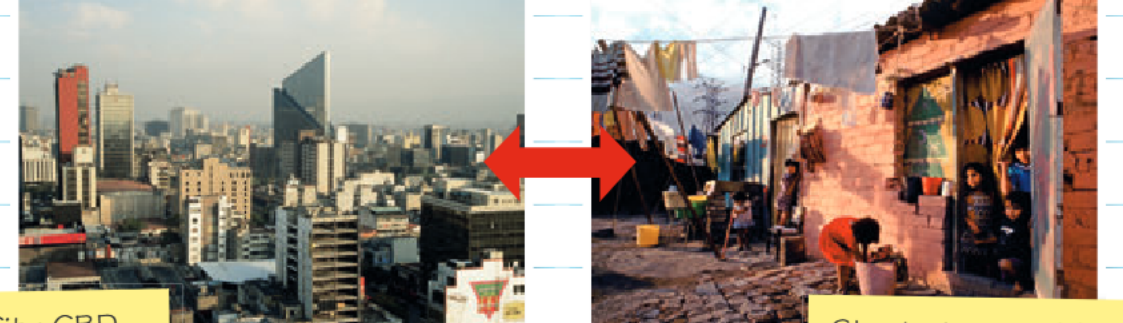
Rapid population growth has created stark inequalities between wealthy and poor areas in many developing cities. This creates a clear divide between those who benefit from urban development and those who are left behind.
Important
The contrast between wealthy and poor areas in developing cities is not just about income - it affects every aspect of daily life including education, healthcare, housing quality, and access to basic services.
Mexico City case study
Mexico City provides an excellent example of how extreme inequalities develop within a single urban area. The contrast between the Central Business District (CBD) and the shanty towns demonstrates the scale of these differences.
Example
Worked Example: Income Inequality in Mexico City
Wages and income:
- Minimum wage: approximately $13 (278 pesos) daily
- Reality: around one third of workers receive less than minimum wage
- Income gap: The wealthiest 20% earn thirteen times more than the poorest 20%
Educational opportunities:
- Poorest 10%: average only 2 years of school attendance
- Richest 10%: average 12 years of school attendance
- This 6x difference reinforces the cycle of inequality
Essential services:
- Shanty towns: no running water, electricity, or nearby food shops
- Wealthy areas: large houses with gardens and swimming pools
Impacts of rapid urbanisation
Rapid urban growth creates several significant challenges that particularly affect the poorest residents of developing cities.
Housing challenges Cities struggle to cope with the housing demands of fast-growing populations moving to urban centres seeking work. This leads to overcrowding and the development of informal settlements.
Inadequate homes Many people moving from rural areas are sometimes forced to construct homes using inadequate and waste materials. These dwellings typically lack running water or electricity, creating poor living conditions that affect health and quality of life.
Note
The lack of formal housing development means that many urban migrants have no choice but to create informal settlements, often on unsuitable land that may be prone to flooding or landslides.
Under-employment issues Many residents work seven days a week whilst still doing multiple types of jobs to earn enough money. This represents under-employment rather than unemployment, as people are working but not earning sufficient income or working in suitable conditions.
Pollution problems Mexico City demonstrates how geographic location can worsen pollution issues. The city is surrounded by mountains, which trap pollutants and increase air pollution levels. This causes many residents to suffer from respiratory diseases, particularly affecting the health of those in poorer areas who cannot afford better healthcare.
Example
Worked Example: Mexico City's Pollution Crisis
Geographic factors worsen pollution:
- Location: surrounded by mountains that trap pollutants
- Vehicle numbers: over 5 million cars contribute to emissions
- Result: significantly higher air pollution levels
- Health impact: increased respiratory diseases, especially among the poor who cannot afford better healthcare
Reduction in services Even basic waste management becomes overwhelmed. Mexico City generates 13,000 tonnes of rubbish daily but struggles to dispose of all waste properly, resulting in rubbish being dumped on streets. This creates unsanitary conditions and health risks.
Understanding exam questions
When answering questions about rapid urbanisation impacts, it's important to provide specific examples and explain the connections between causes and effects.
Note
Exam Strategy Tips: For instance, explaining how Mexico City's pollution problems are worsened by both the high number of cars (over 5 million) and the mountain geography that traps pollutants shows understanding of multiple factors working together.
Good answers should include accurate case study evidence and explain how different impacts affect people's daily lives, demonstrating understanding of the human consequences of rapid urban growth.
Summary
Key Points to Remember:
- Rapid urban growth in developing cities creates extreme inequalities between wealthy and poor areas
- Mexico City shows how the same city can have both modern CBD areas and impoverished shanty towns with vastly different living conditions
- Key inequality indicators include wages (wealthy earn 13x more than poor), education (2 years vs 12 years average schooling), and access to basic services
- Rapid urbanisation creates multiple impacts: housing shortages, inadequate homes, under-employment, pollution, and overwhelmed services
- Geographic factors like Mexico City's mountain location can worsen problems like air pollution by trapping pollutants