Solving city problems (Edexcel GCSE Geography A): Revision Notes
📚Revision Notes
Solving city problems
Cities in developing and emerging countries face numerous challenges that require creative solutions. Understanding different approaches to urban problem-solving is essential for improving quality of life and managing rapid urban growth effectively.
Note
Urban challenges are particularly acute in developing countries where rapid population growth often outpaces infrastructure development and government resources.
Types of development projects
Urban development projects can be classified into two main categories based on their scale and management approach.
Important
Understanding Project Types is Critical
There are two fundamental approaches to urban development that every student must understand:
Top-down projects represent large-scale initiatives that are typically funded and managed by city governments or national authorities. These projects often involve significant investment and aim to address citywide issues through comprehensive planning and implementation.
Bottom-up projects are smaller-scale initiatives that emerge from local communities and are often supported by NGOs (non-governmental organisations) or community-based organisations. These projects focus on addressing specific local needs and rely heavily on community participation and local knowledge.
The key difference lies in who controls the planning and implementation: government authorities versus local communities. This distinction affects everything from funding sources to project sustainability.
Community-based projects
Mexico City provides excellent examples of how community-led initiatives can address urban challenges through grassroots action and local participation.
Example
Worked Example: Community Projects in Mexico City
Project 1: Cultiva Ciudad Programme
- What: Educational gardening initiative
- How: Partners with local schools to teach sustainable gardening
- Benefits: Creates educational opportunities AND green spaces
Project 2: Rooftop Gardens
- What: Converting unused roof spaces into food production areas
- How: Residents transform rooftops into productive gardens
- Benefits: Improves food security, reduces urban heat, provides fresh produce
Project 3: Community Fundraising
- What: Local residents raising money for infrastructure
- Focus: Building schools and health centres on city outskirts
- How: Collaborative community efforts when government resources are limited
These initiatives demonstrate how community participation and local knowledge can create effective solutions that address multiple urban challenges simultaneously.
Affordable housing solutions
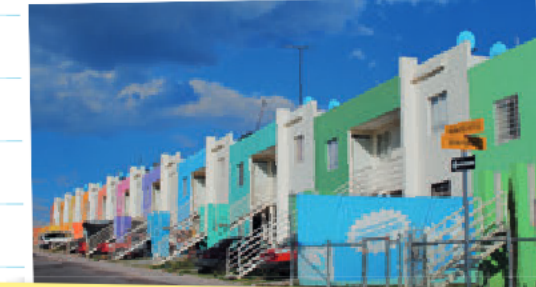
Housing affordability remains a critical challenge in rapidly growing cities. Innovative approaches to housing design can help address this issue while maintaining quality and sustainability.
Example
Worked Example: Innovative Affordable Housing
Designer: Architect Tatiana Bilbao Location: Mexico City Cost: Approximately US$8,000 per home Materials: Wooden pallets (primary construction material) Key Innovation: Modular design - pallets can be easily added or removed as families' needs change Result: Flexible, affordable homeownership for low-income families
This approach proves that innovative design thinking can make homeownership accessible while maintaining structural integrity and adaptability.
Sustainable transport schemes
Transportation systems play a crucial role in urban sustainability and quality of life. Mexico City's transport initiatives demonstrate how cities can reduce environmental impact while improving mobility.
Example
Worked Example: Mexico City Metrobus System
Launch Year: 2005 System Type: Bus rapid transit network Daily Users: Approximately 700,000 people per day
Environmental Impact:
- CO₂ Reduction: 35,000 tonnes annually
- Air Quality: Significant improvement across the city
Efficiency Gains:
- Time Savings: 30 minutes reduction in average journey time
- Before: 1.5 hours average journey
- After: 1 hour average journey
The success of this system demonstrates how government-led top-down projects can create city-wide benefits when properly planned and implemented.
Waste recycling initiatives
Effective waste management is essential for maintaining urban health and environmental sustainability. Mexico City has developed innovative approaches to address its substantial waste production challenges.
Mexico City generates approximately 13,000 tonnes of solid waste daily, with all waste traditionally being sent to a single landfill site. When this landfill eventually reached capacity and was shut down, the government initially struggled to provide alternative waste management solutions.
Example
Worked Example: Barter Market System (2011)
The Challenge: Massive daily waste production with limited disposal options
The Solution: Innovative "barter market" system
- How it works: Residents bring recyclable waste to collection points
- Exchange system: Waste is traded for vouchers
- Food access: Vouchers can be exchanged with local farmers for fresh produce
Multiple Benefits:
- Reduces waste requiring disposal
- Provides residents with access to fresh food
- Supports local farmers by creating markets for produce
- Creates a circular economy model
This approach addresses multiple urban challenges simultaneously, showing how creative policy solutions can generate win-win outcomes for different stakeholders.
Case study analysis
Mexico City's comprehensive approach to urban challenges demonstrates how cities can implement multiple strategies simultaneously. The city has successfully introduced sustainable transport through the Metrobus system, which serves hundreds of thousands of residents daily while significantly reducing carbon emissions.
Note
The combination of different project types - both top-down government initiatives and community-based bottom-up projects - creates a more resilient and comprehensive approach to urban problem-solving.
The waste management system shows particular innovation through the barter market approach, where residents exchange recyclable materials for food vouchers that can be used to purchase fresh produce from local farmers. This system creates multiple benefits: reducing waste, improving food access, and supporting local agriculture.
These examples illustrate how cities can combine top-down government initiatives (like the Metrobus system) with community-based approaches (like the barter market) to create comprehensive solutions to urban challenges.
Summary
Key Points to Remember:
- Two types of projects: Top-down projects are large-scale and government-led, while bottom-up projects are small-scale and community-driven
- Community initiatives work: Mexico City's examples show how local projects like rooftop gardens and educational programmes can address multiple urban challenges
- Transport systems matter: The Metrobus system demonstrates how sustainable transport can move large numbers of people while reducing emissions by thousands of tonnes annually
- Innovative solutions are possible: Creative approaches like the barter market and modular housing show how cities can address waste and housing challenges affordably
- Multiple approaches needed: Successful urban management requires combining government initiatives with community-based projects to address different scales of challenges