UK and global energy mix (Edexcel GCSE Geography A): Revision Notes
📚Revision Notes
UK and global energy mix
What is energy mix?
Energy mix refers to the combination of different energy sources that countries use to meet their energy needs. Each nation uses energy resources in varying proportions, and this combination changes over time due to various economic, environmental, and technological factors. The balance between fossil fuels like coal and oil, and cleaner alternatives such as renewable energy, differs significantly between countries and has evolved dramatically over recent decades.
Note
The concept of energy mix is fundamental to understanding how countries balance their energy security, economic costs, and environmental commitments. A diverse energy mix typically provides greater energy security and resilience against supply disruptions.
UK's changing energy landscape
The United Kingdom has undergone a remarkable transformation in its energy consumption patterns over the past five decades. This shift reflects changing government policies, environmental concerns, and technological developments.
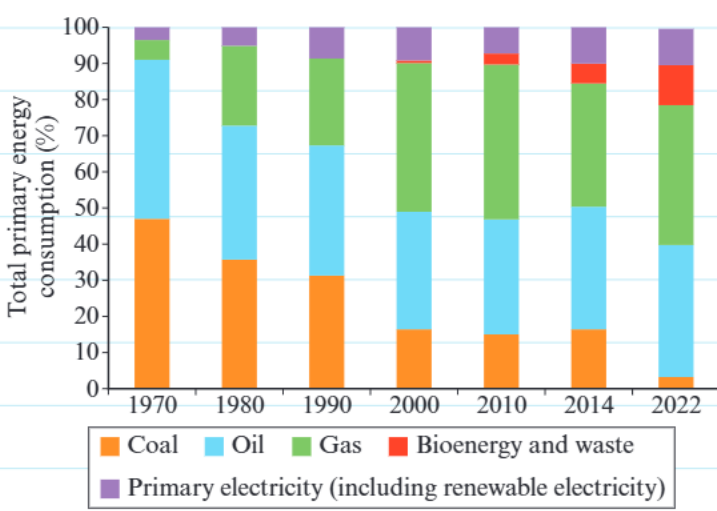
Historical trends (1970s-2020s)
During the 1970s, the UK's energy system was heavily dependent on traditional fossil fuels. Coal and petroleum together accounted for approximately 91% of the nation's total energy consumption. This reliance on carbon-intensive fuels was typical of industrial nations during this period.
However, by 2020, this dependence had decreased substantially. The energy landscape showed a significant transformation with natural gas becoming the dominant energy source, while renewable energy sources gained considerable ground. This transition represents one of the most dramatic energy shifts among developed nations.
Important
The UK's shift from 91% fossil fuel dependence in the 1970s to a more diversified energy mix by 2020 demonstrates how rapidly energy systems can transform when supported by appropriate policies and investment.
Future targets and commitments
The UK government has set ambitious environmental targets for the coming decade. There is a commitment to achieve 95% of energy generation from renewable sources by 2030. This target demonstrates the country's dedication to reducing carbon emissions and combating climate change through a fundamental restructuring of its energy infrastructure.
Global energy variations
Energy consumption patterns vary dramatically across different countries and regions worldwide, influenced by several key factors that determine both the types of energy used and the quantities consumed.
Population influences
Countries with large populations, such as China, face enormous energy demands and typically rely on diverse energy sources to meet their needs. In contrast, nations with smaller populations, like Iceland, can often focus on specific energy types that suit their geographical advantages - in Iceland's case, abundant geothermal power resources.
Note
Population size doesn't always correlate directly with total energy consumption. Per capita energy use varies significantly based on economic development, climate, and lifestyle factors.
Economic development levels
Wealth plays a crucial role in determining energy choices. More developed countries, including the USA and UK, possess the financial resources to invest in a broader range of energy technologies and cleaner alternatives. These nations can afford the initial costs associated with renewable energy infrastructure and advanced technologies.
Conversely, less developed countries often cannot afford diverse energy portfolios and frequently depend on imported oil and traditional energy sources. Countries like Pakistan illustrate this challenge, where economic constraints limit energy options and often lead to heavy reliance on imports.
Geographical availability
Natural resource availability significantly shapes national energy strategies. Countries blessed with specific geographical features can develop corresponding energy sources. The UK, for instance, can harness wind and tidal power due to its coastal location and weather patterns. Other nations must rely heavily on imported oil and coal when local renewable resources are limited.
Example
Country Comparison: Geographical Advantages
Iceland: Utilises abundant geothermal energy due to volcanic activity, providing nearly 100% renewable electricity.
Norway: Leverages extensive hydroelectric resources from mountainous terrain and abundant rainfall.
Saudi Arabia: Relies heavily on oil reserves but increasingly investing in solar power due to abundant sunshine.
Factors driving global energy demand and supply
Three primary factors have fundamentally altered global energy patterns over the past century, creating both challenges and opportunities for energy planning worldwide.

Rapid population growth
Global population expansion, particularly pronounced in developing countries like China and Brazil, has created unprecedented energy demands. As more people require electricity for homes, transportation, and daily activities, the total global energy consumption continues to rise dramatically.

Rising affluence and living standards
As people worldwide become more prosperous, their energy consumption patterns change significantly. Higher incomes enable households to purchase electrical appliances, vehicles, and other energy-consuming goods. This increased affluence means that even if population growth slowed, energy demand would continue rising as living standards improve globally.

Technological advances
Modern technology has created both increased energy demand and new supply solutions. On the demand side, the proliferation of electrical goods, from smartphones to electric vehicles, has boosted electricity consumption. Simultaneously, technological progress has enabled the development and implementation of renewable energy sources, making solar, wind, and other clean technologies more viable and cost-effective than ever before.
Important
The relationship between technology and energy is dual-natured: while new technologies increase energy demand, they also provide innovative solutions for cleaner and more efficient energy production and consumption.
Understanding energy transitions
Energy transitions occur when countries shift from one dominant energy source to another. These changes typically happen gradually over decades and reflect evolving priorities around cost, security, and environmental impact. The UK's transition from coal dominance to natural gas leadership, with increasing renewable contributions, exemplifies how nations can transform their energy systems while maintaining economic growth.
Such transitions require careful planning, substantial investment, and often significant policy interventions. They also demonstrate how countries can reduce their carbon footprints while meeting growing energy demands through smarter technology and resource management.
Note
Successful energy transitions typically require coordination between government policy, private investment, technological innovation, and public acceptance. The process can take several decades to complete fully.
Summary
Key Points to Remember:
-
Energy mix refers to the combination of different energy sources a country uses, which varies based on population size, economic development, and natural resource availability
-
The UK has dramatically transformed its energy consumption from 91% coal and oil dependence in the 1970s to a gas-dominated system with growing renewable contributions by 2020
-
Global energy demand is driven by three key factors: rapid population growth (especially in developing countries), rising affluence enabling greater energy consumption, and technological advances creating both new demands and supply solutions
-
Wealthier countries can invest in diverse, cleaner energy portfolios while less developed nations often rely heavily on imported fossil fuels
-
The UK aims for 95% renewable energy by 2030, showing how ambitious targets can drive energy transformation in developed nations