c1900-present: Modern Britain (Edexcel GCSE History): Revision Notes
📚Revision Notes
The Derek Bentley case

Introduction
The Derek Bentley case stands as one of the most controversial executions in British history. In 1953, nineteen-year-old Derek Bentley was executed for murder, despite never actually pulling the trigger. His case became a powerful symbol of the problems with capital punishment and played a crucial role in the eventual abolition of the death penalty in Britain.
Note
Derek Bentley was just 19 years old when executed, and had learning difficulties that significantly impacted his understanding of the situation. This made his case particularly troubling to the public and legal observers of the time.
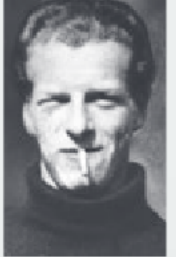
The crime: warehouse burglary gone wrong
In late 1952, Derek Bentley and his sixteen-year-old friend Christopher Craig decided to break into a warehouse. What started as a simple burglary attempt quickly escalated into a deadly confrontation with police. The key facts of the crime show how a relatively minor offence spiralled out of control.
Bentley, who had learning difficulties, was accompanied by Craig, who was armed with both a knife and a gun. When police arrived at the scene, the two young men found themselves trapped on the warehouse roof with no way to escape. This desperate situation set the stage for the tragic events that followed.
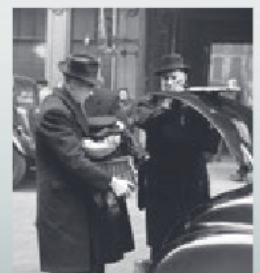
The confrontation with police proved fatal when Detective Constable Fairfax attempted to arrest the pair. During the struggle, Craig shot DC Fairfax in the shoulder. According to witness testimony and police officers present, Bentley then shouted the infamous words "Let him have it, Chris!" before Craig fired again, this time killing Police Constable Sidney Miles.
Important
The phrase "Let him have it, Chris!" became central to the case. This ambiguous statement could be interpreted in two completely different ways:
- As an instruction to shoot the officer
- As advice to surrender the weapon to police
This ambiguity would become a crucial point in debates about Bentley's guilt and the fairness of his execution.
When Craig ran out of ammunition, he jumped from the roof in an attempt to escape, breaking his back in the fall. Meanwhile, Bentley remained with the injured DC Fairfax throughout the incident, showing no attempt to flee.
The trial and convictions
Both young men were tried and convicted of murder, but their fates differed dramatically due to their ages. Craig, being under eighteen, was sentenced to a long prison term and could not legally face the death penalty. Bentley, however, despite his learning difficulties and the fact that he never fired the fatal shots, received a death sentence.
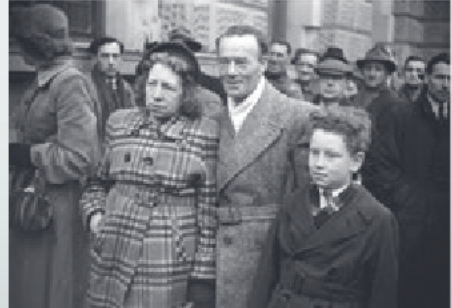
The trial raised serious questions about justice and fairness. Bentley's defence argued that his learning difficulties meant he didn't fully understand the consequences of his actions. Furthermore, the crucial phrase "Let him have it, Chris!" could be interpreted in two ways - either as an instruction to shoot or as advice to surrender the weapon.
Note
The stark contrast in sentences highlighted a fundamental issue with capital punishment: Craig, who actually fired the fatal shots, received a prison sentence due to his age, while Bentley, who never pulled the trigger, faced execution simply because he was three years older.
After a failed appeal hearing, Derek Bentley was executed by hanging on 28 January 1953. The contrast between his fate and Craig's sentence highlighted the arbitrary nature of how justice was applied, particularly regarding the death penalty.
Public and parliamentary reaction
The Bentley case sparked unprecedented public outcry against the death sentence. There was massive public opposition to the execution, with many people believing that justice had not been properly served. The case received extensive media coverage, with newspapers and the public largely sympathetic to Bentley's situation.
Parliamentary support for Bentley was also significant. A motion calling for the Home Secretary to grant a reprieve was supported by 200 Members of Parliament. However, despite this substantial political backing, the motion was never formally debated in Parliament. This failure to engage with parliamentary concerns further fuelled criticism of the system.
The Home Secretary held the power to reprieve condemned murderers, and many others in similar situations had been granted mercy in the past. The decision not to reprieve Bentley, especially given his circumstances, appeared inconsistent and unfair to many observers.
Derek Bentley's family refused to give up their fight for justice, continuing their campaign even after his death. Their persistent efforts eventually bore fruit decades later, demonstrating the lasting impact of their determination to clear his name.
Long-term significance and outcomes
The Derek Bentley case proved highly significant in changing British attitudes towards capital punishment. It clearly demonstrated the vast differences in how murder cases were treated, with some defendants receiving death sentences while others got prison terms for similar crimes.
The case also revealed the problems with the Home Secretary's reprieve system. The seemingly random nature of which murderers were granted mercy and which were executed appeared like a cruel lottery to many observers. This inconsistency undermined public confidence in the fairness of the justice system.
Combined with other controversial executions during this period, the Bentley case significantly increased the number of people who became critical of the death penalty. Many began to question whether capital punishment could ever be applied fairly and justly.
The campaign for justice continued long after Bentley's execution. In 1993, he was granted a posthumous pardon, officially acknowledging that errors had been made. Even more significantly, in 1998 his conviction for murder was completely overturned, finally vindicating those who had argued for his innocence.
Timeline of key events
- Late 1952: Derek Bentley and Christopher Craig attempt warehouse burglary
- 28 January 1953: Derek Bentley executed by hanging
- 1993: Derek Bentley receives posthumous pardon
- 1998: Bentley's murder conviction officially overturned
Summary
Key Points to Remember:
- Derek Bentley was executed in 1953 for a murder committed by his teenage accomplice, despite never firing the fatal shots himself
- His case generated massive public opposition and parliamentary support for a reprieve, which was ultimately denied
- The controversy highlighted the unfair and inconsistent application of the death penalty in Britain
- Bentley's learning difficulties and the ambiguous nature of his alleged instruction to Craig made his execution particularly controversial
- His eventual pardon in 1993 and overturned conviction in 1998 proved that justice had miscarried, contributing to the case against capital punishment