Government on Elizabeth's accession (Edexcel GCSE History): Revision Notes
📚Revision Notes
Government on Elizabeth's accession

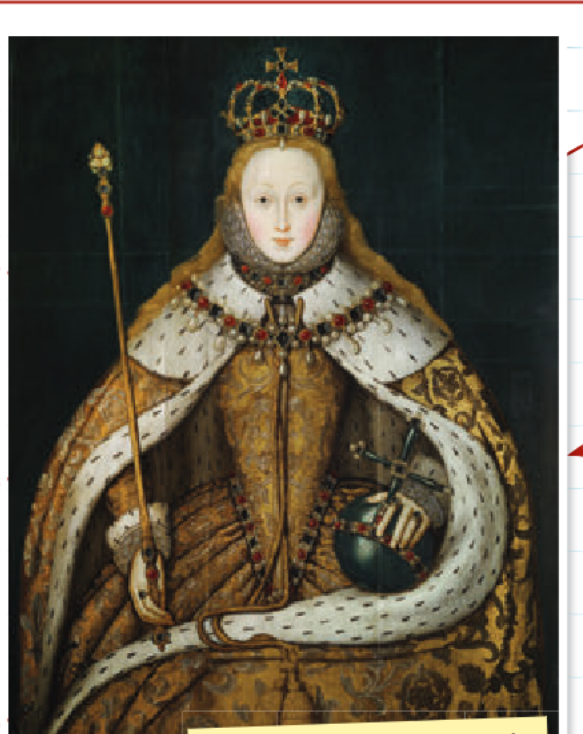
When Elizabeth I became queen in 1558, she inherited a complex system of government that had developed over many centuries. Understanding how this system worked is crucial for grasping the challenges she faced and how she managed to rule successfully for 45 years.
Note
The governmental system Elizabeth inherited was not of her own making, but rather a complex web of institutions that had evolved over centuries. Her success as a monarch largely depended on her ability to work within and master this existing framework.
The structure of Elizabethan government
The Elizabethan system of government was made up of several different institutions, each with specific roles and responsibilities. These institutions worked together to help the monarch govern the country effectively.
The court
The royal court consisted of nobles who served as the queen's advisers and companions. These individuals were Elizabeth's trusted friends and counsellors who helped her make important decisions about ruling the country. Court members also assisted the monarch in displaying her wealth and authority to both domestic and foreign audiences. Many courtiers could also serve as members of the Privy Council, creating an overlap between these two important institutions.
The Privy Council
The Privy Council was perhaps the most important governing body after the monarch herself. This group was composed of members from the nobility who had been chosen specifically to help run the country. Their responsibilities were extensive and vital to the smooth functioning of government. They kept a close watch on Parliament's activities and monitored the Justices of the Peace throughout England. The Privy Council also oversaw the enforcement of laws and maintained order and security across the realm. This made them essential partners in Elizabeth's rule.
Important
The Privy Council was the key institution that connected the monarch to all other parts of government. Without their support and effective functioning, the entire governmental system would have collapsed.
Parliament
Parliament served as an advisory body to Elizabeth's government and was divided into two distinct chambers. The House of Lords consisted of nobles and bishops who held their positions due to their high social rank and religious authority. In contrast, the House of Commons was an elected body, though it's important to note that very few people in Tudor England actually had the right to vote.
Parliament's main function was to offer advice to the government and discuss proposed legislation. However, Parliament also held significant power through its ability to pass laws and approve taxes. The institution could impose extraordinary taxation when needed, which was particularly important during times of war or national emergency.
Justices of the Peace
These were typically large landowners who had been appointed by the government to maintain law and order at the local level. Justices of the Peace played a crucial role in the day-to-day governance of England by keeping peace in their local areas and hearing various court cases. They served as the vital link between the central government and local communities, ensuring that royal authority reached every corner of the kingdom.
Note
The role of Justices of the Peace demonstrates how Tudor government relied heavily on the cooperation of local elites. The crown couldn't govern effectively without the voluntary participation of these wealthy landowners.
Lord Lieutenants
Lord Lieutenants were nobles who had been specially appointed by the government to oversee the administration of English counties. These officials had significant responsibilities, including governing their assigned counties and raising the local militia when required. The militia was particularly important as it served as England's emergency military force, made up of ordinary citizens rather than professional soldiers.
Limitations on Elizabeth's power
Despite being an absolute monarch in theory, Elizabeth I did not possess unlimited power in practice. There were several important constraints on her authority that shaped how she had to govern.
Important
Critical Understanding: Elizabeth's Power Was Limited
Elizabeth could NOT:
- Pass new laws without Parliament's approval
- Raise taxes without Parliament's agreement
This meant successful rule required negotiation and diplomacy with her own institutions, not just foreign powers.
Most significantly, Elizabeth could not pass new laws without Parliament's approval. This meant that when she wanted to introduce legislation, she had to work with both the House of Lords and House of Commons to gain their support. Similarly, she could not raise taxes without Parliament's agreement, which gave this institution considerable influence over royal policy.
These limitations meant that Elizabeth had to be skilled in negotiation and diplomacy, not just with foreign powers, but with her own Parliament and advisers. She needed to maintain good relationships with these groups to govern effectively.
Key terms
Extraordinary taxation: Additional taxes that were imposed to pay for unexpected expenses, particularly during times of war. These taxes required Parliamentary approval and were only used when regular government income was insufficient.
Militia: An emergency military force composed of ordinary citizens rather than professional soldiers. The militia could be called upon during times of crisis to defend the country.
Timeline
1558: Elizabeth I becomes Queen of England and inherits the established governmental system.
Summary
Key Points to Remember:
- Elizabeth's government included multiple institutions: the court, Privy Council, Parliament, Justices of the Peace, and Lord Lieutenants
- The Privy Council was the most important governing body, responsible for monitoring Parliament and maintaining law and order
- Parliament was divided into two houses: Lords (nobles and bishops) and Commons (elected, though few could vote)
- Elizabeth's power was limited - she needed Parliament's approval to pass laws and raise taxes
- Local government was managed through Justices of the Peace and Lord Lieutenants who connected central authority with local communities