The fall of Anne Boleyn (Edexcel GCSE History): Revision Notes
📚Revision Notes
The fall of Anne Boleyn
Anne Boleyn's dramatic downfall represents one of the most shocking episodes of Henry VIII's reign. In just three years, she transformed from triumphant new queen to condemned traitor, meeting her death at the Tower of London in May 1536. Thomas Cromwell played a crucial role in orchestrating her destruction, though historians debate whether this was calculated revenge or political necessity.
Note
Anne Boleyn's rapid fall from grace demonstrates the precarious position of royal wives in Tudor England, where political necessity often outweighed personal loyalty.
Timeline of Anne's downfall
The events leading to Anne Boleyn's execution unfolded with alarming speed between 1533 and 1536:
Example
Timeline: Anne Boleyn's Final Years
September 1533 - Anne gives birth to Princess Elizabeth, disappointing Henry VIII who desperately wanted a male heir to secure the Tudor succession.
1534 - Anne suffers a miscarriage, further frustrating the king's hopes for a son.
January 1536 - Anne experiences another devastating miscarriage. The lost baby was reportedly male and may have been deformed, which many at court interpreted as divine punishment.
2 May 1536 - Following Cromwell's investigation, Anne is arrested and taken to the Tower of London. She faces charges of adultery and treason alongside several alleged lovers, including the court musician Mark Smeaton and courtiers Sir Francis Weston, Sir Henry Norris, Sir William Brereton, and even her own brother George Boleyn.
15 May 1536 - Anne is found guilty of all charges against her.
17 May 1536 - Henry VIII's marriage to Anne is declared null and void.
19 May 1536 - Anne Boleyn is executed by sword at the Tower of London.
Reasons for Anne's dramatic fall
Henry's new romantic obsession
By early 1536, the king had become completely infatuated with Jane Seymour, one of Anne's own ladies-in-waiting. Henry now viewed Jane as his future queen rather than merely his mistress. This meant Anne had to be permanently removed from the picture to make way for his third marriage.
Important
Henry's pattern of replacing wives when they failed to produce male heirs or when his affections shifted elsewhere would continue throughout his reign, making the position of royal consort extremely dangerous.
Growing royal frustration
The king's patience with Anne had reached breaking point. She had consistently failed to provide him with the male heir he so desperately needed to secure the Tudor dynasty. Her assertive personality and tendency to engage in flirtatious behaviour at court may have begun to embarrass Henry, making him eager to be rid of her.
Foreign policy disagreements
Anne held strong views about England's relationships with foreign powers and the Church that increasingly conflicted with royal policy. Her unwillingness to simply agree with Henry's decisions seemed to irritate the king, who expected complete obedience from his wives.
Note
Tudor queens were expected to be politically passive and supportive of their husband's policies. Anne's tendency to express strong opinions on matters of state made her increasingly vulnerable to accusations of overstepping her role.
Toxic court environment
The royal court had become a hotbed of malicious gossip and rumor-mongering. Anne had accumulated numerous enemies who were delighted to spread accusations of adultery against her. This poisonous atmosphere made it easier for Henry to believe the worst about his second wife.
Cromwell's role in engineering Anne's destruction
Thomas Cromwell's involvement in Anne Boleyn's downfall remains a subject of historical debate, but several factors point to his active participation in her destruction:
Cromwell was acutely aware that Anne had played a significant role in the downfall of his former master, Cardinal Wolsey. He had no desire to share Wolsey's fate and may have seen removing Anne as essential for his own survival.
Important
The rivalry between Cromwell and Anne Boleyn represented a dangerous power struggle at the heart of Henry's government. In Tudor politics, such conflicts rarely ended without one party's complete destruction.
The chief minister and the queen held fundamentally different views on foreign policy and how the wealth gained from dissolving the monasteries should be utilised. These policy disagreements created tension between them at the highest levels of government.
Cromwell methodically constructed the adultery case against Anne by interviewing witnesses and employing spies throughout the queen's household. He even used torture to extract confessions, though notably only Mark Smeaton actually admitted to having an affair with Anne. Cromwell then skillfully used this "evidence" to convince both Henry and the court of Anne's guilt.
Note
The fact that only one of Anne's alleged lovers confessed, and only under torture, suggests that the charges against her were likely fabricated. This was not uncommon in Tudor political prosecutions where the desired outcome was predetermined.
However, some historians argue that Cromwell was simply carrying out Henry's wishes rather than pursuing a personal vendetta. They suggest that by 1536, the king had already decided Anne must go, and Cromwell was merely the efficient administrator who made it happen.
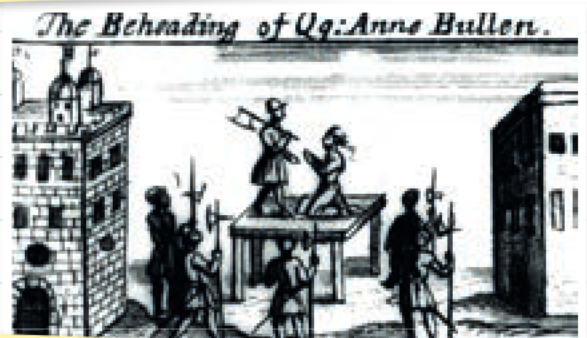
The execution took place at the Tower of London, where Anne was beheaded by an experienced French swordsman rather than the traditional axe - a final "mercy" from Henry VIII.
Summary
Key Points to Remember:
- Anne Boleyn fell from queen to condemned traitor in just three years (1533-1536)
- Henry's infatuation with Jane Seymour and frustration over the lack of a male heir were key factors in Anne's downfall
- Thomas Cromwell played a crucial role in building the case against Anne, though historians debate his exact motivations
- The charges of adultery and treason were likely fabricated, with only one alleged lover confessing under torture
- Anne's execution in May 1536 cleared the way for Henry's third marriage to Jane Seymour within days