Catherine of Aragon and the succession (Edexcel GCSE History): Revision Notes
📚Revision Notes
Catherine of Aragon and the succession
Henry's marriage to Catherine of Aragon (1509)
When Henry VIII became king in 1509, he married Catherine of Aragon, his deceased brother Arthur's widow. Initially, this marriage appeared highly successful for several important reasons.
The marriage brought significant benefits to Henry's reign. Henry proved to be a devoted and caring husband in the early years, while Catherine became beloved by the English people through her charitable activities and good works. Catherine also demonstrated her loyalty and capability by serving as regent during Henry's military campaigns in France between 1512 and 1514. During this period, she even organised the despatch of an army to Scotland, which successfully defeated and killed James IV. As a symbolic gesture of this victory, she sent Henry the bloodied shirt of the fallen Scottish king.
Note
Diplomatic and Strategic Benefits
The marriage strengthened England's diplomatic position considerably. The union with Catherine reinforced England's alliance with Spain and the Holy Roman Empire, significantly improving England's prospects in any future conflicts with France by ensuring Spanish support and reducing the risk of European isolation.
The succession crisis emerges
However, what initially seemed like a perfect royal marriage began to develop serious problems centred around the crucial issue of producing a male heir.
Between 1509 and 1520, Catherine experienced at least six pregnancies, but tragically only one child survived: Princess Mary. Catherine's inability to provide Henry with a surviving male heir became an increasingly serious concern for several interconnected reasons.
Important
Critical Succession Problems
The absence of a male heir created multiple serious threats:
- It reflected poorly on Henry's reputation and masculinity according to the social expectations of the time, suggesting to some that Henry was incapable of fathering sons
- More critically, it threatened the stability of the Tudor dynasty, as the lack of a male heir encouraged potential rivals both within England and from abroad to consider challenging Henry's throne
- This raised the real possibility of civil war and foreign invasion
By 1527, Catherine had reached the age of 42, making future pregnancies and the birth of a male heir highly unlikely given the medical realities of the time.
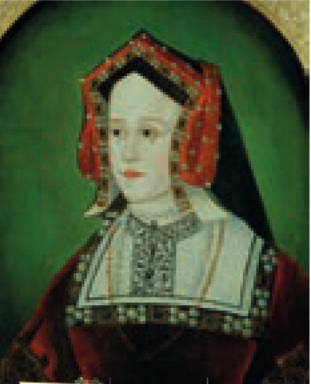
Henry's growing dissatisfaction with his marriage
As the succession issue intensified, Henry began to question whether his marriage to Catherine was legitimate and started looking for ways to explain their lack of male children.
Henry developed three main arguments for why Catherine was at fault for their marital problems. First, he blamed Catherine for failing to give him a healthy son, pointing out that he had successfully fathered an illegitimate son with his mistress Bessie Blount, which proved his capability. Second, Henry's romantic interest had shifted to younger women, particularly Anne Boleyn, making him less committed to his marriage with Catherine.
Important
Henry's Religious Argument
Most significantly, Henry began to argue that his marriage to Catherine was cursed by God because it violated religious law. Since Catherine had previously been married to Henry's brother Prince Arthur, Henry claimed this union was forbidden according to Old Testament teachings, specifically citing the passage:
"If a man shall take his brother's wife it is an impurity... they shall be childless."
This became Henry's primary justification for seeking an annulment.
The annulment dilemma
Henry concluded that the only solution to his succession problem was to end his marriage to Catherine, but this presented enormous legal and political challenges.
The only way Henry could legally end his marriage was through obtaining an annulment - a legal declaration that the marriage had never been valid and therefore had never truly existed. However, this process was extremely complicated and faced several major obstacles.
Important
Major Obstacles to Annulment
- Only the Pope had the authority to grant such an annulment
- An annulment would effectively declare that Charles V, the Holy Roman Emperor (Catherine's nephew) had been wronged, creating a diplomatic nightmare
- Henry needed to avoid upsetting this powerful European ruler
- Catherine herself strongly opposed any annulment because it would strip her of her status as queen and declare her daughter Mary illegitimate, removing Mary's claim to the throne
Catherine's resistance made the already difficult process even more challenging for Henry to achieve.
Key timeline
- 1509: Henry VIII marries Catherine of Aragon
- 1512-1514: Catherine serves as regent during French wars
- 1516: Birth of Princess Mary (only surviving child)
- 1520: Catherine's last recorded pregnancy
- 1527: Catherine reaches age 42, making future pregnancies unlikely
- 1527: Henry begins seriously pursuing annulment proceedings
Summary
Key Points to Remember:
- Catherine's failure to produce a male heir created a serious succession crisis that threatened the stability of the Tudor dynasty
- Henry blamed Catherine for their lack of sons, using religious, personal, and political arguments to justify ending their marriage
- The annulment process was extremely complex because only the Pope could grant it, and it would upset powerful European allies
- Catherine's resistance to the annulment was motivated by protecting both her own status and her daughter Mary's claim to the throne
- This succession crisis would ultimately lead to Henry's break with the Catholic Church when he couldn't obtain papal approval for the annulment