Wolsey's fall from power (Edexcel GCSE History): Revision Notes
📚Revision Notes
Wolsey's fall from power
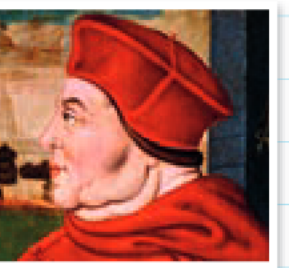
Cardinal Thomas Wolsey had been Henry VIII's most trusted minister for nearly two decades, wielding unprecedented power as Lord Chancellor. However, by 1529, a combination of political missteps, policy failures, and changing court dynamics led to his dramatic downfall.
Note
Wolsey's fall marked one of the most significant political upheavals of Henry VIII's reign, fundamentally changing how the Tudor court operated and paving the way for the English Reformation.
Main reasons for Wolsey's decline
The Amicable Grant disaster (1525)
One of the most damaging episodes to Wolsey's reputation was his introduction of the Amicable Grant in 1525. This forced loan was designed to fund Henry's military campaigns, but it proved to be a catastrophic miscalculation. The tax demand was so unpopular that it sparked widespread rebellion across England, with many subjects refusing to pay.
Important
The Amicable Grant rebellion was so severe that Henry VIII was forced to publicly distance himself from Wolsey's policy, marking the first time the king openly undermined his chief minister's authority.
The failure to collect this tax severely undermined Wolsey's standing with the king. Henry was forced to distance himself publicly from his minister's actions, weakening Wolsey's authority and influence at court. This episode marked the beginning of serious doubts about Wolsey's judgement and effectiveness.
The Great Matter - Henry's annulment crisis
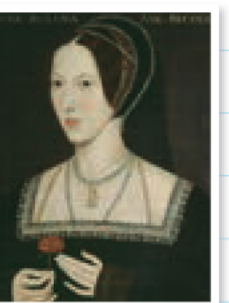
Perhaps the most crucial factor in Wolsey's fall was his inability to secure Henry's marriage annulment from Catherine of Aragon. When Henry became infatuated with Anne Boleyn, he demanded that Wolsey arrange for his marriage to be declared invalid so he could remarry.
Despite his considerable diplomatic skills and connections with Rome, Wolsey found himself caught between Henry's increasingly impatient demands and the Pope's reluctance to grant the annulment. The divorce proceedings dragged on unsuccessfully, and by 1529, it became clear that Wolsey had failed to deliver what his king most desperately wanted.
Important
Henry began to suspect that Wolsey was secretly working with the Pope to prevent the annulment rather than facilitate it - a suspicion that proved fatal to their relationship.
The rise of the Boleyn faction
Henry's infatuation with Anne Boleyn had profound consequences for court politics. The Boleyn family, particularly Anne's father Thomas Boleyn and her brother George, gained increasing influence at court. This presented a significant threat to Wolsey's position, as the Boleyns saw him as an obstacle to their advancement.
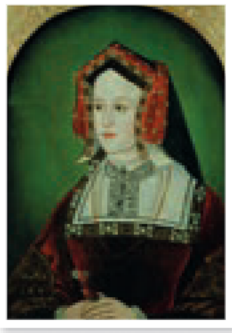
Anne Boleyn herself developed a strong dislike for Wolsey, believing he was deliberately sabotaging her relationship with Henry. She successfully persuaded other nobles who were already unhappy with Wolsey to join forces against him. This created a powerful coalition of enemies who actively worked to undermine his authority and turn the king against him.
Note
The Boleyn faction represented a new type of court politics - one based on family networks and personal relationships rather than traditional noble hierarchies or clerical authority.
Domestic reforms and their consequences
Wolsey's extensive reforms to the justice system, while well-intentioned, created numerous enemies among the nobility. His efforts to enclose land, his willingness to challenge the Crown's traditional allies, and his high-handed approach to governance made him deeply unpopular with many powerful courtiers.
These reforms, though often beneficial to ordinary people, threatened the interests of wealthy nobles who had previously enjoyed privileged positions. Their resentment created a ready-made opposition that the Boleyns could exploit when the time came to move against Wolsey.
Foreign policy failures
Wolsey's reputation as a skilled diplomat suffered severely due to several foreign policy setbacks. Most notably, his failure to build an effective alliance against Charles V left England diplomatically isolated. The Treaty of Cambrai was negotiated without English involvement, demonstrating that England was no longer seen as a crucial European power.
This diplomatic marginalisation frustrated Henry, who had always prided himself on England's international standing. Wolsey's inability to maintain England's influence in European affairs further eroded the king's confidence in his minister's abilities.
The final fall (1529-1530)
Dismissal and disgrace
In October 1529, Wolsey was stripped of most of his powers and possessions. He was forced to surrender his position as Lord Chancellor and was exiled to York, far from the centre of power. This marked the end of his political career and his influence over royal policy.
Important
The charges brought against him included praemunire - essentially working in the interests of a foreign power (the Pope) rather than the king. This accusation was particularly damaging as it suggested that Wolsey had been disloyal to Henry throughout his career.
Death and legacy
Wolsey's story came to a tragic end in July 1530 when he was summoned back to London to face trial. However, he died during the journey south, possibly from illness brought on by the stress of his situation. His death meant that he never had to face the full consequences of Henry's displeasure, but it also marked the definitive end of an era in English politics.
Changing court politics
Wolsey's fall represented a fundamental shift in how Henry VIII's court operated. For nearly twenty years, Wolsey had been able to maintain his power by ensuring that other courtiers had little direct influence over the king. His departure allowed rival factions to emerge and compete for royal favour.
The Boleyns initially benefited most from this change, but Wolsey's fall also opened the door for other ambitious figures like Thomas Cromwell, who would eventually become Henry's next chief minister. The king's growing impatience with advisers who couldn't deliver his wishes became a defining feature of his later reign.
Note
This shift marked the beginning of the more volatile and dangerous court atmosphere that would characterise the remainder of Henry VIII's reign, where royal favour could be quickly lost and the consequences were often fatal.
Timeline of key events
- 1525: Introduction of the Amicable Grant leads to rebellion and damages Wolsey's reputation
- 1527: Henry begins seeking an annulment of his marriage to Catherine of Aragon
- 1529: Divorce proceedings fail in London; Wolsey falls from favour and is dismissed in October
- 1530: Wolsey summoned to London but dies on the journey in July
Summary
Key Points to Remember:
- The Amicable Grant (1525) was a turning point - its failure through popular rebellion seriously damaged Wolsey's reputation with Henry VIII
- The annulment crisis was decisive - Wolsey's inability to secure Henry's divorce from Catherine of Aragon was the main reason for his downfall
- The Boleyns were key opponents - Anne Boleyn and her family actively worked against Wolsey, building a coalition of his enemies at court
- Multiple factors combined - domestic reforms that angered nobles, foreign policy failures, and changing court politics all contributed to his fall
- His death in 1530 ended an era - Wolsey's fall marked the beginning of a new, more volatile period in Henry VIII's reign where royal favour could be quickly lost