Wolsey's rise to power (Edexcel GCSE History): Revision Notes
📚Revision Notes
Wolsey's rise to power
Thomas Wolsey became one of the most powerful figures in Tudor England, serving as Henry VIII's Lord Chancellor during the first half of his reign. Understanding how Wolsey achieved such remarkable influence helps explain the early years of Henry VIII's government.
Timeline of Wolsey's career progression
Thomas Wolsey's rise to power was remarkably swift, taking him from humble beginnings to the heights of political and religious authority in just two decades.
Early life and education (1473-1509)
- 1473: Born in Ipswich to a butcher father and cattle dealer
- 1498: Obtained his degree from Oxford University and was ordained as a priest
Royal service begins (1509-1515)
- 1509: Appointed to the Royal Council as Royal Almoner (responsible for distributing money to the poor)
- 1514: Became Bishop of Lincoln and Archbishop of York
- 1515: Achieved the dual positions of Lord Chancellor (Henry's chief minister) and Cardinal
Peak of power (1518)
- 1518: Appointed as Papal Legate, making him the pope's representative and the most powerful churchman in England
Note
Wolsey's rapid accumulation of titles demonstrates the speed of his rise to power. In just nine years, he went from Royal Almoner to holding the highest positions in both Church and state - a remarkable achievement for someone born into humble circumstances.
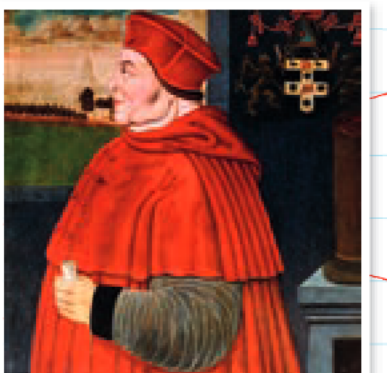
Wolsey's personality and character
Wolsey possessed several key personality traits that enabled his remarkable ascent to power. He was not born into nobility, which made his achievements even more extraordinary. His intelligence was exceptional, allowing him to master complex political and religious matters quickly.
His ambition drove him to seek ever-higher positions, while his charm and persuasive abilities helped him build crucial relationships with the king and foreign rulers. Perhaps most importantly, Wolsey demonstrated complete willingness to carry out Henry's wishes, making himself indispensable to the king.
However, Wolsey was also known for his ruthlessness towards anyone who threatened his position or the king's government. His contemporaries nicknamed him "Alter Rex" (meaning "second king"), which reflected his enormous power and influence in the realm.
Important
The nickname "Alter Rex" reveals just how powerful Wolsey had become. When contemporaries referred to him as the "second king," they were acknowledging that his influence rivalled that of Henry VIII himself - an extraordinary position for any minister to achieve.
Wolsey's wealth and lavish lifestyle
Wolsey's positions in both Church and state provided him with multiple sources of income, allowing him to accumulate extraordinary wealth. He became ten times richer than his nearest rival, demonstrating the financial benefits of holding high office in Tudor England.
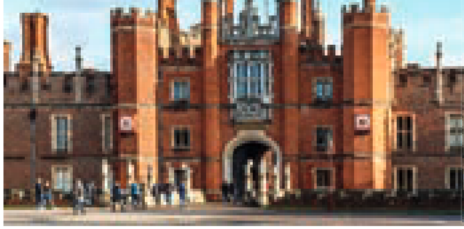
This immense wealth enabled Wolsey to live in magnificent style. He built opulent residences, including York Place and Hampton Court, where he entertained visitors lavishly. His lifestyle rivalled that of royalty, which both impressed foreign dignitaries and sometimes caused resentment among the nobility.
Note
Hampton Court became a symbol of Wolsey's power and wealth when he began rebuilding it in 1515. The palace was so magnificent that it demonstrated Wolsey's status as one of the most powerful men in Europe. However, this grandeur also made him vulnerable - Henry VIII eventually took over Hampton Court in 1529, illustrating how precarious Wolsey's position truly was.
The reasons for Wolsey's rise to power
Several interconnected factors explain how Wolsey achieved such remarkable influence over Henry VIII and English government.
Henry's governing style Henry VIII preferred not to involve himself in day-to-day governmental administration. This created an opportunity for ambitious and capable ministers like Wolsey to take on significant responsibilities. By handling the boring but essential tasks of government, Wolsey made himself invaluable to a king who wanted to enjoy the pleasures of monarchy without its tedious duties.
Strategic royal appointments Wolsey's appointment as Royal Almoner in 1509 gave him direct access to the king and membership in the Royal Council. This position allowed him to influence royal decisions and demonstrate his capabilities. As he proved his worth, Henry granted him increasingly important roles.
Elimination of rivals Henry systematically removed many of his father's advisers, whom he considered too cautious and unpopular. This removal of potential rivals cleared Wolsey's path to power and reduced competition for the king's attention and favour.
Military success and diplomatic skills The war with France in 1512 provided Wolsey with an opportunity to demonstrate his organisational abilities. By 1513, he had successfully organised a well-equipped and well-supplied army, proving his worth to Henry. This military success increased his power and influence significantly.
Example
Worked Example: Wolsey's Military Organisation (1512-1513)
When England went to war with France in 1512, Wolsey seized the opportunity to demonstrate his exceptional organisational skills:
Step 1: Wolsey took charge of military logistics and supply chains Step 2: He organised the recruitment and training of troops Step 3: He ensured the army was properly equipped and supplied Step 4: The campaign's success proved his administrative capabilities to Henry VIII
Result: This military success became a key factor in Wolsey's rapid promotion to higher offices and increased his influence with the king.
Personal qualities that appealed to Henry Wolsey's persuasive personality and his ability to flatter enabled him to maintain influence over the king. His skill as a negotiator made him effective in dealing with foreign powers on Henry's behalf. Most crucially, his ruthlessness and willingness to destroy rivals who challenged his position ensured he could maintain his influence without serious threats to his authority.
Simple timeline of major events
- 1473 - Wolsey born in Ipswich
- 1509 - Became Royal Almoner and joined Royal Council
- 1512 - War with France begins, Wolsey proves his organisational skills
- 1514 - Appointed Bishop of Lincoln and Archbishop of York
- 1515 - Becomes Lord Chancellor and Cardinal, starts rebuilding Hampton Court
- 1518 - Appointed Papal Legate, reaching peak of his power
Summary
Key Points to Remember:
-
Wolsey rose from humble beginnings - Born to a butcher in Ipswich, he achieved extraordinary power through talent and ambition rather than birth
-
His dual roles gave him unique power - As both Lord Chancellor (political leader) and Cardinal/Papal Legate (religious leader), Wolsey controlled both Church and state
-
Henry's governing style enabled Wolsey's rise - The king's reluctance to handle day-to-day administration created opportunities for ambitious ministers
-
Military success was crucial - Wolsey's organisation of the French war effort in 1512-1513 demonstrated his capabilities and increased his influence
-
Personal qualities mattered - His intelligence, charm, ruthlessness, and willingness to serve Henry's wishes made him indispensable to the king