The outbreak of war (Edexcel GCSE History): Revision Notes
📚Revision Notes
The outbreak of war

Introduction to the civil war
The period following the sealing of Magna Carta was incredibly turbulent for England. What started as an attempt at political reform quickly descended into civil war. The Great Charter remained in effect for barely two months before the country erupted into what historians call the First Barons' War by October 1215. This conflict would fundamentally change the relationship between the monarchy and the nobility.
The build-up to conflict
King John had no intention of honouring the terms of Magna Carta for long. Rather than accepting the limitations placed on his power, he began employing delaying tactics almost immediately after agreeing to the charter. His strategy became clear when he reached out to Pope Innocent III for support, appealing for help in overturning what he saw as an unjust agreement forced upon him.
The papal response was swift and decisive. On 24 August 1215, Pope Innocent III issued a papal bull that declared Magna Carta completely void. The Pope's reasoning was that John had been coerced into accepting the charter, making it invalid in the eyes of the Church. Furthermore, the papal bull threatened to excommunicate anyone who attempted to enforce the charter's provisions. This gave John the religious backing he needed to renounce his earlier promises.
Note
The papal bull of 24 August 1215 was crucial in legitimising John's rejection of Magna Carta. By declaring the charter void due to coercion, Pope Innocent III provided John with both religious and legal justification to break his promises to the barons. The threat of excommunication was particularly powerful in mediaeval society, where religious sanctions could have severe social and political consequences.
With papal support secured, John felt confident enough to openly reject Magna Carta. The rebel barons, realising that negotiation was no longer possible, made a fateful decision. Rather than continuing to work within the existing system, they chose to invite Prince Louis, son of King Philip II of France, to become the new king of England. They also sent messages to King Alexander II of Scotland, requesting military assistance if he could provide troops to support their cause.
The strategic importance of Rochester Castle
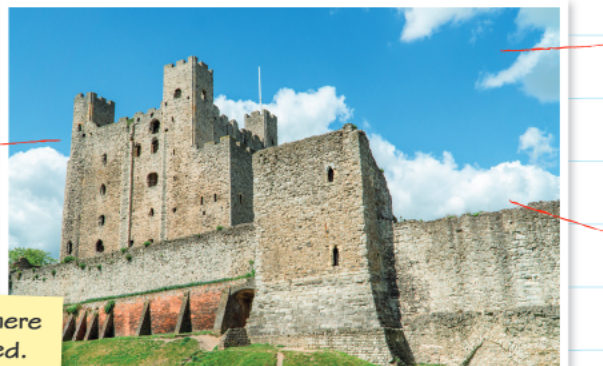
Rochester Castle held enormous strategic significance in mediaeval England. Located on the crucial route between Dover and London, whoever controlled this fortress effectively controlled access to the capital. The rebels understood this perfectly, which is why they moved quickly to seize control of it in October 1215. When John arrived shortly after to reclaim the castle, he found himself facing a well-fortified position that would prove incredibly difficult to capture.
Important
Why Rochester Castle was crucial: The castle's location on the Dover-London route meant that controlling it was essential for anyone wanting to move troops, supplies, or communications between the coast and the capital. Without Rochester, John risked being cut off from his coastal fortifications and losing the ability to coordinate his military campaigns effectively.
The castle's design made it particularly suited for defensive warfare. Its thick stone walls and multiple towers provided excellent protection against attackers, while its position allowed defenders to control river crossings and major roads. For John, failing to recapture Rochester would mean leaving a rebel stronghold directly threatening his ability to move troops and supplies between his coastal fortifications and his capital.
The siege of Rochester Castle
John's siege of Rochester Castle became one of the most intensive military operations of his reign. The King employed multiple siege techniques to break the defenders' resistance. Five powerful siege machines were constructed to pound the castle walls with heavy stones continuously. These machines, likely including trebuchets and mangonels, could hurl projectiles with devastating force against the fortifications.
However, the most ingenious aspect of the siege involved undermining tactics. John's engineers ordered miners to dig tunnels beneath the castle walls, with the goal of weakening the foundations and causing sections to collapse. This dangerous work required skilled sappers who could work underground while avoiding detection by the defenders above.
Example
The Siege Timeline: Rochester Castle 1215
October 1215: Rebels seize Rochester Castle October-November 1215: John begins intensive siege operations
- Construction of five siege engines
- Continuous bombardment of castle walls
- Underground mining operations commence 30 November 1215: Castle finally surrenders after seven weeks of resistance
Total siege duration: Seven weeks - demonstrating both the castle's defensive strength and John's persistence.
The siege proved to be a test of endurance for both sides. The rebels managed to hold out for seven long weeks before finally surrendering to John on 30 November. This represented a significant military achievement for the King, as it demonstrated that even the strongest rebel positions could eventually be overcome through persistent siege warfare.
The successful recapture of Rochester marked the beginning of a revival in John's military fortunes. Energised by this victory, he immediately began marching northward to reclaim other territories that had fallen under rebel control, including lands previously taken by Alexander II of Scotland. By March 1216, only London remained firmly in rebel hands, showing how effectively John had used his Rochester success as a springboard for broader military campaigns.
The French intervention
The arrival of Prince Louis fundamentally changed the nature of the conflict. On 21 May, the French prince landed in Kent with a substantial military force of 1,200 knights. This represented a significant escalation, as it brought experienced continental soldiers into what had previously been primarily an internal English dispute.
John's response to Louis's landing revealed his tactical thinking. Rather than immediately engaging the French forces in battle, the King chose to retreat, avoiding a direct confrontation that might have resulted in a decisive defeat. This cautious approach allowed John to preserve his forces while observing how the political situation might develop.
Important
The escalation to international war: Louis's landing with 1,200 knights transformed the First Barons' War from a domestic English civil war into an international conflict. This brought French military expertise, resources, and legitimacy to the rebel cause, fundamentally changing the balance of power.
The impact of Louis's arrival was immediately apparent across southeastern England. By the end of July, rebel forces had successfully retaken control of Essex, Norfolk, and Suffolk. They also managed to capture significant portions of Yorkshire and Lincolnshire. The momentum was clearly shifting in favour of the rebels, culminating in August when Alexander II of Scotland successfully captured Carlisle, opening up a northern front against John.
The rebellion gained additional strength as more nobles decided to join the rebel cause. Some previously loyal barons, including the influential Earl of Salisbury, switched sides during this period. This political shift meant that approximately two-thirds of the English baronage now actively supported the rebels rather than remaining loyal to John.
Why the barons chose Louis
The decision to invite French intervention was not taken lightly by the rebel barons, but several factors made Prince Louis an attractive alternative to King John. Understanding these motivations helps explain how the conflict escalated from a domestic dispute to an international war.
First, John had cultivated some very powerful supporters, including both the Pope and William Marshal, one of England's most respected military leaders. By aligning with France, the barons gained access to a equally powerful supporter who could match John's international backing. This levelled the political playing field significantly.
Financial considerations also played a crucial role. The King of France possessed far greater monetary resources than the English rebels could muster independently. Louis could provide not only financial support for the war effort but also access to superior weapons and siege equipment that the rebels desperately needed for their military campaigns.
Military expertise represented another critical advantage. Louis brought with him experienced soldiers who had proven themselves in continental warfare. These troops possessed knowledge of advanced siege techniques and battlefield tactics that many English barons lacked, having spent most of their military careers in local conflicts rather than major international campaigns.
Perhaps most importantly, few rebel barons and certainly not John himself possessed the extensive military experience that Prince Louis had gained. The French prince had participated in significant military campaigns and understood the complexities of managing large-scale warfare, making him a more credible military leader than the alternatives available within England.
Timeline of key events
- June 1215: Magna Carta sealed at Runnymede
- 24 August 1215: Pope Innocent III issues papal bull declaring Magna Carta void
- October 1215: Rebels seize Rochester Castle; civil war begins
- October-November 1215: Seven-week siege of Rochester Castle
- 30 November 1215: Rochester Castle surrenders to John
- 21 May 1216: Prince Louis lands in Kent with 1,200 knights
- July 1216: Rebels retake Essex, Norfolk, and Suffolk
- August 1216: Alexander II captures Carlisle
- 15 October 1216: King John dies of dysentery
Summary
Key Points to Remember:
-
Magna Carta's brief existence: The Great Charter lasted only about two months before civil war erupted, showing how fragile the initial peace agreement was.
-
Strategic warfare: Rochester Castle's location made it crucial for controlling access to London - whoever held it controlled the route between Dover and the capital.
-
International conflict: What began as a domestic dispute became an international war when French forces landed in England, fundamentally changing the nature of the rebellion.
-
Military innovation: The siege of Rochester demonstrated advanced mediaeval warfare techniques, including siege engines and underground mining tactics.
-
Political momentum: John's initial success at Rochester allowed him to regain significant territory, but the arrival of French support ultimately shifted the balance back towards the rebels.