John as king (Edexcel GCSE History): Revision Notes
📚Revision Notes
John as king
When King John came to the throne in 1199, he faced far greater challenges than his brother Richard I had experienced during his succession. Unlike Richard's smooth transition to power, John had to work hard to establish his authority both in England and across his territories in France.
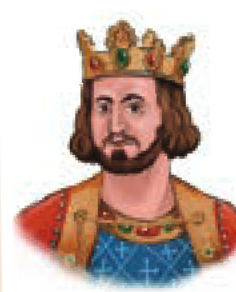
John's background and character
John was born in 1167 and was known by two telling nicknames that revealed much about his reputation. People called him "Lackland" because, as the youngest son, he initially received no territorial inheritance from his father Henry II. Later, he earned the nickname "Softsword", which suggested he was seen as less militarily capable than his warrior-king brother Richard.
As the fourth and only surviving son of Henry II and Eleanor of Aquitaine, John had a legitimate claim to the throne. Richard I had acknowledged him as his heir, and their mother Eleanor supported this claim. However, John's character was quite different from Richard's. While he was intelligent, hardworking, and had military experience, he lacked Richard's natural leadership abilities and inspiring presence.
Note
John's character flaws would prove significant throughout his reign. He was known to be suspicious of others, quick-tempered, and could sometimes act disloyally when it suited his interests - traits that would later cause problems with his nobles and allies.
How John secured his power
John used several clever strategies to establish his authority as king, showing his political intelligence even if he lacked military charisma. His approach demonstrated that mediaeval kingship required both political skill and strategic thinking, not just military prowess.
Immediate action in England: John moved quickly after Richard's death on 6 April 1199, having himself crowned king on 27 May. This rapid action prevented any rivals from challenging his position during the vulnerable transition period.
Religious devotion: After his coronation, John made public visits to important religious sites like Canterbury and Bury St Edmunds. This demonstrated his piety and helped win the loyalty of his English subjects, who valued a king who respected the Church.
Smart delegation: Rather than trying to control everything personally, John wisely left England to be governed by experienced men who had served under Richard. This allowed him to focus on defending his French territories while ensuring stable rule at home.
Northern defences: John strengthened England's northern borders against potential Scottish invasion by giving powerful positions to loyal barons who could protect these vulnerable areas.
Strategic marriages: He secured support from important nobles like the Count of Angoulême by arranging his marriage to the Count's daughter Isabelle. He also convinced the Count of Anjou to change sides and support him.
Military success: John successfully drove back Philip II of France's forces and made peace through the Treaty of Le Goulet in May 1200.
The Treaty of Le Goulet
This important diplomatic agreement between John and Philip II of France in May 1200 temporarily solved John's problems but created new ones. The treaty represented a complex political compromise that would have lasting consequences for John's reign.
- Recognition: Philip officially recognised John as king of the Angevin Empire, giving him the legitimacy he needed
- Territorial concessions: John had to give Philip some land in Normandy, showing he was willing to compromise
- Arthur's position: Prince Arthur (John's nephew and rival claimant) remained Duke of Brittany but had to acknowledge John's authority
- Financial cost: John agreed to pay homage to Philip for his French lands and pay an enormous fine for inheriting these territories
Important
The peace this treaty brought lasted only two years, but it gave John valuable time to strengthen his position. However, the territorial and financial concessions would weaken John's long-term power in France.
The murder of Prince Arthur
The disappearance of Prince Arthur in 1202 became one of the most controversial events of John's reign and seriously damaged his reputation. This event marked a turning point that would have devastating consequences for John's rule.
Example
The Sequence of Events:
Step 1: The capture John's army captured Arthur at Mirebeau in August 1202. Unlike other captured nobles who were usually treated well according to the chivalric code of the time, Arthur was imprisoned in chains, which shocked mediaeval society.
Step 2: The disappearance What happened to Arthur next remains unclear, with different historical accounts giving various stories. However, Arthur simply disappeared from all records, and most people blamed John for his nephew's death.
Step 3: The consequences Many believed John had murdered Arthur, and some even thought John had killed his own nephew personally.
Important
Critical Impact: This scandal caused many of John's supporters in France to abandon him and switch to supporting Philip II instead. The belief that John had murdered his nephew contributed to John eventually losing control of Normandy completely, demonstrating how reputation and legitimacy were crucial for mediaeval rulers.
Timeline of key events
The following timeline shows the rapid succession of events that shaped John's early reign:
- 1167: John born
- 6 April 1199: Richard I dies
- 27 May 1199: John crowned King of England
- May 1200: Treaty of Le Goulet signed
- August 1202: Prince Arthur captured at Mirebeau
- 1202-1204: John loses most French territories
Summary
Key Points to Remember:
- John faced much greater challenges becoming king than Richard I had, requiring him to use political skill rather than military reputation
- He secured power through quick action, religious displays, smart delegation, and strategic alliances
- The Treaty of Le Goulet gave John recognition as king but cost him territory and money
- Prince Arthur's mysterious disappearance seriously damaged John's reputation and caused many supporters to abandon him
- John's reign showed that mediaeval kingship required both military strength and political legitimacy to be successful