Richard I as king (Edexcel GCSE History): Revision Notes
📚Revision Notes
Richard I as king
Richard's coronation and early reign
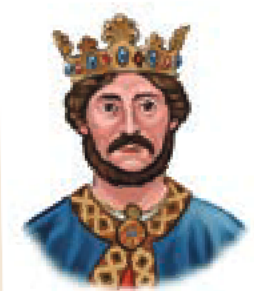
Richard I became king of the Angevin Empire on 3 September 1189 in a grand coronation ceremony. Unlike many mediaeval successions that involved conflict, Richard's transition to power was remarkably peaceful. This smooth transfer of authority was particularly significant given that Richard had previously rebelled against his own father, Henry II.
Note
The peaceful nature of Richard's succession was unusual for the mediaeval period, where disputed successions and civil wars were common. This stability allowed Richard to focus immediately on his crusading ambitions rather than consolidating domestic power.
Once crowned, Richard immediately began preparing for his departure on the Third Crusade, which would take place just three months after his coronation. This early focus on crusading would define much of his kingship and require careful planning to ensure England remained stable in his absence.
Background and character of Richard I
Richard was born in 1157 and earned the famous nickname "Coeur de Lion" (Lionheart) due to his exceptional military prowess and courage in battle. As the eldest surviving son of Henry II and Eleanor of Aquitaine, he had a strong hereditary claim to the throne based on the principle of primogeniture.
His background made him an experienced and capable ruler even before becoming king. Richard had served as Duke of Aquitaine since 1172, giving him valuable experience in governance and military leadership. His character combined several important royal qualities: he was charismatic and brave, with a strong belief in the ideals of chivalry. He was also a great soldier who wrote music and poetry, showing his cultured side. However, Richard could be arrogant and selfish, and his willingness to fight against his own family during his father's reign demonstrated his ruthless ambition.
Note
Richard's cultural achievements are often overshadowed by his military reputation. He was a skilled troubadour who composed poetry in the Occitan language and was patron to many artists and writers, reflecting the sophisticated court culture of Aquitaine.
How Richard secured his power
Despite the peaceful succession, Richard faced potential challenges to his authority and took several strategic steps to consolidate his position:
Making peace with former enemies: Richard wisely chose to reconcile with those who had opposed him during his conflicts with Henry II. Rather than seeking revenge, he focused on building alliances and unity within the kingdom.
Managing rival claimants: Richard neutralised potential threats from within his own family by making his brother John the Count of Mortain (essentially giving him lands in Normandy) and his half-brother Geoffrey the Archbishop of York. However, he also banished both from England for three years, removing them as immediate threats while still acknowledging their status.
Example
Strategic Family Management: The John and Geoffrey Solution
Richard's approach to his brothers demonstrates mediaeval political pragmatism:
- Step 1: Grant them significant titles (Count of Mortain, Archbishop of York)
- Step 2: Provide them with lands and income outside England
- Step 3: Ban them from England for three years to prevent immediate plotting
- Result: Brothers feel honoured rather than excluded, but cannot threaten Richard's early reign
Securing Scottish independence: Richard made a crucial agreement with William the Lion, king of Scotland. He agreed that Scotland would remain a separate country and that William would not need to pay homage to him. In return, William abandoned any claims to northern England, securing Richard's northern border.
Appointing loyal administrators: Understanding that he would be absent on crusade, Richard placed capable and loyal men like William Longchamp in charge of governing England during his absence.
Building support through patronage: Richard restored lands to nobles who had been disinherited by Henry II, using this redistribution of property to reward powerful barons and secure their loyalty.
Treating nobles with respect: Richard maintained courteous relations with the nobility and inspired loyalty through his charismatic leadership style, ensuring their continued support for his reign.
Important
Richard's strategy of securing power through reconciliation rather than revenge was crucial to his success. Many mediaeval rulers who sought to punish former enemies faced ongoing rebellions and instability throughout their reigns.
Death and succession crisis
Richard's reign came to an abrupt end in March 1199 when he was badly wounded while fighting in France. He died on 6 April 1199, and on his deathbed named his brother John as his heir.
However, Richard's death created a succession crisis. His nephew Arthur, who was the son of John's older brother Geoffrey, claimed the throne based on the principle of primogeniture. According to this rule, Arthur should have inherited before John because Arthur was the son of an elder brother. This dispute would have significant consequences for the stability of the Angevin Empire.
Important
The Primogeniture Problem
The succession dispute highlighted a fundamental problem with mediaeval inheritance law. While primogeniture generally passed inheritance to the eldest son, it was unclear whether this meant:
- The eldest surviving brother (John's claim), or
- The son of the eldest deceased brother (Arthur's claim)
This ambiguity would lead to years of civil war and ultimately contribute to the loss of Normandy.
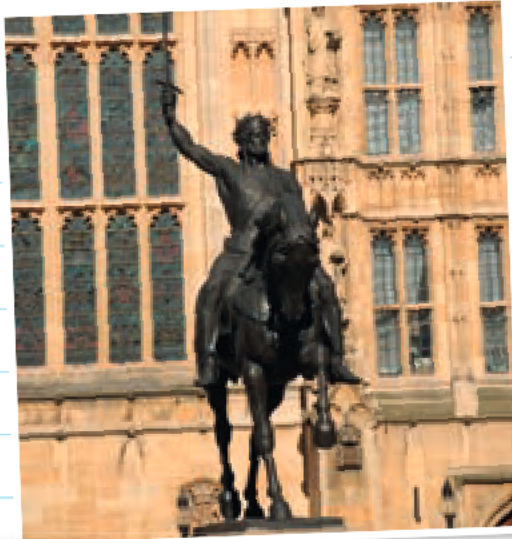
Richard's legacy as a warrior-king has endured through the centuries, and he is often portrayed in paintings and statues as the ideal mediaeval knight and crusader.
Timeline of key events
- 1157: Richard I born
- 1172: Becomes Duke of Aquitaine
- 3 September 1189: Crowned King of England
- December 1189: Departs for Third Crusade
- March 1199: Richard badly wounded in France
- 6 April 1199: Richard dies, names John as heir
- 1199: Succession dispute begins between John and Arthur
Summary
Key Points to Remember:
- Richard I became king peacefully on 3 September 1189 despite having previously fought against his father Henry II
- His nickname "Coeur de Lion" (Lionheart) reflected his reputation as an exceptional military leader and crusader
- Richard secured his power through strategic alliances, managing rival claimants, and rewarding loyal supporters with land and positions
- He spent only six months of his ten-year reign actually in England, preferring to focus on crusading and fighting in France
- His death in 1199 created a succession crisis between his brother John and nephew Arthur, based on competing interpretations of primogeniture