The ‘antis’ movements (Edexcel GCSE History): Revision Notes
📚Revision Notes
The 'antis' movements (1951-1952)
Introduction
The 'antis' movements were crucial terror campaigns that helped Mao consolidate Communist Party control over China. These movements used fear and intimidation to eliminate potential opposition to the CCP while extending their dominance over both government institutions and the economy. The campaigns demonstrated how the CCP would use mass mobilisation to achieve political goals.
Note
The 'antis' movements represented a systematic approach to political control, combining state terror with popular participation to transform Chinese society and eliminate opposition to Communist rule.
The 'three antis' movement (Sanfan), 1951
Purpose and targets
The Sanfan campaign specifically targeted CCP officials who had connections to the old Guomindang (GMD) government. Mao recognised that loyal Communist Party members needed to replace these potentially unreliable officials to secure complete control.
The movement encouraged ordinary Chinese people to help "clean the filth and poison" remaining from the previous government. This grassroots approach made citizens active participants in the political transformation of China.
The three key problems addressed
Sanfan focused on eliminating three major issues within the government structure:
- Corruption - Officials taking bribes or misusing their positions for personal gain
- Waste - Inefficient use of government resources and materials
- Government inefficiency (bureaucracy) - Slow, complicated administrative processes that hindered effective governance
The campaign aimed to create a more streamlined and loyal government apparatus that would serve the Communist Party's objectives effectively.
Understanding bureaucracy
Note
A bureaucracy refers to a system where groups of officials handle government work. While bureaucracies can be necessary for organisation, the term often criticises inefficient government systems that become overly complicated with excessive rules and processes, commonly called "red tape."
Consequences of Sanfan
Important
The Sanfan campaign had severe and wide-reaching effects that demonstrated the brutal nature of CCP political control:
- Approximately 4 million people faced investigation, with 1 million either sent to labour camps or executed
- The campaign created significant administrative problems, as tax collection failed in many regions
- Government operations suffered major disruptions due to the removal of experienced officials
- These difficulties forced Mao to end the campaign after just one month
However, the movement succeeded in removing potential opposition within government ranks and installing more loyal Communist officials.
The 'five antis' movement (Wufan), 1952
Purpose and targets
The Wufan campaign shifted focus from government officials to wealthy Chinese capitalists and business owners. The CCP wanted to eliminate potential economic opposition while gaining control over China's industrial sector.
Propagandists actively visited businesses and encouraged workers to criticise their employers, creating an atmosphere of suspicion and fear among the business community.
The five key problems addressed
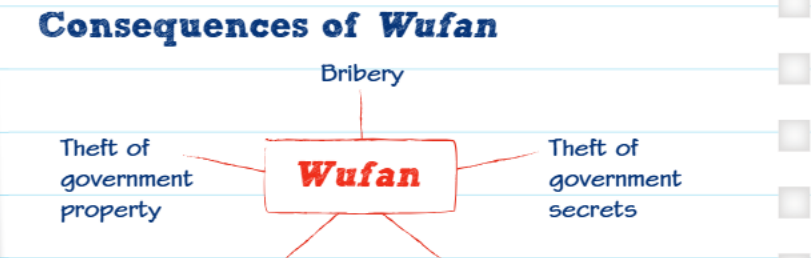
Wufan targeted five specific criminal activities:
- Bribery - Paying officials for favourable treatment
- Fraud - Deceiving customers or the government
- Tax evasion - Avoiding proper tax payments
- Theft of government property - Stealing state-owned materials or equipment
- Theft of government secrets - Accessing or sharing confidential information
The campaign also aimed to eliminate "capitalist thinking" from Chinese society, promoting Communist ideology instead.
Consequences of Wufan
Important
The Wufan movement had devastating effects on China's business sector, effectively destroying private enterprise:
- Nearly all major Chinese companies (approximately 450,000 businesses) underwent investigation
- Although only 1% of those investigated went to prison, many faced substantial fines
- The financial penalties were so severe that numerous companies went bankrupt and were subsequently taken over by the government
- Business leaders became extremely fearful of the campaign, making them more compliant with government demands
Despite the harsh treatment of business owners, workers generally supported these campaigns, which increased popular backing for the CCP. The government acquired significant wealth through fines and gained stronger control over the economy.
The connection between movements
Note
Strategic Coordination of the Campaigns
The Sanfan and Wufan campaigns worked together strategically. Sanfan eliminated CCP officials who had been influenced by capitalist corruption, while Wufan directly attacked capitalism within China's economy. Both movements weakened the power of bureaucracy, which had been influential in China for centuries, and cleared the path for a new generation of Mao supporters to take control.
Timeline of the 'antis' movements
- 1951: Launch of Sanfan ('three antis') movement targeting corrupt government officials
- 1951 (after one month): Sanfan campaign ended due to administrative problems
- 1952: Launch of Wufan ('five antis') movement targeting wealthy capitalists and businesses
Remember!
Summary
Key Points to Remember:
- The 'antis' movements were terror campaigns designed to eliminate opposition to Communist rule
- Sanfan (1951) targeted government corruption, waste, and inefficiency, particularly among officials with GMD connections
- Wufan (1952) focused on wealthy capitalists and businesses, addressing bribery, fraud, tax evasion, and theft
- Both campaigns used mass participation to encourage ordinary citizens to denounce targets
- The movements successfully strengthened CCP control over government and economy, though they caused significant disruption
- These campaigns demonstrated how the CCP would use fear and popular mobilisation to achieve political transformation