Asian migrants in Leicester (Edexcel GCSE History): Revision Notes
📚Revision Notes
Asian migrants in Leicester

Leicester became one of Britain's most successful examples of multicultural integration after 1945, largely due to Asian migration. From 1945 onwards, Asian migrants brought significant prosperity to the city, though their experience included both challenges and remarkable success stories.
Migration patterns to Leicester
The Asian population in Leicester grew dramatically during the post-war period. In 1951, only 624 Asians lived in Leicester, but by 1981 this number had exploded to 59,709 people. This massive increase occurred for several important reasons.
Note
This represents a 95-fold increase in the Asian population over just 30 years, making it one of the most significant demographic changes in Leicester's history.
Leicester offered plenty of available housing and work opportunities, particularly in the textile and shoe industries that were thriving at the time. The city's industrial base made it an attractive destination for migrants seeking economic opportunities.
Asian migrants came primarily from India, Pakistan and Bangladesh, initially seeking safety and stability during the civil war that followed the partition of India in 1947. However, thousands more Asians arrived from Kenya after 1967 and from Uganda in 1972, often as refugees fleeing political persecution and economic uncertainty in East Africa.
Many Asian people found crucial help and support through community organisations in Leicester. The British Asian Welfare Society played a vital role in helping new arrivals find jobs and homes, creating a support network that encouraged further migration to the area.
By 1972, the Asian community had established strong religious foundations with three Hindu temples, three Sikh gurdwaras and two mosques. Social and welfare clubs were also well-established, with 40 operating by 1972, demonstrating how successfully the community had organised itself.
Challenges and opposition faced
Despite Leicester city council generally welcoming Asian migrants, not everyone was supportive, and migrants faced significant challenges including racism and economic concerns from some residents.
In the early years of Asian migration, the local press expressed concerns about multiculturalism, preferring the Asian community to remain separate rather than integrate. However, attitudes shifted over time, and later the local press became full of praise for the Asian community and their hard work in bringing prosperity to Leicester.
Important
In August 1972, the city council told the Home Office that the city was 'full up' and ran advertisements in the Ugandan press discouraging Asians from coming to Leicester, reflecting growing concerns about housing and resources.
Political opposition also emerged from extreme groups. The National Front targeted Leicester and in 1974 and 1979 they organised marches to protest against immigration, creating tension and fear within the Asian community.
Economic concerns arose among some trade unions who worried that jobs would go to Asians instead of white British people. Many Asians had to take work for which they were overqualified and were generally paid less than white workers doing the same jobs, highlighting the discrimination they faced in employment.
Positive impact on Leicester
Despite facing significant challenges, Asian migrants transformed Leicester into a thriving multicultural city with remarkable economic and cultural benefits.
In 1967, the Race Equality Centre was founded, based on the Commission for Racial Equality. It helped thousands of migrants from Asia, Africa and the Caribbean, providing crucial support services and advocacy.
The economic impact of Asian migration proved enormously beneficial. Many Asian migrants had been successful business owners in Uganda and brought valuable experience and expertise with them. By 1994, there were 1,446 Asian-owned businesses in Leicester. Ten years later, there were over 10,000 British Asian-owned businesses in Leicester, employing thousands of people and contributing greatly to the British economy.
Example
Success Story: The Golden Mile
In the 1970s, Asian immigrants took over empty shops in Belgrave Road, selling clothing and food. This area became known as the 'Golden Mile' because of the number of jewellers' shops, creating a thriving shopping area and major tourist attraction that continues to draw visitors from across Britain today.
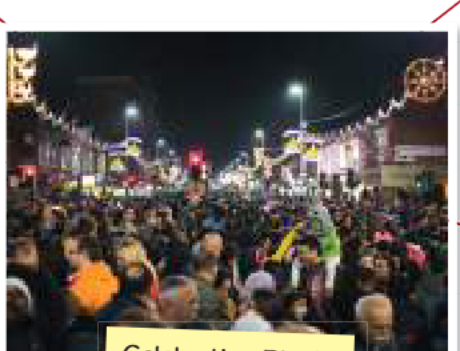
Cultural celebrations transformed Leicester's social calendar. Two major festivals are now held every year in Leicester. Since 1982, the Mela Festival has been a celebration of South Asian Arts and Indian culture. Diwali, the Festival of Light, is held every November lasting for five days and is celebrated by Hindus, Sikhs and Jains, creating vibrant community celebrations that attract visitors from across Britain.
Timeline of key events
- 1947: Partition of India leads to initial migration
- 1951: 624 Asians living in Leicester
- 1967: Race Equality Centre founded; migration from Kenya begins
- 1972: Asian migrants arrive from Uganda; city council declares Leicester 'full up'
- 1972: 40 Asian social and welfare clubs established; three Hindu temples, three Sikh gurdwaras, two mosques operating
- 1974-1979: National Front organises anti-immigration marches
- 1981: Asian population reaches 59,709
- 1982: First Mela Festival held
- 1994: 1,446 Asian-owned businesses operating
- Later period: Over 10,000 British Asian-owned businesses established
Summary
Key Points to Remember:
-
Asian migration to Leicester increased dramatically from 624 people in 1951 to 59,709 by 1981, primarily from India, Pakistan, Bangladesh, Kenya and Uganda
-
Despite facing racism, political opposition and economic discrimination, Asian migrants established strong community organisations including religious buildings, welfare societies and cultural groups
-
Asian businesses transformed Leicester's economy, growing from 1,446 enterprises in 1994 to over 10,000, creating the famous Golden Mile shopping district
-
Cultural contributions include major annual festivals like Diwali and the Mela Festival, making Leicester a celebrated example of successful multiculturalism
-
The experience shows both the challenges migrants faced and their remarkable success in contributing to British society despite initial opposition and discrimination