Black activism (Edexcel GCSE History): Revision Notes
📚Revision Notes
Black activism in Notting Hill c1948-c1970
Introduction
During the period from 1948 to 1970, black communities in Notting Hill faced increasing hostility and discrimination. This challenging environment sparked the growth of black activism, as people organised themselves to combat racism and fight for their rights. The activism took many forms, from establishing newspapers and cultural events to direct protests against police harassment.
Note
The period from 1948-1970 was particularly significant as it coincided with increased Caribbean immigration to Britain following World War II, leading to growing tensions and the need for organised resistance against discrimination.
Key activists and organisations
The fight for civil rights in Notting Hill was led by several remarkable individuals and organisations who used different strategies to challenge racism and build community solidarity.
Claudia Jones and the West Indian Gazette
Claudia Jones became one of the most influential black activists in Britain during this period. Originally from Trinidad, she had been involved in civil rights work in the United States before being deported in 1955 due to her political activities.
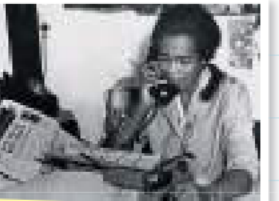
After arriving in Britain, Jones quickly recognised the need for a voice that could represent black communities. In 1958, she established the West Indian Gazette, which became Britain's first major newspaper specifically for black readers.
Important
The establishment of the West Indian Gazette was groundbreaking because newspapers were one of the main ways people received information and shared ideas during the 1950s. For black communities experiencing racial discrimination and abuse, having their own 'voice' through the newspaper was extremely important.
Jones used her influence to campaign for better treatment of black people in various areas of life. She successfully persuaded London Transport to allow black employees to advance to senior positions, breaking down employment barriers. She also campaigned against the 1962 Commonwealth Immigration Act, which unfairly restricted immigration from black and Asian Commonwealth countries while allowing white Commonwealth citizens to enter freely.
The West Indian Gazette also suffered from harassment, receiving large amounts of abusive and often racist mail. Despite this, Jones persevered and used the newspaper to sponsor the first Caribbean Carnival in 1959, which would become a major cultural celebration.
Frank Crichlow and the Mangrove restaurant
Frank Crichlow owned the Mangrove restaurant, which became a focal point for black activism and community life. However, the restaurant faced constant harassment from police, who regularly raided it looking for drugs but never found any evidence of illegal activity.
Important
Between January 1969 and July 1970, police conducted nine separate raids on the Mangrove, causing significant disruption to the business and its customers. This pattern of systematic harassment demonstrated the extent of police discrimination against black-owned businesses.
This pattern of harassment made Crichlow and other community members furious, leading them to organise a protest response. The British Black Panthers helped organise a protest march, and the organisers informed the Home Office, the prime minister, the leader of the opposition, and Caribbean officials about their plans, showing they wanted to protest legally and peacefully.
On 9 August 1970, over 150 people participated in the march. However, despite the peaceful intentions, police monitored the march and monitored the Mangrove's customers. The situation escalated when police claimed the marchers were encouraging racial violence, leading to arrests including Frank Crichlow himself.
The Mangrove Nine trial
The arrest of protesters led to a significant legal case known as the Mangrove Nine trial. Initially, magistrates dismissed the charges, but the Director of Public Prosecutions decided that nine defendants, including Frank Crichlow, should face trial for more serious offences.
The government attempted to influence the judge to rule that racial hatred existed on both sides of the conflict, but the judge refused this suggestion. When all defendants were found not guilty of the serious charges, it represented a major victory for the black community.
Important
The trial was widely seen as proof that the justice system could work fairly, even in cases involving racial tensions. This legal victory became a symbol of successful resistance against institutional racism and gave hope to other activists fighting discrimination.
The Notting Hill Carnival
The Caribbean Carnival began as an indoor event in 1959, featuring black entertainers such as Cleo Laine. It took place in St Pancras Town Hall in London on 30 January 1959. Claudia Jones played a crucial role in organising and financing this first carnival, then worked to expand the event so more people could participate and celebrate Caribbean culture.
Following Jones' death in 1964, the carnival continued to grow. In 1966, the event moved outdoors and relocated to Notting Hill, where it became known as the Notting Hill Carnival.
Note
This outdoor festival grew rapidly and is now recognised as the largest street festival in Europe, celebrating Caribbean culture and bringing communities together. The carnival's evolution from a small indoor gathering to a massive street celebration demonstrates the growing confidence and cultural pride of Britain's Caribbean community.
The Black Panther movement in Britain
Inspired by the American Black Panther Party, the British Black Panthers formed in 1968. This organisation focused on campaigning against police brutality and addressing various social issues affecting black communities. Their goal was to build pride and confidence within black communities while working with other anti-racism groups.
The BBP's leadership included notable figures such as Obi Egbuna, Darcus Howe, Altheia Jones-LeCointe, and Olive Morris. Importantly, Howe and Jones-LeCointe were among the Mangrove Nine, showing the connections between different activist organisations.
Note
By the early 1970s, the BBP had grown to approximately 3,000 members and collaborated with various other groups fighting racism, demonstrating the breadth of the anti-racism movement during this period. This growth showed how black activism had evolved from individual efforts to organised, interconnected movements.
Timeline of major events
- 1955: Claudia Jones deported from USA, arrives in Britain
- 1958: West Indian Gazette established
- 1959: First Caribbean Carnival held (30 January, St Pancras Town Hall)
- 1962: Commonwealth Immigration Act passed
- 1964: Claudia Jones dies
- 1966: Carnival moves outdoors to Notting Hill
- 1968: British Black Panthers formed
- 1969-1970: Nine police raids on Mangrove restaurant
- 9 August 1970: Mangrove protest march
- 1970: Mangrove Nine trial - defendants acquitted
Summary
Key Points to Remember:
- Black activism in Notting Hill developed as a response to increased hostility and discrimination between 1948-1970
- Claudia Jones established the West Indian Gazette in 1958, giving black communities their own voice and organising the first Caribbean Carnival in 1959
- The Mangrove Nine trial in 1970 was a significant legal victory that proved the justice system could work fairly in racial cases
- The Notting Hill Carnival grew from a small indoor event to become Europe's largest street festival, celebrating Caribbean culture
- The British Black Panthers, formed in 1968, worked alongside other groups to combat police brutality and build black community pride