Living and working conditions (Edexcel GCSE History): Revision Notes
📚Revision Notes
Living and working conditions in the Soviet Union, 1924-41
Overview of changes by 1941
By 1941, life in the Soviet Union had transformed dramatically compared to the pre-revolutionary period. Under the Tsarist regime before 1917, the vast majority of people had lived in extreme poverty. Following the economic and social changes implemented between 1928-39, living standards had generally improved for most citizens. However, the socialist promise of removing class divisions remained unfulfilled - ordinary workers continued to experience much worse conditions than Communist Party officials and bureaucrats.
Important
Despite official socialist ideals, the Soviet Union maintained clear class divisions, with Communist Party members enjoying significantly better living conditions than ordinary workers.
Living conditions across the Soviet Union
Life in towns and cities
Urban workers saw some improvements compared to the Tsarist era, but significant problems remained. Housing presented the biggest challenge, with severe overcrowding forcing families to live in just one or two rooms. Space was extremely limited, and many workers still lived in basic barracks-style accommodation. Some families had to share communal housing with multiple other families.
Note
The housing crisis in Soviet cities was so severe that entire families were often confined to single rooms, with communal facilities shared between multiple families.
Food rationing controlled people's diets until 1935, with the government creating four different grades of ration. The system clearly showed the class divisions that socialism was supposed to eliminate - industrial workers received the highest grade of rations, which included meat and fish, while the lowest grade contained no meat or fish at all.
Working conditions in factories showed both progress and problems. While workers gained benefits like holidays, days off, healthcare and free education that had been unavailable under the Tsars, strict controls limited their freedom. Trade unions were banned, workers couldn't change jobs without permission, and factory conditions remained poor with limited attention to health and safety.
Life in the countryside
Rural areas experienced much harsher conditions than towns. The government invested very little in collective farms, leaving housing basic and primitive. Collective farm workers earned extremely low wages and didn't own the crops they produced for the state. Most rural families depended on tiny private garden plots to grow enough food for survival.
Working life proved particularly difficult for agricultural workers. They faced very hard physical labour with minimal rewards, and many resisted the harsh conditions imposed by the government. The state treated collective farm workers as the lowest social group in Soviet society, with internal passports introduced in 1932 keeping them tied to their farms and preventing movement to cities.
Important
The Internal Passport System (1932)
This system effectively created a form of serfdom, preventing rural workers from seeking better opportunities in cities and keeping them bound to collective farms against their will.
Despite the risks of arrest and imprisonment in the Gulag, thousands of rural workers attempted to escape to urban areas seeking better opportunities.
Working conditions and restrictions
The Soviet government provided workers with certain benefits including holidays, healthcare, and educational opportunities that represented genuine improvements over pre-revolutionary conditions. However, these came alongside severe restrictions on personal freedom. Workers could not choose their jobs freely, faced punishment for lateness or unauthorised time off, and lived under constant surveillance.
Throughout both rural and urban workplaces, men typically earned higher wages than women, showing that gender inequality persisted despite official claims of equality.
Note
The contradiction between official Soviet ideology promoting equality and the reality of persistent gender-based wage gaps illustrates the gap between socialist promises and actual implementation.
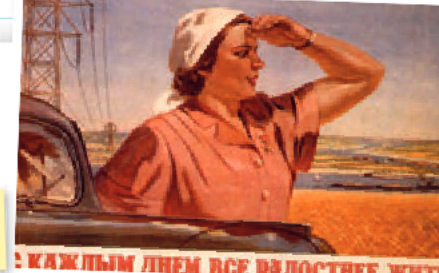
The gap between socialist promises and reality
The Communist Party claimed the Soviet Union was a "workers' state", but party members consistently received better treatment than ordinary workers. Party officials enjoyed superior housing, better jobs, and special privileges like access to leisure clubs and exclusive facilities.
Under Stalin's rule, nobody enjoyed true freedom as all citizens lived in constant fear of being reported, arrested, or sent to labour camps. The secret police maintained close surveillance over everyone's daily lives, creating an atmosphere of suspicion and terror.
Important
The Reality of Soviet "Equality"
While the Soviet Union officially promoted classless society, a clear hierarchy existed with Communist Party officials at the top, urban workers in the middle, and collective farm workers at the bottom.
Key timeline of changes
Example
Major Developments in Soviet Living Conditions
- 1928-39: Major economic and social transformation period under Stalin's Five-Year Plans
- 1932: Introduction of internal passports restricting movement from rural to urban areas
- 1935: End of the food rationing system that had controlled diets since the Revolution
- 1941: By this date, living conditions had changed greatly from the Tsarist era, though new problems had emerged
Summary
Key Points to Remember:
- Living standards improved compared to Tsarist times, but significant problems remained, especially overcrowding and limited personal freedom
- Food was rationed until 1935 with different grades showing continued class divisions despite socialist ideals
- Rural workers faced much worse conditions than urban workers, with collective farm workers treated as the lowest social class
- Communist Party members enjoyed better housing, jobs, and special privileges while ordinary workers struggled
- Internal passports from 1932 prevented rural workers from moving to cities, keeping them tied to collective farms