Early decrees and execution of the tsar (Edexcel GCSE History): Revision Notes
📚Revision Notes
Early decrees and execution of the tsar

Following the October Revolution of 1917, the Bolsheviks moved quickly to consolidate their power and implement their revolutionary agenda. During their first months in control, they passed a series of crucial decrees and took decisive action against potential threats to their authority, including the ultimate elimination of the royal family.
The four early decrees (November 1917)
The Bolsheviks understood that they needed to act swiftly to maintain popular support and establish their legitimacy. In November 1917, they issued four groundbreaking decrees that would fundamentally reshape Russian society.
Note
These four early decrees were strategically designed to address the most pressing concerns of different groups in Russian society - soldiers wanted peace, peasants wanted land, workers wanted better conditions, and ethnic minorities wanted recognition. By addressing these needs immediately, the Bolsheviks secured crucial support during their vulnerable early period.
Decree on Peace (8 November 1917)
This decree addressed Russia's desperate need to exit World War I. The Bolsheviks declared that all countries should seek peace immediately. Crucially, they specified that peace should be achieved without annexations (taking territory) or indemnities (demanding large compensation payments). This policy resonated with war-weary Russian soldiers and civilians who had suffered enormously during the conflict.
Decree on Land (8 November 1917)
The land decree tackled one of Russia's most pressing social issues. It declared that land taken from wealthy landowners now belonged to the peasants. This revolutionary redistribution of property fulfilled a long-standing peasant demand and helped secure rural support for the Bolshevik government. In December, the decree was extended to include Church land, which was also nationalised.
Decrees on workers' rights (November-December 1917)
These decrees dramatically improved conditions for industrial workers. The Decree on Work established an 8-hour working day, a significant reduction from previous practices. The Decree on Unemployment Insurance provided financial support for those unable to work, creating an early form of social safety net. Perhaps most radically, the Decree on Workers' Control allowed workers' committees to run their own factories, giving ordinary labourers unprecedented power over their workplaces.
Example
Practical Impact: Factory Workers' Control
Before the decree: A textile factory in Petrograd was managed by wealthy owners who set 12-hour shifts and provided no sick pay.
After the decree: The same factory was now run by a workers' committee who implemented the 8-hour day, established a fund for injured workers, and gave employees a direct voice in production decisions.
Decree on Nationalities (November 1917)
This decree addressed the complex ethnic makeup of the former Russian Empire. It granted different peoples within the old Russian territories the right to have their own governments. However, these new governments remained under Bolshevik control, meaning that while local autonomy was acknowledged, ultimate authority stayed with the revolutionary leadership.
The abolition of the Constituent Assembly
Lenin had previously promised to hold a general election for a Constituent Assembly, which would create a new democratic government for Russia. However, when the elections took place, the results were disappointing for the Bolsheviks. The Socialist Revolutionaries (SRs) won 53% of the vote, while the Bolsheviks secured only 24%.
Rather than accept this democratic setback, the Bolsheviks declared that returning to parliamentary democracy would be a backwards step for a country that already had soviets (workers' councils). When the first meeting of the Constituent Assembly convened on 5 January 1918, it refused to pass the Bolsheviks' key decrees or accept the principle of all power belonging to the soviets.
Important
The shutdown of the Constituent Assembly after just one day marked a crucial turning point in Russian history. This action demonstrated that the Bolsheviks were willing to abandon democratic principles entirely when they conflicted with their hold on power. It established the precedent that would characterise Soviet rule for decades to come.
Lenin's response was swift and decisive. After just one day, he ordered the Red Guards to shut down the Assembly permanently. This action marked the end of any pretence of democratic government and demonstrated the Bolsheviks' determination to hold power regardless of electoral results.
The establishment of the Cheka
On 7 December 1917, Lenin created the Cheka, officially known as the Extraordinary Commission to Combat Counter-Revolution, Sabotage and Speculation. Lenin justified this secret police organisation by claiming that the revolution was under threat from class enemies of the workers and peasants, particularly the burzhui (people who had belonged to the middle or upper classes before the October Revolution).
Note
The term "burzhui" was a derogatory Bolshevik term derived from "bourgeoisie." It was deliberately used to dehumanise former middle and upper-class citizens, making it easier to justify their persecution and elimination. Anyone could be labelled burzhui based on their pre-revolutionary status, possessions, or even associations.
The Cheka became a powerful tool of political repression. Bolshevik supporters could easily denounce anyone they suspected of being burzhui, and such accusations often led to arrest, property confiscation, and severe punishment. The organisation became the primary mechanism through which the Bolsheviks used terror to consolidate their control over Russia and the territories of the former empire.
The execution of the tsar and his family
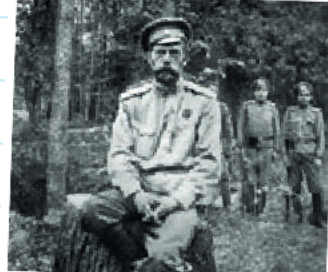
The former Tsar Nicholas II and his family had been held as prisoners by the Bolsheviks since 1918, kept captive in Yekaterinburg in the Ural mountains. Nicholas, his wife Alexandra, their five children, and four servants remained under guard as the Russian Civil War intensified.
The royal family represented a significant potential threat to Bolshevik power. Monarchist supporters could have used them as a rallying point for counter-revolution, potentially undermining everything the Bolsheviks had achieved. As anti-Bolshevik forces began closing in on Yekaterinburg in July 1918, the local Bolshevik leadership decided to eliminate this threat permanently.
Important
The execution of the entire royal family, including the children, demonstrated the ruthless pragmatism of Bolshevik rule. By eliminating any potential claimants to the throne, they ensured that monarchist opposition could never unite around a legitimate royal figure. This brutal calculation became typical of how the Bolsheviks dealt with perceived threats.
On 17 July 1918, the Bolsheviks executed Nicholas II, his wife, children, and servants. This brutal act ensured that there could be no restoration of the monarchy and removed a powerful symbol around which opposition forces might have united.
Timeline of key events
Summary
Chronology of Bolshevik Consolidation (1917-1918)
- 8 November 1917: Decree on Peace and Decree on Land issued
- November-December 1917: Decrees on workers' rights implemented
- November 1917: Decree on Nationalities issued
- 7 December 1917: Cheka established by Lenin
- 5 January 1918: First (and final) meeting of Constituent Assembly
- 6 January 1918: Lenin orders Red Guards to shut down Constituent Assembly
- 17 July 1918: Execution of Tsar Nicholas II and his family at Yekaterinburg
Summary
Key Points to Remember
-
The four early decrees established Bolshevik policies on peace, land redistribution, workers' rights, and nationalities, helping to secure popular support in their first months of power
-
The Constituent Assembly was abolished after just one day because it refused to accept Bolshevik authority, marking the end of democratic government in revolutionary Russia
-
The Cheka was created as a secret police force to use terror against political opponents, particularly targeting the burzhui (former middle and upper classes)
-
The execution of the royal family eliminated a potential rallying point for counter-revolution and demonstrated the Bolsheviks' ruthless determination to maintain power
-
These early actions between November 1917 and July 1918 established the pattern of Bolshevik rule: popular policies combined with political repression and the elimination of opposition