Czechoslovakia and the Prague Spring Cold War crises (Edexcel GCSE History): Revision Notes
📚Revision Notes
Czechoslovakia and the Prague Spring (1968)
Background: Soviet control of Czechoslovakia
Following World War II, Czechoslovakia became one of the Soviet Union's satellite states in Eastern Europe. Under strict communist rule, the country experienced significant hardships that created growing discontent among its people.
Note
The term "satellite states" refers to countries that were nominally independent but were actually under the political and military influence of the Soviet Union during the Cold War period.
The harsh realities of Soviet-imposed communism in Czechoslovakia included severely declining living standards and economic conditions. The communist government systematically eliminated any form of political opposition, creating an authoritarian system that became increasingly unpopular with ordinary citizens. This repressive environment set the stage for the dramatic changes that would emerge in 1968.

Alexander Dubček becomes leader
In January 1968, Alexander Dubček rose to power as the new Czechoslovakian leader, marking the beginning of a transformative period in the country's history. Dubček brought a unique perspective to communist leadership - he maintained a close friendship with Soviet leader Leonid Brezhnev, which initially provided him with some protection from Moscow's interference.
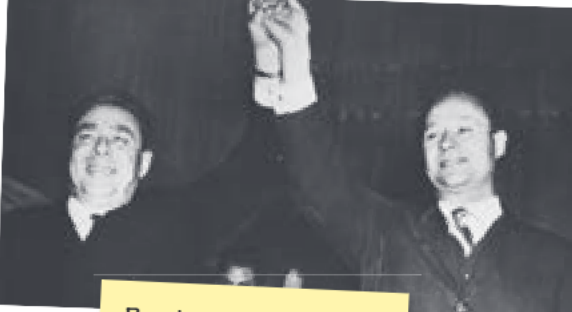
Despite being a committed communist who supported the Warsaw Pact alliance, Dubček recognised that the current system was failing the Czechoslovak people. He believed that communism could be improved and reformed to create a more humane and liveable society. Dubček termed his vision "socialism with a human face", emphasising his desire to maintain communist principles while making life better for ordinary citizens.
The Prague Spring reforms
Dubček's reform programme, which became known as the Prague Spring, began in April 1968 and represented a significant departure from traditional Soviet-style communism. These reforms aimed to create greater freedom and democracy while remaining within the communist framework.
Important
The Prague Spring represented the most significant challenge to Soviet-style communism in Eastern Europe since World War II. It demonstrated that reform within the communist system was possible, but also highlighted the limits of Soviet tolerance for change.
The most significant changes included:
- Relaxing censorship laws - allowing people much greater freedom to express their opinions and criticise the government, even when their views challenged communist ideology
- Democratic political reforms - other political parties were permitted to operate alongside the Communist Party, giving citizens genuine political choices for the first time in decades
- Reduced Soviet control - giving the national parliament more power and autonomy to make decisions
- Economic reforms - introducing elements of "market socialism", allowing some capitalist features to be incorporated into the planned economy
- Limiting secret police powers - significantly curtailing the feared secret police, reducing the climate of surveillance and intimidation
How Czechoslovaks responded to the reforms
The Prague Spring generated mixed reactions among different groups within Czechoslovak society. Students, intellectuals, workers, and younger Communist Party members enthusiastically welcomed Dubček's reforms, seeing them as long-overdue improvements that would create a more open and prosperous society.
This popular support led to an explosion of creativity and political discussion. Writers such as Václav Havel and Milan Kundera began producing works that were highly critical of Soviet-style communism, taking advantage of the relaxed censorship to express ideas that had been suppressed for decades.
However, not all Czechoslovaks supported these changes. Members of the secret police and some senior army officers strongly resented the reforms because they resulted in a significant loss of their power and privileged status within society. This internal division would prove to be a crucial factor in subsequent events.
International communist response
The Prague Spring sent shockwaves throughout the communist world, causing considerable alarm among other Eastern European communist leaders. Many older Czechoslovak communists feared that these reforms would lead to the complete collapse of communist rule in their country, undermining decades of socialist construction.
Note
The "domino theory" was a major concern for communist leaders - they worried that if one country successfully reformed or abandoned communism, others would quickly follow, leading to the collapse of the entire Eastern Bloc.
Communist leaders in other Eastern European nations, particularly Eric Honecker in East Germany, shared these concerns. They worried that the Prague Spring would inspire similar reform movements in their own countries, potentially threatening communist control throughout the entire Eastern Bloc.
Soviet leader Leonid Brezhnev found himself facing an extremely difficult dilemma. On one hand, Dubček was his personal friend, and taking military action would severely damage the Soviet Union's international reputation and relationships with other communist parties. On the other hand, allowing the reforms to continue unchecked might encourage similar movements elsewhere, potentially leading to the collapse of the entire Eastern European communist system.
This situation created enormous tension within the Warsaw Pact alliance and forced communist leaders to confront fundamental questions about the future direction of socialism in Eastern Europe.
Timeline of key events
- January 1968: Alexander Dubček becomes Czechoslovakian leader
- April 1968: The Prague Spring begins with major political reforms
- 1968: Censorship relaxed, allowing criticism of communism
- 1968: Economic and political reforms implemented throughout the year
- 1968: Growing concern among other Warsaw Pact nations about reform movement
Summary
Key Points to Remember:
- Alexander Dubček wanted to create "socialism with a human face" - reforming communism to make it more humane while keeping its basic principles
- The Prague Spring (April 1968) introduced major reforms including relaxed censorship, more democracy, reduced Soviet control, and economic changes
- Czechoslovak society was divided - students and intellectuals supported reforms, but secret police and army officers opposed losing their power
- Other communist leaders feared the Prague Spring would spread to their countries and threaten communist rule across Eastern Europe
- Brezhnev faced a dilemma between friendship with Dubček and maintaining Soviet control over Eastern Europe, creating increased international tension