Billy the Kid and Wyatt Earp (Edexcel GCSE History): Revision Notes
📚Revision Notes
Billy the Kid and Wyatt Earp
The challenge of law and order in the West
During the late 1800s, the American West faced serious challenges in maintaining law and order. As the frontier expanded, conflicts arose between different groups trying to make a living in harsh conditions. Two famous figures - Billy the Kid and Wyatt Earp - represent different sides of these tensions, showing how difficult it was to establish effective law enforcement in the West.
Note
The American frontier period (roughly 1850s-1890s) was characterised by rapid westward expansion, mining booms, cattle ranching, and the absence of established legal institutions. This created a perfect storm for lawlessness and vigilante justice.
Billy the Kid: The outlaw's story
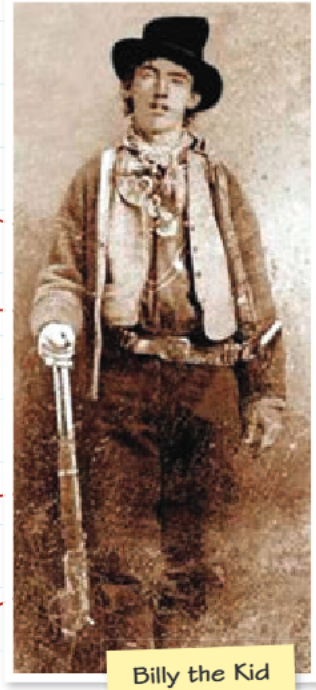
Billy the Kid became one of the West's most notorious outlaws, but his story reveals much about the conditions that created lawlessness on the frontier.
Early life and the path to crime
Billy grew up in extreme poverty, which pushed him towards stealing as a means of survival. This highlights how economic hardship in the West often drove people to crime when legitimate opportunities were scarce.
The Lincoln County War (1878)
Example
Historical Example: The Lincoln County War
The Lincoln County War was a violent conflict that erupted in New Mexico Territory between competing factions:
- Large operations: Established cattle barons like John Chisum controlled vast territories
- Small ranchers: Struggled to compete and often clashed with the established powers
- Personal vendettas: When Billy's friends were killed, he swore revenge, escalating the conflict from business dispute to personal war
Billy became deeply involved in a violent conflict known as the Lincoln County War. This was a range war between large cattle operations (like that of John Chisum) and smaller ranchers. When friends of Billy were killed in this conflict, he swore revenge, showing how personal grievances could escalate into broader violence.
Gang activities and weak law enforcement
Billy formed a gang that caused widespread chaos across New Mexico. The fact that his gang could operate so freely demonstrates several key problems with law enforcement in the West:
Important
Key Problems with Frontier Law Enforcement:
The following factors made effective law enforcement nearly impossible in the American West:
- Corruption and intimidation: Local law enforcement was often weak and had been compromised by the ongoing range war
- Geography: The vast, remote areas of the West made it easy for outlaws to escape and hide from the law
- Limited resources: There simply weren't enough lawmen to patrol such huge territories effectively
The end comes with new leadership
Only when a new governor appointed Pat Garrett as sheriff could the law finally be enforced effectively. Garrett tracked down and shot Billy dead in 1881, but this shows how dependent law and order was on having the right people in charge.
Note
Pat Garrett's success in tracking down Billy the Kid demonstrated that effective law enforcement was possible, but required dedicated, competent leadership and adequate resources - luxuries that were rare in the frontier West.
Why Billy became glamorous
Despite his criminal activities, many people saw Billy as glamorous and exciting. This reveals how poverty and limited opportunities made outlaw life seem appealing to some, even though it was dangerous and ultimately destructive.
Wyatt Earp: The controversial lawman
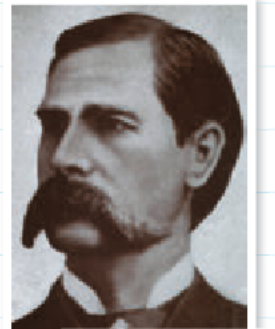
Wyatt Earp's career shows how even law enforcement officers faced moral dilemmas and used questionable methods in the Wild West.
Early career in law enforcement
Earp first became involved in law enforcement after being arrested for fighting in Wichita. Ironically, this experience with the law led to him becoming a deputy marshal, showing how flexible the boundaries between lawman and outlaw could be in the West.
Moving to Tombstone (1879)
By 1879, Earp had moved to the booming mining town of Tombstone, Arizona. Here, wealthy business owners were fighting for control of the area against ranchers and cowboys, led by groups like the Clantons and McLaurys. This conflict between economic interests created the perfect conditions for violence.
Aggressive policing methods
In 1880, local business owners hired Earp as deputy sheriff to end the fight in their favour. However, Earp and his brothers became known for their aggressive policing tactics. They frequently clashed with the Clantons and McLaurys, and some people began to question whether the Earps were actually increasing lawlessness rather than reducing it.
The OK Corral gunfight (October 1881)
Example
Historical Example: The OK Corral Gunfight
Date: October 26, 1881 Location: Tombstone, Arizona Participants: Wyatt Earp, his brothers Virgil and Morgan, and Doc Holliday vs. the Clanton and McLaury families Outcome: Three cowboys killed, but the aftermath proved more significant than the shootout itself Significance: The event highlighted how unclear the line between justice and vigilantism had become in frontier towns
The tension between the Earps and their opponents came to a head in the famous gunfight at the OK Corral. In this shootout, Earp and his brothers fought against cowboys who supported the Clantons and McLaurys. Three cowboys died, but witnesses disagreed about whether this was self-defense or murder, showing how unclear the line between justice and vigilantism had become.
Continuing violence and departure
Even after the OK Corral gunfight, the violence continued. One of Wyatt's brothers was killed, and Wyatt led a posse that killed three cowboys in return. By 1882, public opinion had turned against the Earps, who were now seen as murderers rather than lawmen. They left Tombstone, their reputation destroyed.
The blurred line between lawman and criminal
Important
The Reality of Frontier Law Enforcement:
Wyatt Earp's story demonstrates a crucial problem in the American West - the similarity between law officers and the criminals they were supposed to stop. Consider these facts:
- Earp himself had been arrested nine times before becoming a lawman
- Many other officers had criminal backgrounds
- The shortage of qualified candidates meant communities often had to accept imperfect law enforcement
Wyatt Earp's story demonstrates how similar law officers could be to the criminals they were supposed to stop. Earp himself had been arrested nine times and many other officers had criminal backgrounds. This shows how the shortage of qualified lawmen meant that communities often had to accept imperfect candidates for law enforcement positions.
What these cases reveal about law and order
Both Billy the Kid and Wyatt Earp's stories illuminate the major challenges facing law enforcement in the American West:
- Economic conflicts drove much of the violence, as different groups competed for resources and control
- Geographic challenges made it difficult to maintain consistent law enforcement across vast territories
- Weak institutions meant that law enforcement depended heavily on individual personalities rather than systematic approaches
- Blurred moral boundaries existed between lawmen and outlaws, making it hard to establish clear standards of justice
Note
These challenges weren't unique to the American West - they appear whenever societies experience rapid change, weak institutional control, and economic competition for scarce resources.
Timeline of key events
- 1878: Billy the Kid becomes involved in the Lincoln County War
- 1879: Wyatt Earp moves to Tombstone and begins conflict with local ranchers
- 1880: Business owners hire Earp as deputy sheriff
- October 1881: OK Corral gunfight takes place
- 1881: Pat Garrett shoots and kills Billy the Kid
- 1882: Earps leave Tombstone after public opinion turns against them
Remember!
Summary
Key Points to Remember:
- Billy the Kid and Wyatt Earp represent the challenges of establishing law and order in the American West during the 1870s-1880s
- Economic conflicts, geographic isolation, and weak institutions all contributed to lawlessness on the frontier
- Billy the Kid showed how poverty and limited opportunities could drive people to crime, while his gang's success revealed weaknesses in law enforcement
- Wyatt Earp demonstrated how lawmen could become as controversial as the criminals they pursued, blurring the lines between justice and vigilantism
- Both cases highlight how dependent law and order was on individual personalities rather than systematic institutions in the frontier West