Greensboro and the sit-in movement (Edexcel GCSE History): Revision Notes
📚Revision Notes
Greensboro and the sit-in movement
The Greensboro sit-ins of 1960 marked a turning point in the American civil rights movement. These peaceful protests at a lunch counter in North Carolina grew into a nationwide mass movement that challenged racial segregation in public places and demonstrated the power of non-violent direct action.
What was a sit-in?
Note
A sit-in was a form of non-violent protest where demonstrators refused to leave a designated place or area, even when asked to do so. This peaceful resistance method became a powerful tool for challenging segregation policies.
The events at Greensboro, February 1960
The first sit-in - 1 February 1960
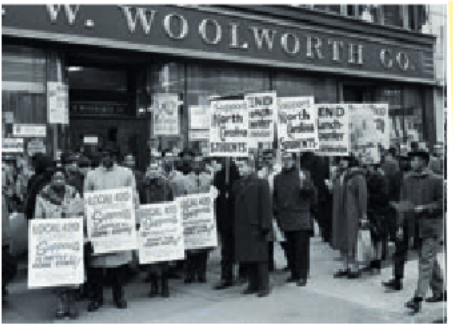
On 1 February 1960, four Black students from North Carolina made history. David Richmond, Jibreel Khazan (formerly Ezell Blair), Franklin McCain, and Joseph McNeil walked into the Woolworth department store in Greensboro and sat at the segregated lunch counter. They knew they would be asked to leave the "whites only" area, but instead of leaving, they remained seated until closing time.
Their goal was simple but powerful: to generate publicity that would force Woolworth to end their segregation policy. This act of quiet defiance would spark a movement that spread across the American South.
Rapid growth of the movement
The response was immediate and overwhelming:
- The next day, 25 more students joined the Greensboro sit-in
- By 4 February, there were more than 300 students participating, including both Black and white supporters working in shifts to maintain continuous protest
- Within a week, the sit-ins had spread to other towns across North Carolina
Important
Economic Impact and Results
The economic pressure was significant. Due to lost earnings and business disruption, the Greensboro Woolworth store desegregated in July 1960. However, the impact varied across the South - some Woolworth stores didn't desegregate until 1965, despite ongoing sit-in protests.
Organisation of the sit-ins
Role of established civil rights groups
As the Greensboro sit-ins gained momentum, established civil rights organisations stepped in to provide support:
- CORE (Congress of Racial Equality) and the SCLC (Southern Christian Leadership Conference) sent experienced campaigners to train students in non-violent protest methods
- These organisations helped coordinate the growing movement and provided crucial guidance
Note
The involvement of established organisations was crucial for providing training in non-violent protest methods and helping to coordinate what was becoming a rapidly expanding movement across multiple states.
Formation of SNCC
On 15 April 1960, a significant development occurred with the establishment of the Student Nonviolent Coordinating Committee (SNCC). This new organisation was created specifically to organise non-violent protests, building on methods previously used by Martin Luther King Jr. and CORE.
SNCC trained students to cope with the hostility and harassment they faced during sit-ins and other demonstrations, including being sworn at, pushed, and having drinks thrown over them.
Key principles of non-violent direct action
Note
The Three Core Principles
The movement operated according to strict principles:
- Demonstrate peacefully and visibly - make your protest clear but non-threatening
- Do not rise to provocation - remain calm even when faced with hostility
- Show your opponent up as a violent oppressor - let their aggressive response demonstrate who was truly in the wrong
Significance of the Greensboro sit-ins
Challenging segregation nationwide
The sit-ins were highly visible forms of public protest that directly challenged segregation in public spaces across the USA. They demonstrated that peaceful resistance could be an effective tool for social change.
Media coverage and public support
The sit-ins received positive news coverage, which helped build support from both Black and white Americans in the North and South. This media attention was crucial in spreading the movement and gaining broader public sympathy.
Note
The positive media coverage was particularly important because it helped shift public opinion and demonstrated to a national audience the peaceful nature of the protesters versus the often hostile reactions they faced.
Rapid spread across the country
Existing civil rights groups and their established structures helped the sit-ins spread quickly across different states. The movement had momentum that civil rights organisations could harness and direct effectively.
Diverse participation
The movement attracted support from various groups:
- White and Black supporters: Some white Southerners joined CORE and SNCC, showing that opposition to segregation crossed racial lines
- Young people: Many young Americans believed segregated lunch counters were wrong and humiliating, and were keen to protest against them
- Mass participation: Large numbers of protesters took part - approximately 500,000 people participated in sit-ins by autumn 1960
Important
Scale of Participation
By autumn 1960, approximately 500,000 people had participated in sit-ins nationwide, demonstrating the massive scale and broad appeal of this form of peaceful protest.
Timeline of key events
- 1 February 1960: Four Black students begin sit-in at Woolworth lunch counter in Greensboro
- 2 February 1960: 25 more students join the protest
- 4 February 1960: Over 300 students participating, including white supporters
- February 1960: Sit-ins spread to other North Carolina towns
- 15 April 1960: Student Nonviolent Coordinating Committee (SNCC) established
- July 1960: Greensboro Woolworth store desegregates
- Autumn 1960: Approximately 500,000 people participate in sit-ins nationwide
Summary
Key Points to Remember:
- The Greensboro sit-ins began on 1 February 1960 when four Black students refused to leave a segregated Woolworth lunch counter
- The movement grew rapidly, from 4 students to over 300 within days, and spread across the South
- SNCC was formed on 15 April 1960 to organise and coordinate student-led non-violent protests
- Non-violent principles were crucial - demonstrators remained peaceful even when faced with hostility and harassment
- The sit-ins achieved both immediate and long-term success - they forced some businesses to desegregate and inspired a broader civil rights movement involving around 500,000 people by autumn 1960