Continued opposition to the war (Edexcel GCSE History): Revision Notes
📚Revision Notes
Continued opposition to the war
The period from 1964-75 saw growing resistance to American involvement in Vietnam, particularly following two shocking events that galvanised public opinion against the war. The My Lai Massacre of 1968 and the Kent State University shootings of 1970 became turning points that dramatically increased opposition to the conflict and exposed the true costs of the war both abroad and at home.
Note
These two events represent critical moments when the Vietnam War's impact extended beyond the battlefield, fundamentally changing how Americans viewed both the conflict and their own government's actions.
The My Lai Massacre, 1968
On March 16, 1968, American forces carried out one of the most horrific acts of the entire Vietnam conflict. This event would later become a symbol of everything that had gone wrong with the American military campaign and would fuel massive public outcry against the war.
What happened at My Lai
American soldiers were deployed to the village of My Lai in South Vietnam with expectations that they would encounter Vietcong forces. However, when they arrived, the troops discovered only civilians - women, children, and elderly men. Despite finding no enemy combatants, the soldiers proceeded to kill everyone they found in the village.
Important
The death toll was staggering, with at least 347 civilians confirmed dead, though some estimates suggest the number may have exceeded 500 people. The soldiers also killed the villagers' livestock, adding to the complete destruction of the community.
The massacre was documented by Sergeant Ron Haeberle, a war photographer who accompanied the troops and captured images of the horrific events as they unfolded.
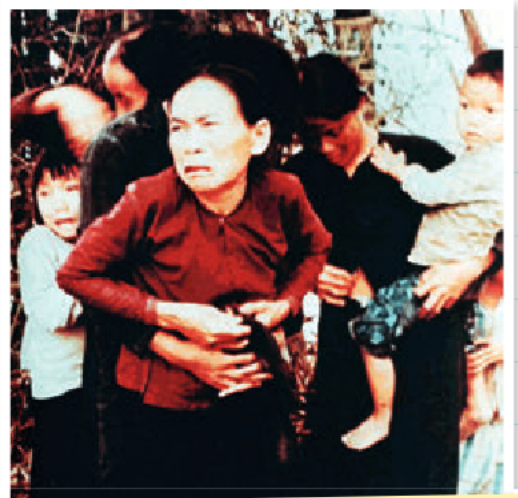
Public reaction to the massacre
When news of My Lai eventually reached the American public, the response was one of shock and disbelief. Many Americans struggled to accept that their military could have committed such acts against innocent civilians. The government faced severe criticism for attempting to suppress information about the incident.
Note
The release of photographs showing the aftermath of the massacre to CBS News in December created a media sensation. These powerful images brought the reality of what had happened directly into American homes, making it impossible for the public to ignore the brutal truth.
The visual evidence sparked serious questions about the conduct of American forces in Vietnam and contributed to a significant shift in public opinion about the war.
Trial of Lt Calley
Lieutenant William Calley, who had led the military operation at My Lai, became the central figure in the subsequent investigation and trial. Calley defended his actions by claiming he had been following direct orders from his superior officers when the massacre occurred.
However, the Peers Enquiry, which investigated the incident, determined that Calley had indeed been acting under orders and revealed that high-ranking army officials, including generals, had been involved in covering up the massacre. This discovery raised serious questions about accountability within the military hierarchy.
Important
Calley was ultimately found guilty of murdering 22 civilians and received a life imprisonment sentence. However, his punishment was later reduced to just three years, which many viewed as inadequate given the severity of his crimes. Controversially, despite evidence that 18 other officers had charges brought against them in connection with the massacre, Calley was the only soldier who actually faced trial.
Kent State University shootings, 1970
The anti-war movement at home reached a tragic climax in May 1970 when National Guard troops opened fire on student protesters at Kent State University in Ohio. This incident transformed campus opposition to the Vietnam War and demonstrated how the conflict was literally coming home to America.
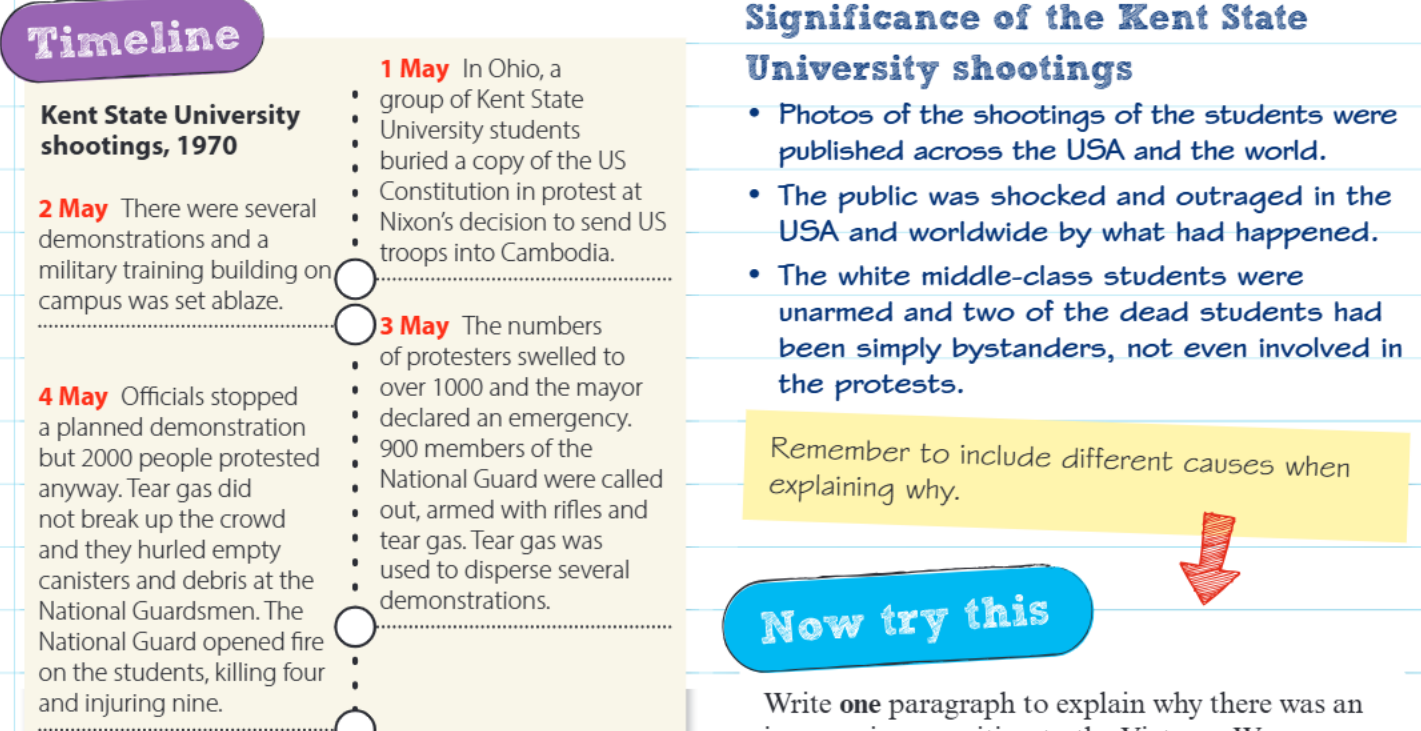
Timeline of events
The crisis at Kent State unfolded over several days in early May 1970:
- May 1st: Students organised protests against both the Vietnam War and President Nixon's decision to expand military operations into Cambodia
- May 2nd: Demonstrations continued with multiple gatherings and a military training building being set on fire
- May 3rd: Protesters grew to over 1000 students, prompting the mayor to declare a state of emergency. 900 members of the National Guard were called in with rifles and tear gas
- May 4th: Around 2000 students gathered despite official attempts to prevent the demonstration
Important
The situation reached its devastating conclusion on May 4th when National Guard soldiers opened fire on the students, killing four and injuring nine others. The tear gas had proven ineffective due to wind conditions, leading to confusion and tension that culminated in the tragic shootings.
Significance of the Kent State shootings
The Kent State shootings had profound and lasting impacts that extended far beyond the university campus. Photographs of the tragic events were published throughout the United States and around the world, creating a powerful visual record that shocked people globally.
The American public was horrified and outraged by what had happened. The idea that the government would use armed force against its own citizens, particularly students exercising their right to protest, fundamentally changed how many people viewed both the Vietnam War and the government's response to domestic opposition.
Note
Perhaps most significantly, the victims at Kent State were unarmed white middle-class students, and two of those killed had not even been participating in the protests - they were simply bystanders. This fact made the shootings particularly shocking to many Americans who had previously been less concerned about anti-war protests.
The Kent State shootings became a powerful symbol of how the Vietnam War was destroying American society from within, and they significantly increased opposition to the conflict across all sections of society.
Summary
Key Points to Remember:
-
The My Lai Massacre revealed the brutal reality of American military conduct in Vietnam, with over 347 civilians killed, shocking the American public when the truth emerged
-
Lt Calley was the only soldier prosecuted for My Lai despite evidence of a wider cover-up involving high-ranking officials, raising questions about military accountability
-
The Kent State shootings on May 4, 1970, saw National Guard troops kill 4 students and wound 9 others during anti-war protests, bringing the violence of the Vietnam conflict to American soil
-
Both events were captured in powerful photographs that were distributed globally, creating visual evidence that could not be ignored or denied
-
These incidents transformed public opinion by showing that the Vietnam War was causing suffering not just in Southeast Asia, but also corrupting American values and institutions at home