Jewish persecution 2 (Edexcel GCSE History): Revision Notes
📚Revision Notes
Jewish persecution 2
Introduction to escalating persecution
By the mid-1930s, Nazi persecution of Jewish communities became increasingly systematic and violent. Two major developments marked critical turning points in this escalation: the introduction of the Nuremberg Laws in 1935 and the horrific events of Kristallnacht in 1938. These events transformed Jewish life in Germany from discrimination to outright terror and violence.
Important
These two events - the Nuremberg Laws and Kristallnacht - represent a crucial escalation in Nazi policy, moving from social discrimination to legal exclusion and finally to organised violence. Understanding this progression is essential to comprehending how persecution intensified over time.
The Nuremberg Laws, 1935
The Nazi regime introduced comprehensive anti-Jewish legislation that fundamentally changed the legal status of Jewish people in Germany. These laws were announced at a massive Nazi rally where Hitler addressed thousands of supporters.
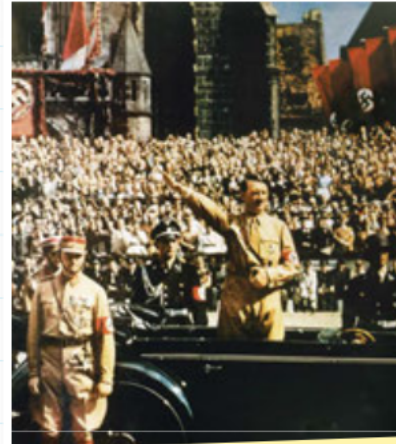
Note
The Nuremberg Laws were named after the city where they were announced during the annual Nazi Party rally. This location was chosen deliberately to give maximum publicity and legitimacy to these discriminatory laws.
The Reich Law on Citizenship
This law created a two-tier citizenship system that excluded Jewish people from German society. The legislation established that only individuals of German blood could be full citizens, while Jewish people were stripped of their citizenship rights entirely. Under these new regulations, Jewish people lost their right to vote and were banned from working in government positions. The law also introduced a humiliating identification requirement, forcing Jewish people to wear yellow star-shaped patches sewn onto their clothing to make them easily identifiable in public.
The Reich Law for the Protection of German Blood and Honour
This second law targeted personal relationships and marriages between Jewish and non-Jewish Germans. The legislation prohibited marriages between Jewish people and German citizens, aiming to prevent what the Nazis called "racial mixing." Additionally, the law banned any sexual relationships between Jewish people and German citizens, making such relationships a criminal offence. These restrictions tore apart existing relationships and isolated Jewish families further from German society.
'Kristallnacht' (the 'Night of the Broken Glass'), 1938
The events of November 1938 represented a dramatic escalation from legal discrimination to organised violence against Jewish communities across Germany.
Timeline of events
Example
Step-by-Step Breakdown: The Events of Kristallnacht
November 7: The violence began when a seventeen-year-old Polish Jewish student entered the German embassy in Paris and shot a German diplomat. This incident provided Nazi leaders with the excuse they needed to launch coordinated attacks against Jewish communities.
November 8: Nazi propaganda minister Joseph Goebbels seized upon this event to stir up resentment against Jewish people throughout Germany. He used the shooting to justify ordering violent attacks on Jewish homes and synagogues, starting in Hanover.
November 9: Goebbels and Hitler made the decision to expand the violence into a nationwide assault on Jewish people and their property. This marked the beginning of the most destructive anti-Jewish pogrom in German history.
November 9-10: During these two terrifying nights, groups of uniformed Nazi members and civilian gangs rampaged through Jewish neighbourhoods across Germany. They systematically destroyed and burned Jewish homes, shops, businesses, and synagogues. The violence was so widespread that broken glass from smashed windows littered the streets, giving the event its name - Kristallnacht or "Night of the Broken Glass."
Consequences and aftermath
The scale of destruction during Kristallnacht was enormous. Approximately one hundred Jewish people were killed during the violence, while hundreds more were injured. The attackers destroyed 814 Jewish shops and businesses, demolished 171 Jewish homes, and burned down 191 synagogues across Germany.
Important
Rather than accepting responsibility for the violence, Nazi leaders blamed Jewish people for the events. This victim-blaming was a deliberate strategy to justify further persecution and shift public opinion against Jewish communities.
Rather than accepting responsibility for the violence, Nazi leaders blamed Jewish people for the events. Goebbels claimed that Jewish people had started the trouble and demanded they pay compensation for the damage. The government imposed a massive fine of one billion marks on the Jewish community, essentially forcing victims to pay for their own persecution.
Timeline of major events
- 1935: Nuremberg Laws introduced, stripping Jews of citizenship and civil rights
- November 7, 1938: Polish Jewish student shoots German diplomat in Paris
- November 8, 1938: Goebbels begins organising anti-Jewish violence
- November 9-10, 1938: Kristallnacht - widespread attacks on Jewish communities
- Post-Kristallnacht: Jewish community fined 1 billion marks for the damage
Note
Notice how quickly events escalated - from the initial shooting on November 7th to nationwide violence just two days later. This rapid progression shows how the Nazi regime was prepared to exploit any incident to justify increased persecution.
Remember!
Summary
Key Points to Remember:
-
The Nuremberg Laws of 1935 legally excluded Jewish people from German citizenship and society, forcing them to wear identifying badges and banning marriages with non-Jewish Germans.
-
Kristallnacht in November 1938 marked a turning point from legal discrimination to organised physical violence against Jewish communities.
-
The Nazi regime used the shooting of a German diplomat as an excuse to launch coordinated attacks, demonstrating how they manipulated events to justify persecution.
-
The scale of Kristallnacht was massive - around 100 deaths, over 800 shops destroyed, and nearly 200 synagogues burned, showing the systematic nature of Nazi anti-Semitism.
-
Jewish people were forced to pay for the damage caused during Kristallnacht, adding financial persecution to the physical and legal oppression they already faced.