Levels of Organisation (OCR GCSE Biology A, Combined (Gateway Science Suite)): Revision Notes
📚Revision Notes
7.2.1 Levels of Organisation
Levels of Organisation in Ecosystems
Note
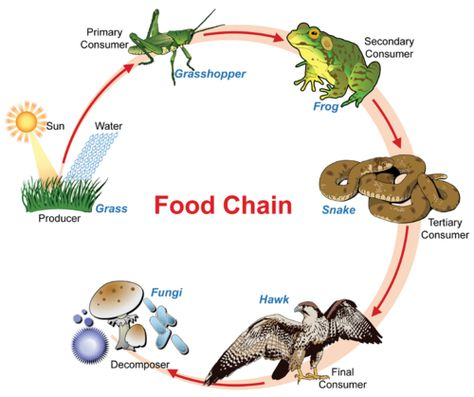
Feeding relationships within an ecosystem are illustrated by food chains, which show how energy is transferred from one organism to another.
- Producers
Note
DEFINITION Producers are organisms, typically green plants or algae, that produce their own food through photosynthesis.
- Role: They convert light energy into chemical energy by making glucose, which is then used to create other biological molecules. These molecules form the biomass that provides energy for other organisms in the food chain.
- Primary Consumers
Note
DEFINITION Primary consumers are herbivores that eat producers.
- Energy Transfer: When primary consumers eat producers, they obtain the energy stored in the biomass of the producers.
- Secondary Consumers
Note
DEFINITION Secondary consumers are carnivores that eat primary consumers.
- Predator-Prey Relationship: In this level, the animals that are eaten are called prey, and the animals that hunt and eat them are known as predators.
- Tertiary Consumers
Note
DEFINITION Tertiary consumers are higher-level carnivores that eat secondary consumers.
- Top Predators: In some ecosystems, tertiary consumers are the apex predators, meaning they have no natural predators.
Studying Ecosystems
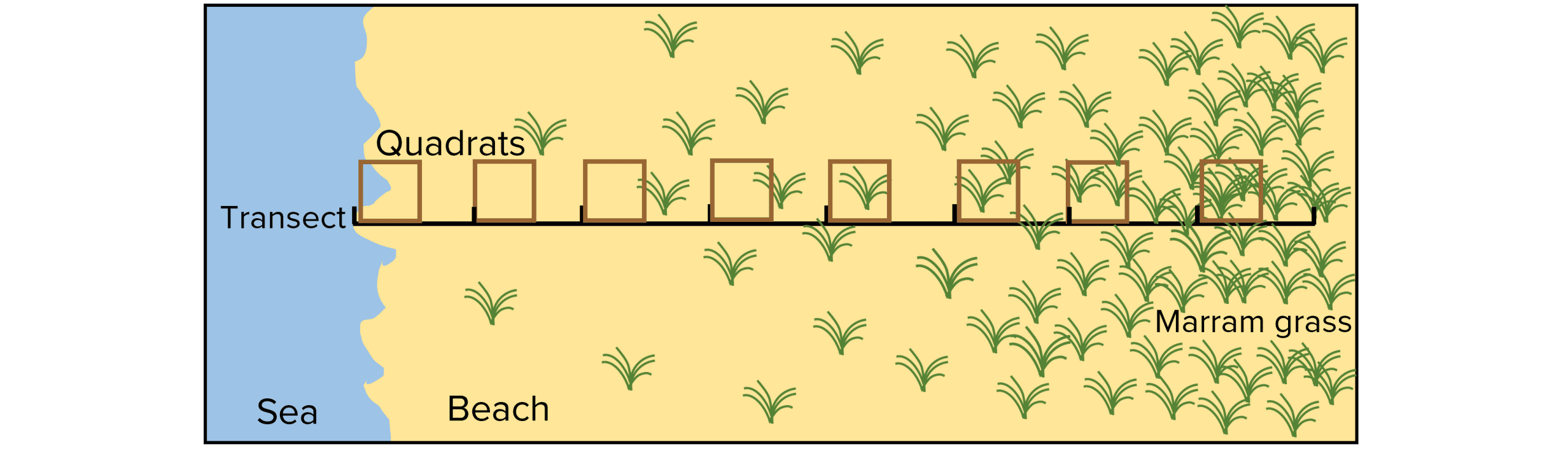
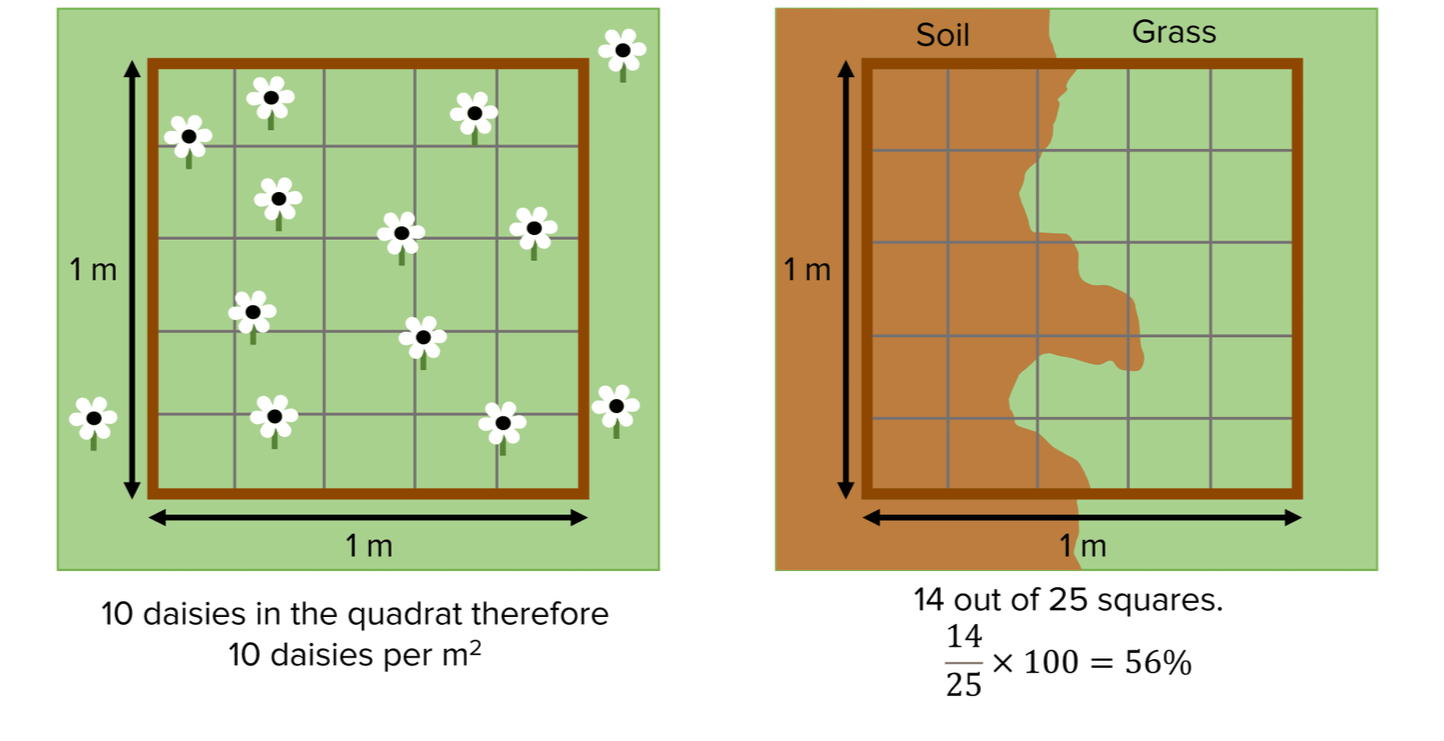
To determine the distribution (where organisms are found) and abundance (how many of them there are) of species in an ecosystem, ecologists use specific tools:
-
Transects: Lines along which samples are taken at regular intervals to study changes in an ecosystem.
-
Quadrats: Square frames used to isolate a standard unit of area for study of the distribution of organisms.
Data Analysis
- Once data is collected using transects and quadrats, it can be analysed by calculating statistical measures such as the mean, mode, and median.
- Results are often represented graphically to show patterns of distribution and abundance.
Population Cycles in Stable Communities
In a stable community, the populations of predators and prey often follow cyclical patterns:
- Increase in Prey Population: Leads to an increase in predator numbers as more food becomes available.
- Decrease in Prey Population: As predators consume more prey, the prey population decreases over time.
- Decrease in Predator Population: When prey becomes scarce, the predator population declines due to lack of food.
- Recovery of Prey Population: With fewer predators, the prey population can begin to increase again. This cyclical relationship helps maintain balance within ecosystems.
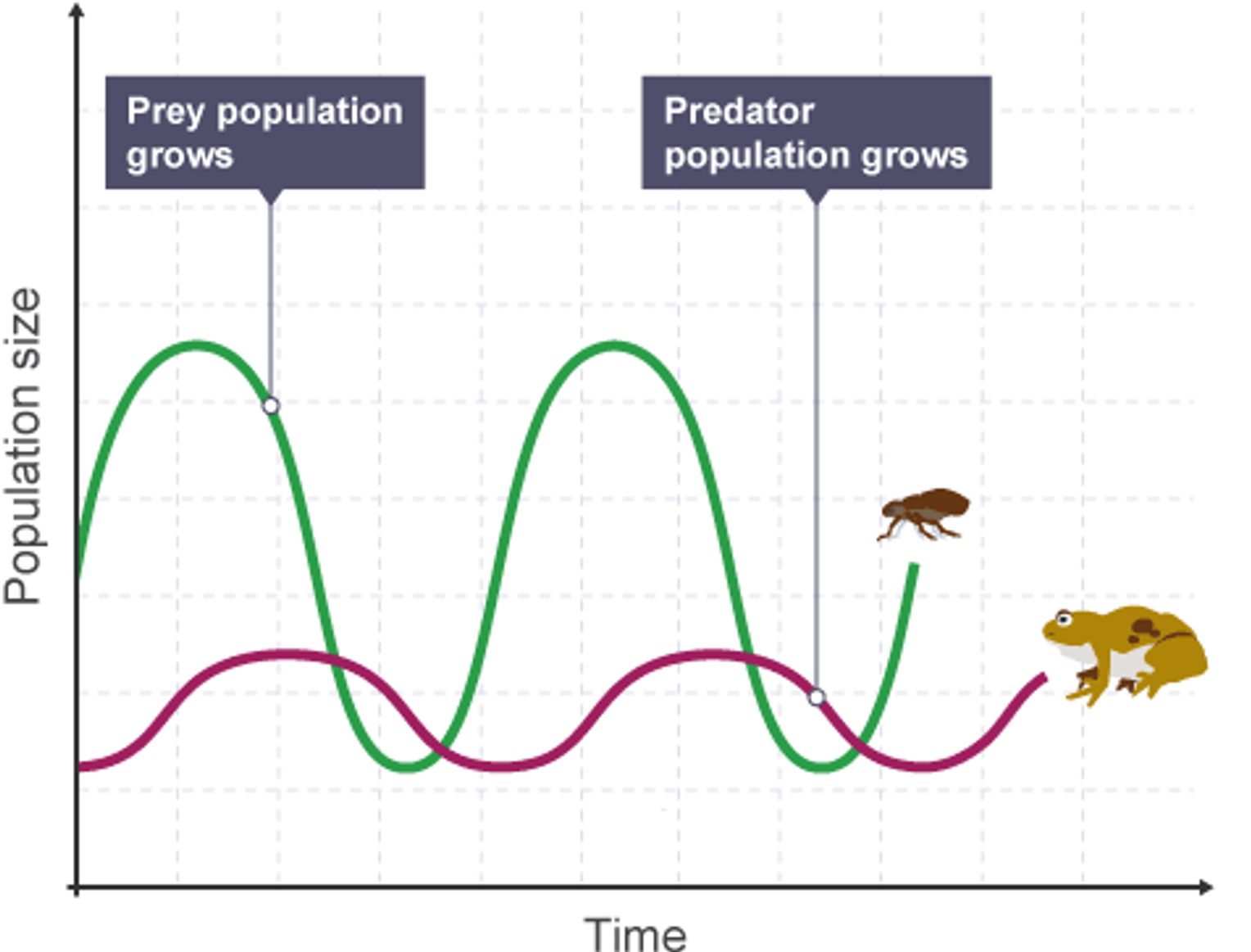
Population cycle