Causes of Atmospheric Pollution (OCR GCSE Chemistry A, Combined (Gateway Science Suite)): Revision Notes
📚Revision Notes
9.3.2 Properties & Effects of Atmospheric Pollutants
Properties & Effects of Atmospheric Pollutants
Note
Fossil fuels often contain impurities, such as sulphur, which can lead to the formation of additional harmful pollutants when burned.
Sulphur and Nitrogen Dioxides
- sulphur Dioxide (SO₂):
- Fossil fuels often contain sulphur impurities. When these fuels are burned at high temperatures, the sulphur is oxidised to form sulphur dioxide (SO₂).
- Nitrogen Oxides (NOₓ):
- Nitrogen from the air can react with oxygen at high temperatures to form nitrogen oxides . Both sulphur dioxide and nitrogen oxides are harmful pollutants.
Effects on Human Health
- Respiratory Issues:
- sulphur dioxide and nitrogen oxides can cause respiratory problems when inhaled. Long-term exposure can also contribute to heart disease.
- Toxic Effects:
- Carbon monoxide and particulate matter from incomplete combustion are particularly dangerous, as they can impair oxygen circulation in the body and cause serious respiratory issues.
Acid Rain
- Formation of Acid Rain:
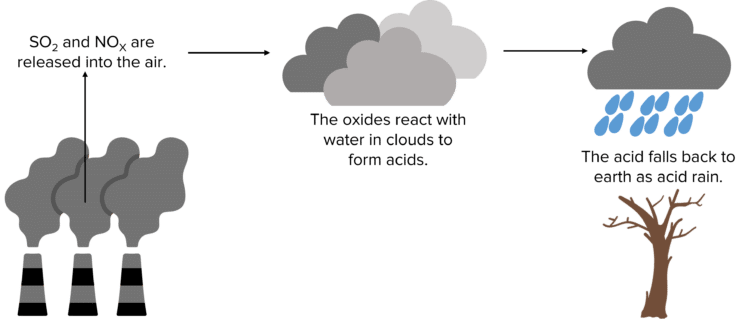
- When sulphur dioxide and nitrogen oxides are released into the atmosphere, they can react with water in clouds to form dilute sulphuric and nitric acids. These acids then fall to the Earth as acid rain.
- Environmental Damage:
- Plants: Acid rain damages plant leaves and increases soil acidity, harming plant growth.
- Aquatic Environments: Acid rain increases the acidity of water bodies, which can be harmful to fish and aquatic plants.
- Man-Made Structures: Buildings and statues made from limestone are particularly vulnerable to acid rain, which corrodes and weakens them over time.
- Corrosion of Metal: Acid rain can corrode metal structures, weakening buildings and other infrastructure, making them less safe.