Crude Oil, Hydrocarbons & Alkanes (OCR GCSE Chemistry A (Gateway Science Suite)): Revision Notes
📚Revision Notes
7.1.1 Crude Oil, Hydrocarbons & Alkanes
Hydrocarbons
Note
Hydrocarbons are compounds that contain only hydrogen and carbon atoms. These atoms are joined together in chains and rings. Hydrocarbons can be either saturated or unsaturated.
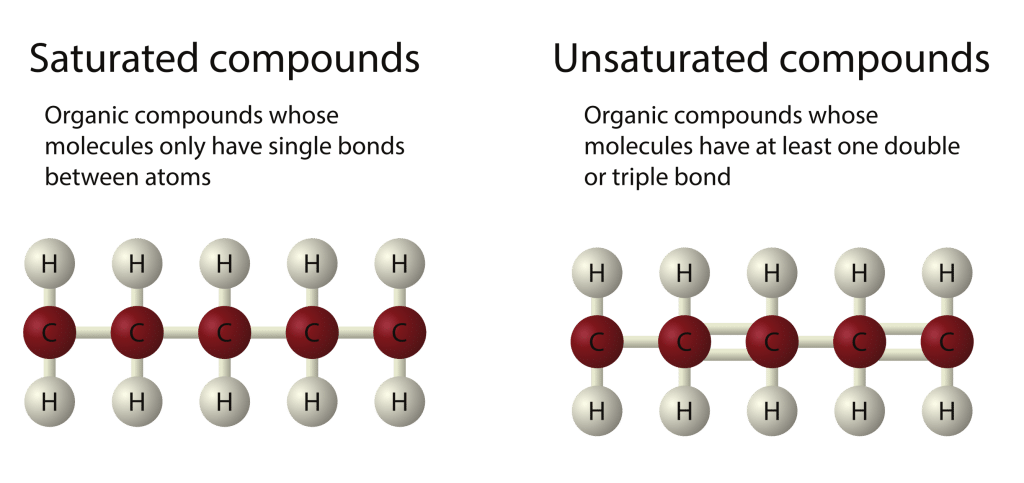
- In this image, the carbon atoms are red, and the hydrogen atoms are grey
Homologous series
To better understand hydrocarbons, scientists have organised them into groups called homologous series. A homologous series is a family of hydrocarbons that have similar properties and share the same general formula. This means that chemically, they all behave in the same way and have similar reactions, including having the same functional group of atoms.
However, hydrocarbons in a homologous series show a gradual variation in physical properties, such as melting and boiling points.
Note
For example, as the number of carbon atoms in a hydrocarbon increases, so does its boiling point. This means that hydrocarbons with longer carbon chains have higher boiling points than those with shorter chains.
Crude Oil
Note
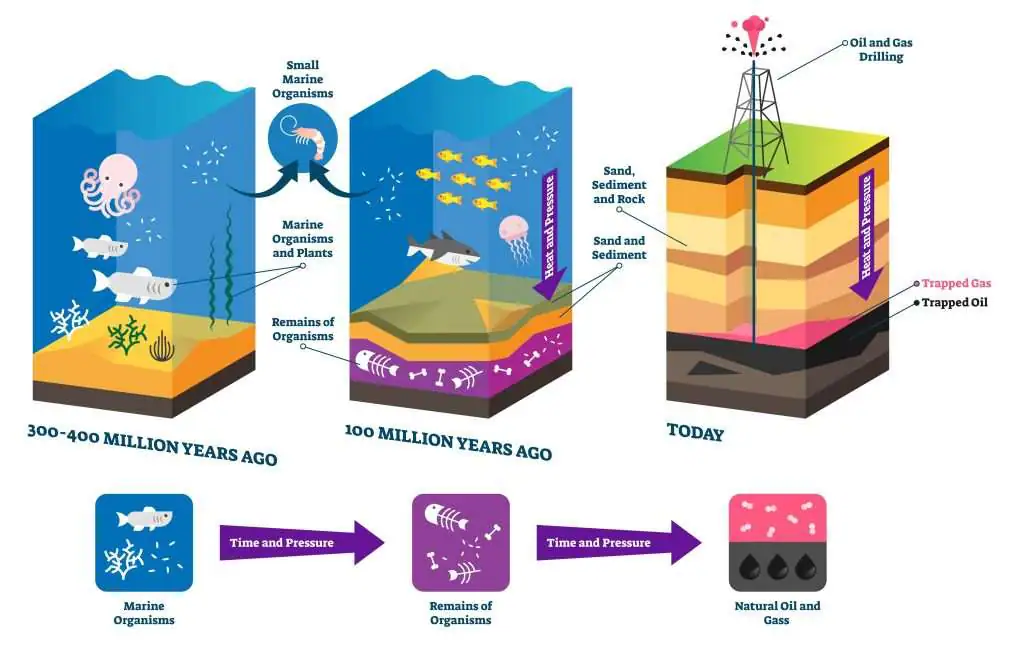
Crude oil (also known as petroleum) is a mixture of different hydrocarbons found deep underground. It naturally formed over millions of years from the remains of dead plants and animals, through a process that involved high heat and pressure.
Note
The appearance of crude oil can vary but it usually appears as a liquid, and we extract it by drilling into the ground. After extraction, the different hydrocarbons in the oil can be separated. It's important to remember that crude oil is a finite (limited) resource. It took millions of years to form, but we are using it much faster than it can be naturally replaced. If we keep burning it for energy, it will eventually run out.
Alkanes
Note
Alkanes are a homologous series of saturated hydrocarbons made up of only carbon and hydrogen atoms. "Saturated" means they have the maximum number of hydrogen atoms possible, with only single bonds between the carbon atoms — no double bonds.
The general formula for alkanes is:
Note
The letter 'n' represents the number of carbon atoms in an alkane molecule. As the number of carbon atoms increases in an alkane chain, its physical properties change, such as a gradual increase in boiling points.
Note
Even though their physical properties vary, alkanes have similar chemical properties. They can burn in combustion, react with halogens, and can also be broken down into smaller molecules through a process called cracking.