Coastal Processes (OCR GCSE Geography A (Geographical Themes)): Revision Notes
📚Revision Notes
3.2.1 Coastal Processes
Erosion
Note
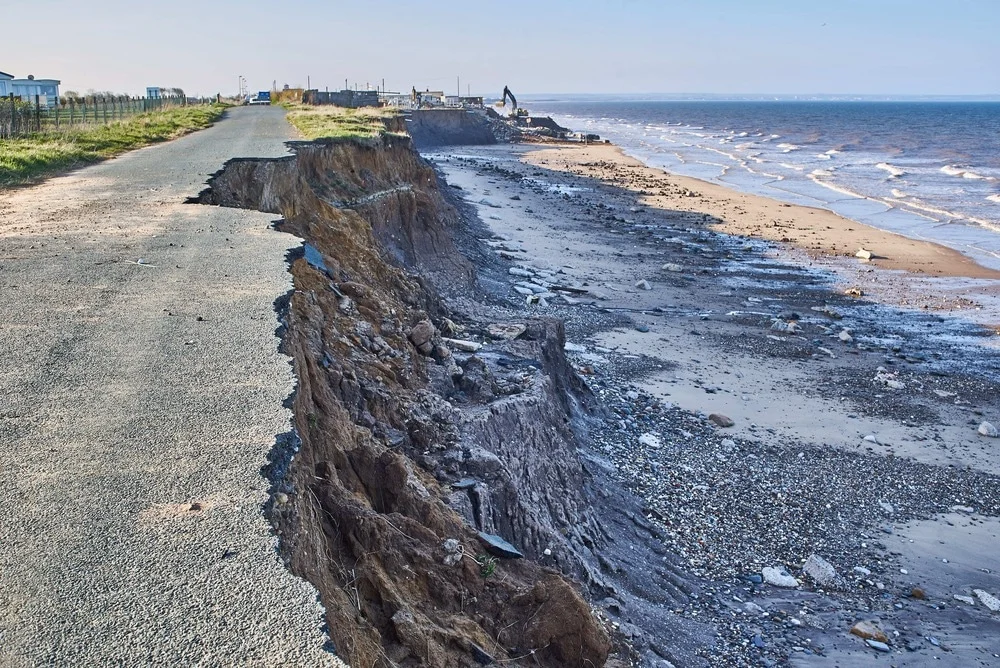
Coastal erosion is of great concern as it causes disruption to everyday life and services. Many people lose their homes and businesses to coastal erosion. Erosion is responsible for some spectacular coastal features.
Coastal Erosion
How do our coastlines erode material?
Hydraulic Action
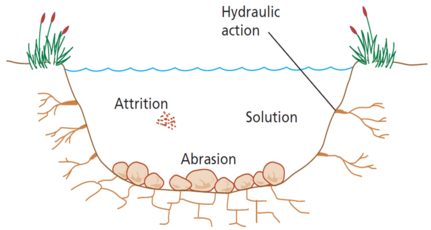
- The power of the waves as they smash onto the cliff.
- Trapped air is forced into cracks and holes in the rocks, eventually forcing the rock to break apart.
Abrasion
- Fragments of rock, pebbles, and sand are picked up by the waves and hurled at the base of the cliffs.
- These fragments act like sandpaper, eroding the base of the cliff.
Attrition
- Rock fragments moving underwater rub against one another, knocking fragments off.
- This process happens continually and wears the rocks down.
Solution
- Rocks can be eroded through chemical action.
- Sea water dissolves certain types of rocks, such as chalk and limestone, in the UK.
Weathering
COASTS – Weathering
Freeze-Thaw Weathering
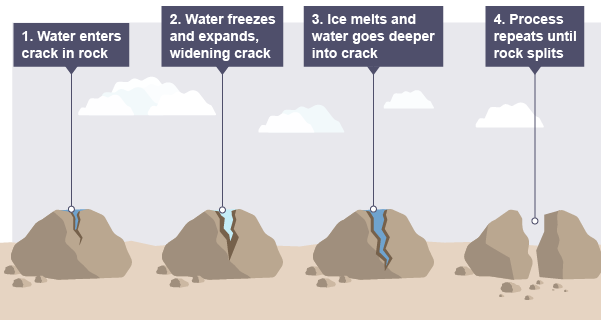
Occurs when rocks are porous (contain holes) or permeable (allow water to pass through).
- Water enters cracks in the rock.
- When temperatures drop, the water freezes and expands, causing the crack to widen.
- The ice melts and water makes its way deeper into the cracks.
- The process repeats itself until the rock splits entirely.
Chemical Weathering
Rainwater and seawater can be a weak acid.
- If a coastline is made up of rocks such as limestone or chalk, over time, they can become dissolved by the acid in the water.
Biological Weathering
Plants and animals can also have an effect on rocks.
- Roots burrow down, weakening the structure of the rock until it breaks away.
- Plant roots can get into small cracks in the rock.
- As the roots grow, the cracks become larger.
- This causes small pieces of rock to break away.
Transportation
Note
How do our coastlines transport material? Material that's been eroded is moved around the coast and deposited by waves
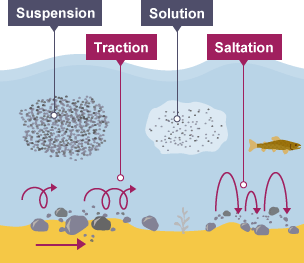
Suspension
- Particles are carried suspended within the water.
Solution
- Rock is transported as dissolved chemicals, often from chalk and limestone cliffs.
Traction
- Large pebbles are rolled along the seabed by the currents.
Saltation
- Turbulence and currents lift up pebbles, which then bounce along the sea bed.
Types of Waves
Note
Why are waves important?
- Wind blowing over the ocean creates friction with the water surface, causing ripples to form.
- The longer the waves travel, the larger and more organised they become. The distance travelled is called the fetch.
- The stretch of the coastline that faces the waves is known as the aspect.
Constructive Waves
- Low waves that surge up the beach and spill with a powerful swash.
- Carry large amounts of sand and pebbles, constructing the beach.
- They have travelled a very long way (Large fetch).
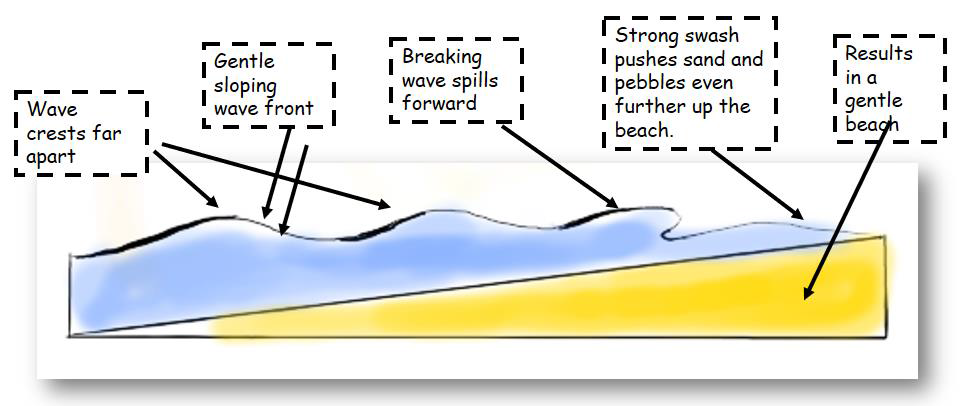
Constructive Waves
Destructive Waves
- Formed by local storms close to the coastline.
- Take beach material away, eroding the beach.
- Steep, plunging waves, close together with a stronger backwash than swash.
- Effective at removing sand and pebbles from the beach.
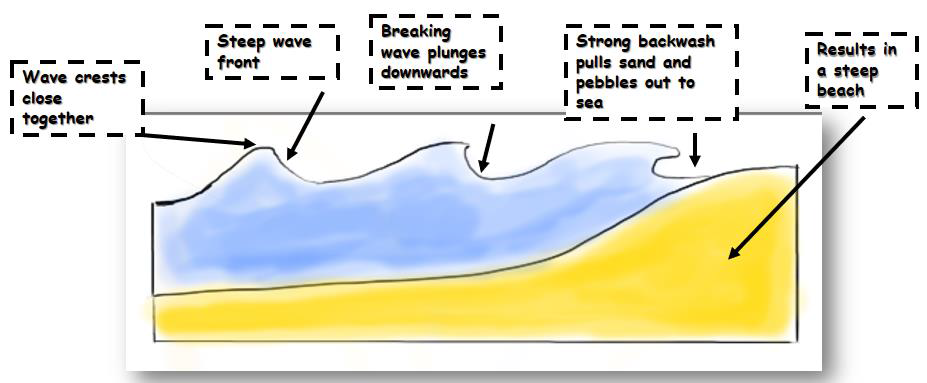
Destructive Waves
Mass Movement
Note
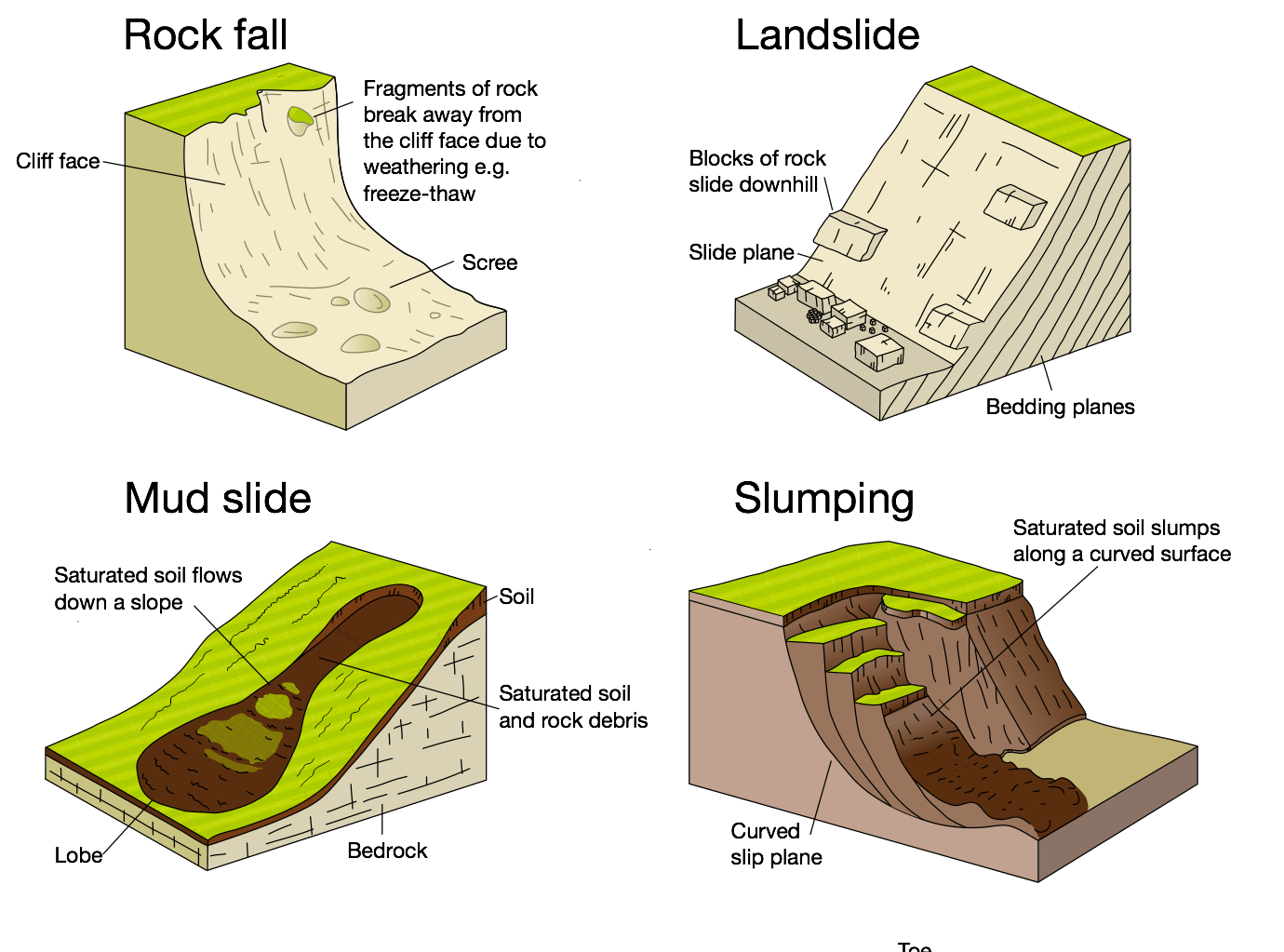
Shifting of rocks and loose material down a slope (cliff). Occurs when the force of gravity acting on a slope is greater than the force supporting it.
Effects
- Causes coasts to rapidly retreat.
- More likely to happen when the material is full of water, acting as a lubricant and making the material heavier.
Types
- Rockfalls: Bits of rock fall off the cliff face, usually due to freeze-thaw weathering.
- Slumps: Saturated soil slumps down a curved surface.
- Landslides: Large blocks of rock slide downhill.
- Mudslide: Saturated soil flows down a slope.