The North/South Divide (OCR GCSE Geography A (Geographical Themes)): Revision Notes
📚Revision Notes
5.1.7 The North/South Divide
Economic Development in the UK: NORTH/SOUTH DIVIDE
Why does a North/South divide exist?
- Economic Investment:
- Investment and jobs are concentrated in the capital (London) and nearby areas.
- London as a Global City:
- A global financial services centre with excellent rail, road, and airport links.
- The south of England has higher wages, house prices, and better quality of life.
- Deindustrialisation:
- In the 1970s and 1980s, northern towns and cities faced deindustrialisation.
- Led to unemployment and weaker economic growth in the north.
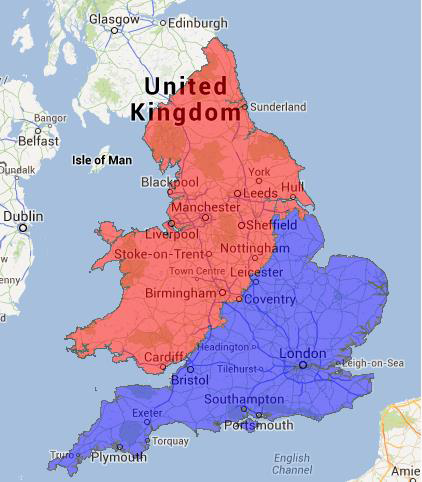
Evidence of the Divide:
- Wages**:**
- Generally lower in the north 📝(e.g., average wage in Huddersfield is 40% lower than in London).
- Health:
- Worse in the north than the south 📝 (e.g., life expectancy in Glasgow, Scotland is 72.6, whereas in Dorset on the south coast it is 82.9).
- Education:
- Better in the south 📝 (e.g., in London, 50% of children go into higher education, whereas in the north, it's 35%).
Solutions to the North/South Divide:
Transport Improvements:
- High-Speed Rail (HS2):
- New high-speed rail service between London and the north (started in 2017).
- Electrification of the Trans-Pennine railway (completion 2024/2025 with work ongoing).
- M62 Cross-Pennine Motorway:
- Upgraded.
- Liverpool2 Deep Water Container Port:
- Opened in 2016).
- Mersey Gateway:
- Opened in October 2017.
- New 6-lane toll bridge over the River Mersey.
Local Enterprise Schemes:
- Northern Powerhouse Strategy:
- Launched by the government to boost the north's economy.
- Investment:
- £62 million BT investment in broadband across 97% of the north by 2025.
- New business rate discount of up to £275,000 per year for businesses moving north.
- Financial Incentives:
- Financial incentives for companies to move to the north.