Local Ecosystem - Case Study (OCR GCSE Geography A (Geographical Themes)): Revision Notes
📚Revision Notes
2.1.2 Local Ecosystem - Case Study
📍 Location: Sutton Park, Birmingham
- Sutton Park is a 2,400 acre National Nature Reserve located 6 miles north of the city centre of Birmingham.
- It's a National Nature Reserve.
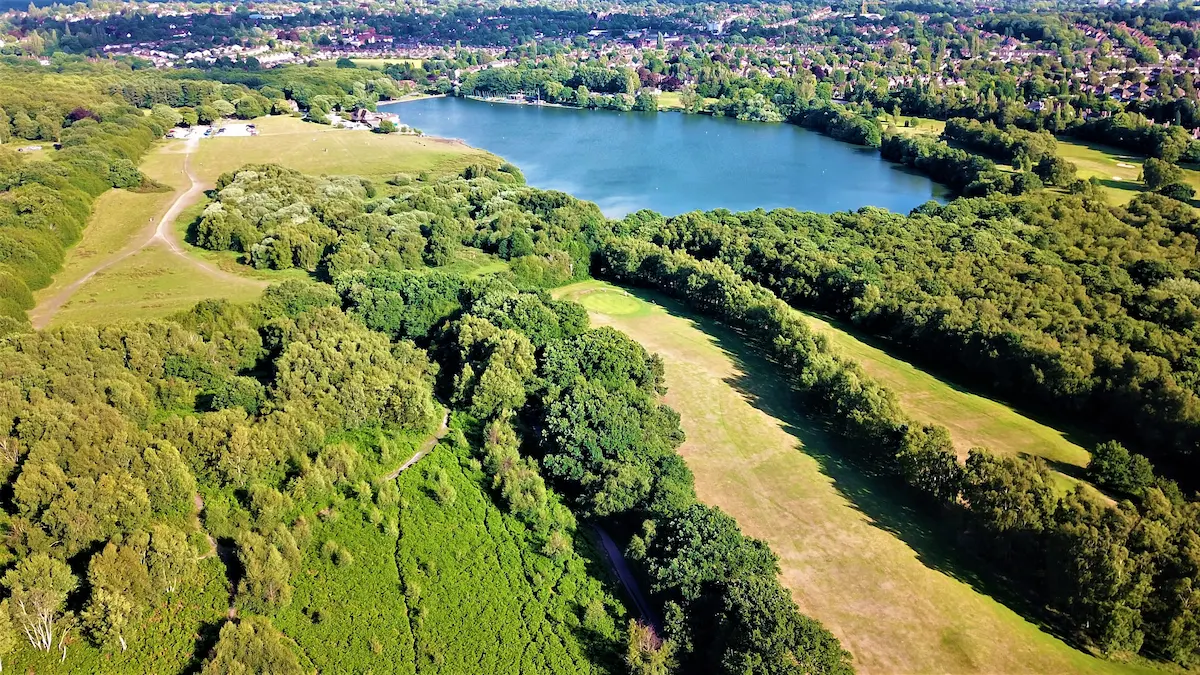
Sutton Park
Human Uses for Woodland
- Recreation: For example, for walks.
- Conservation: To protect ecosystems.
- Resource: Wood is used for fuel (firewood) or as timber for buildings.
Sutton Park's Food Web
- Sutton Park has a complex food web composed of thousands of species, as the result of its careful management.
- A wide variety of native tree species that include oak and ash.
- A shrub layer consisting of hazel and holly, along with grasses, brambles, fern, and bracken.
- Many primary consumers, including insects, small mammals, grazing cows, and 38 species of bird.
- Secondary consumers such as owls, adders, and foxes.
- Over 10 lakes and ponds providing important habitats for numerous species of fauna (animals) and flora (plants).
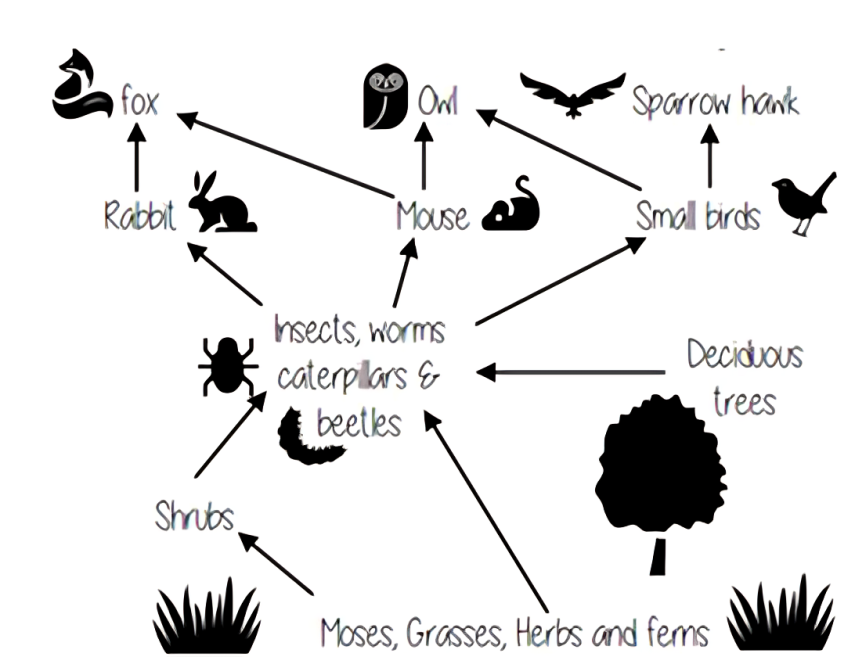
Sutton Park's Food Web
Sustainable Management
- Restoration Efforts:
- In 1989, work began to restore the heathlands. Large areas of birch trees and gorse were cleared from areas that should be open heathland. This work continues today. Low-intensity grazing will help to preserve the health of the heathland into the future.
- Tourist Management Strategies:
- Providing car parks, toilets, park rangers, and maintaining footpaths to manage recreation.
- Providing three easy-access car parks for people with disabilities.
- Preserving ancient earthworks and buildings.
- Other Sustainable Management Strategies:
- Allowing old trees to die and collapse naturally (unless they're dangerous).
- Encouraging grazing (there's a herd of 50 cows) to maintain the grassland.
- Maintaining ponds & lakes to prevent them silting up.
- Preserving the herd of fallow deer.
- Dead wood is generally left when it falls in the forest, as it provides a valuable habitat.
- Some grassy areas are left uncut to encourage wildlife like butterflies.
Threats to the Ecosystem
Note
Human activity can have many impacts on ecosystems. Once one component has been changed it can have a serious knock on effect on the ecosystem.
Human Impact:
- Due to human management and tourism, lots of the natural woodland & heathland was destroyed for park land.
- Changes to grazing in Sutton Park have contributed to invasion by birch, gorse, and bracken. Most of the areas covered in birch trees were open heathland up until 1976.
- Lack of grazing led to birch seedlings becoming established and coverage of large areas of heathland with woodland.