Causes & Impacts of Deforestation (OCR GCSE Geography A (Geographical Themes)): Revision Notes
📚Revision Notes
2.2.5 Causes & Impacts of Deforestation
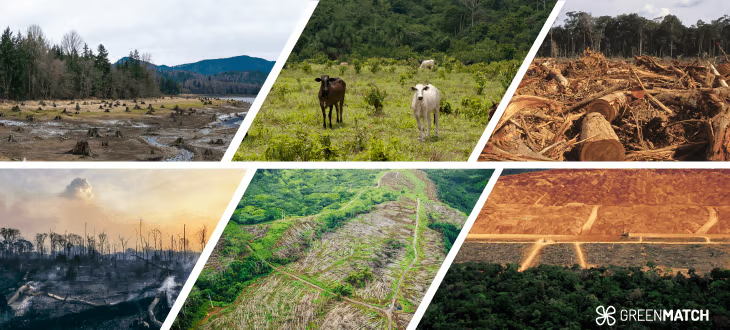
Causes of Deforestation in Brazil's Amazon Rainforest
- Agricultural Expansion
- Cattle Ranching: Cattle ranching is the leading cause of deforestation in the Amazon. Vast areas of the rainforest are cleared to create pastureland for beef production, which is a significant export for Brazil. The country is the world's largest exporter of beef, and this demand drives continuous deforestation.
- Soybean Cultivation: The Amazon is also being cleared to make way for large-scale soybean farms. Soybeans are a major agricultural export for Brazil, primarily used for animal feed in Europe and China. The expansion of soybean plantations is a critical factor contributing to deforestation.
- Logging
- Illegal Logging: The Amazon rainforest is rich in valuable hardwoods, such as mahogany and teak. Illegal logging operations, often unregulated, lead to significant forest destruction. Timber is harvested for export and domestic use, contributing to the degradation of vast forest areas.
- Commercial Logging: Even regulated logging activities contribute to deforestation. Trees are cut down for timber to be used in construction, furniture making, and paper production, leading to further depletion of the rainforest.
- Infrastructure Development
- Road Construction: The construction of roads, such as the Trans-Amazonian Highway, has opened up previously inaccessible areas of the rainforest. These roads facilitate further deforestation by providing access to remote areas for logging, agriculture, and human settlement.
- Hydroelectric Dams: The development of hydroelectric dams in the Amazon Basin has led to the flooding of large forested areas, causing deforestation and disrupting local ecosystems. These dams are part of Brazil's push to increase energy production but come at the cost of significant environmental damage.
- Mining
- Resource Extraction: The Amazon is rich in minerals like gold, copper, and iron ore. Mining operations, both legal and illegal, result in the clearing of forest areas to access these resources. The impact of mining extends beyond deforestation, causing pollution and harming biodiversity.
- Population Growth and Settlement
- Land for Settlement: As Brazil's population grows, there is increasing pressure to convert forest land into space for housing and urban development. Government policies have, at times, encouraged migration to the Amazon region, leading to the clearing of forests for new settlements.
- Shifting Cultivation: In some parts of the Amazon, traditional practices involve clearing forested areas for subsistence farming. As soils become depleted, these lands are often abandoned, and new areas of the forest are cleared, perpetuating a cycle of deforestation.
Environmental Impacts in Brazil's Amazon Rainforest
- Carbon Storage
- Significant Carbon Reservoir: The Amazon rainforest acts as a critical carbon sink, storing approximately 100 billion tonnes of carbon. When trees are cut down, this carbon is released into the atmosphere, contributing to increased levels of carbon dioxide.
- Contribution to Climate Change: The reduction in tree cover due to deforestation decreases the amount of carbon dioxide that can be absorbed, exacerbating global warming and accelerating climate change.
- Soil Erosion
- Loss of Topsoil: Brazil loses around 55 million tonnes of topsoil annually as a direct consequence of deforestation, primarily due to farming activities. This loss diminishes soil fertility, making it harder to sustain agriculture over time.
- Impact on Agriculture: Soil erosion reduces the land's productivity, leading to lower crop yields and increased reliance on chemical fertilisers, which can further degrade the environment.
- Habitat Destruction
- Threat to Biodiversity: Deforestation in the Amazon leads to the destruction of habitats, threatening the survival of countless indigenous species, some of which are endemic and cannot be found anywhere else in the world.
- Disruption of Ecosystems: The expansion of human activity into these ecosystems disrupts the balance of nature, leading to potential species extinction and loss of biodiversity.
- Forest Loss
- Scale of Deforestation: From August 2018 to July 2019, over 9,800 square miles of the Amazon rainforest were lost. This area is equivalent to more than 1.8 million football fields, marking the highest rate of deforestation in a decade.
- Long-term Impact: The rapid loss of forests not only affects the local environment but also has global implications, such as altered weather patterns and reduced air quality.
Economic Impacts in Brazil's Amazon Rainforest
- Economic Opportunities for Developing Countries
- Source of Income: For many developing countries, deforestation provides an immediate economic benefit. The exploitation of forest resources can be a significant source of revenue, helping to lift populations out of poverty.
- Revenue from Farming
- Agricultural Profits: Deforestation allows for the expansion of agricultural activities. In Brazil, for instance, cattle ranching generated $7 billion in revenue in 2008 alone, making it a vital part of the country's economy.
- Agricultural Expansion
- Global Food Supply: Brazil's deforestation-driven agricultural expansion has made it the sixth-largest food exporter in the world, supplying a significant portion of global agricultural products.
- Employment Opportunities
- Job Creation: The deforestation of the Amazon creates employment opportunities, particularly in industries such as mining, where approximately 3,000 people are employed.
- Logging Industry
- Economic Contribution: Logging contributes to 3% of Brazil's GDP, reflecting its importance to the national economy. Additionally, Brazil accounts for 3% of global forestry products, highlighting its role in the international market.
- Debt Repayment and Investment
- Financial Stability: Revenue generated from deforestation-related activities enables countries to repay foreign debts and invest in essential public services, such as education and healthcare. This can lead to improved living standards and further economic development.