Hazards in the USA (OCR GCSE Geography B (Geography for Enquiring Minds)): Revision Notes
📚Revision Notes
Hazards in the USA
Introduction to natural hazards in the USA
The United States faces a wide variety of natural hazards that threaten lives, property, and economic stability. These hazards fall into two main categories: weather-related hazards and tectonic hazards. Weather hazards include tornadoes, hurricanes, floods, droughts, extreme temperatures (both heatwaves and severe cold), and wildfires. Tectonic hazards primarily involve earthquakes caused by movement along fault lines. Understanding the nature, frequency, and impacts of these different hazards is essential for effective disaster preparedness and response planning.
Note
Natural hazards in the USA can be grouped into two major categories:
- Weather hazards: Caused by atmospheric conditions and weather patterns
- Tectonic hazards: Caused by movements in the Earth's crust along fault lines
Each category presents unique challenges for communities and requires different preparedness strategies.
Types of natural hazards
Weather hazards
The USA experiences numerous weather-related hazards due to its large size, varied geography, and position between different air masses. These include:
Storms encompass both tornadoes and hurricanes, which bring violent winds, heavy rainfall, and often cause widespread destruction. Tornadoes form from severe thunderstorms and create rotating columns of air, while hurricanes develop over warm ocean waters and bring sustained high winds and storm surges.
Floods occur when water overflows onto normally dry land, often resulting from heavy rainfall, rapid snowmelt, or storm surges. They can damage infrastructure, contaminate water supplies, and displace communities.
Extreme temperatures include both heatwaves and periods of severe cold. Although these may seem less dramatic than storms, they pose significant health risks, particularly to vulnerable populations such as the elderly and those without adequate shelter or climate control.
Droughts develop when regions experience prolonged periods of below-average precipitation, leading to water shortages, crop failures, and increased wildfire risk.
Wildfires spread rapidly through vegetation, especially during dry conditions, destroying homes and natural habitats while producing dangerous smoke pollution.
Tectonic hazards
Earthquakes represent the primary tectonic hazard affecting the USA. These occur when stress along geological fault lines is suddenly released, causing ground shaking that can damage buildings, infrastructure, and trigger secondary hazards like landslides or tsunamis in coastal areas.
Tornadoes - a major natural hazard
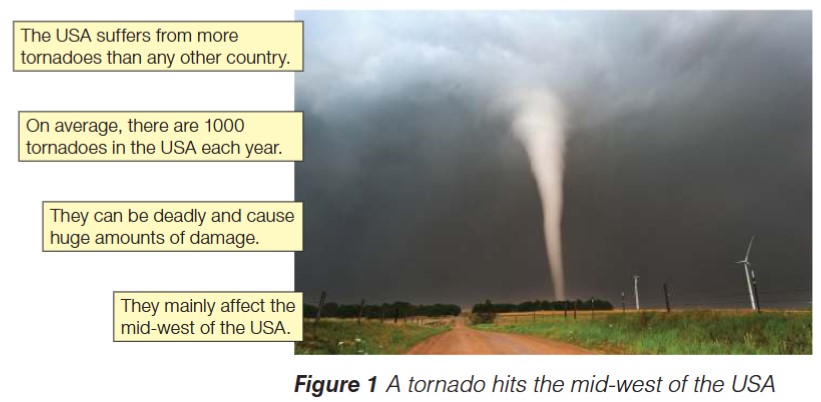
Tornadoes represent one of the most frequent and devastating natural hazards affecting the United States. The country experiences more tornadoes than any other nation in the world, with an average of 1,000 tornadoes occurring each year. This exceptional frequency is due to the USA's unique geography, where cold air from Canada meets warm, moist air from the Gulf of Mexico, creating ideal conditions for severe thunderstorm development.
These violent rotating columns of air mainly affect the mid-west region of the USA, an area sometimes called "Tornado Alley." States such as Oklahoma, Kansas, Nebraska, and Texas experience particularly high tornado activity, especially during spring and early summer when atmospheric conditions are most favorable.
Important
Tornadoes can be deadly and cause huge amounts of damage. Their destructive power comes from extremely high wind speeds that can exceed 300 mph in the strongest tornadoes, capable of demolishing well-built structures, uprooting trees, and turning debris into dangerous projectiles. The damage path of a single tornado can extend for many miles, affecting multiple communities.
Comparing different hazards
Frequency, deaths, and economic impacts
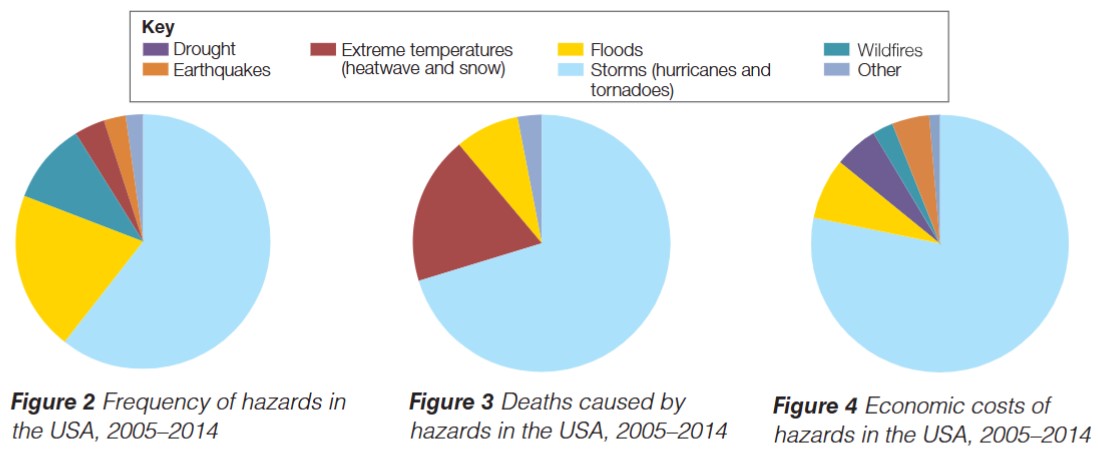
When analyzing natural hazards in the USA, it is important to examine them using three key metrics: frequency of occurrence, deaths caused, and economic costs. Data from 2005-2014 reveals interesting patterns when comparing different hazard types across these three measures.
Frequency of occurrence refers to how often different hazards happen. Storms, including tornadoes and hurricanes, occur most frequently among major hazards. Other hazards like wildfires, floods, and extreme temperatures also occur regularly, while earthquakes and droughts tend to be less frequent events.
Deaths caused by hazards represent the human cost of natural disasters. Storms rank highly in terms of fatalities, but extreme temperatures (including both heatwaves and severe cold) also cause significant loss of life. This demonstrates that frequency alone does not determine how deadly a hazard is.
Economic costs measure the financial impact of hazards, including property damage, infrastructure repair, business interruption, and recovery expenses. Storms generate substantial economic costs due to their ability to damage large areas and destroy valuable property and infrastructure. However, other hazards like floods and droughts can also impose significant financial burdens on affected regions.
Understanding the relationship between frequency and severity
An important principle in hazard analysis is that the most frequent hazards are not always the most deadly or costly. While storms, including tornadoes, are frequent, dramatic, and deadly, other hazards such as heatwaves are less frequent or dramatic but just as deadly. Heatwaves may not generate dramatic news footage or leave visible destruction, but they can cause many deaths, particularly among vulnerable populations who lack access to air conditioning or adequate hydration.
Important
Critical Insight about Hazard Frequency:
High frequency does not equal high severity. Some hazards that occur less often or appear less dramatic can be equally or more deadly than frequent, visible disasters. This is why comprehensive disaster planning must address all significant threats, not just the most frequent or dramatic ones.
This variation in hazard characteristics means that effective disaster preparedness must address multiple types of hazards. Communities cannot focus solely on the most frequent or most dramatic hazards but must develop strategies to protect against all significant threats, considering how different hazards affect lives and the economy in different ways.
Summary
Key Points to Remember:
- The USA experiences more tornadoes than any other country, averaging 1,000 per year, primarily affecting the mid-west region
- Natural hazards in the USA include both weather hazards (tornadoes, hurricanes, floods, extreme temperatures, droughts, wildfires) and tectonic hazards (earthquakes)
- Hazards must be compared using three key metrics: frequency of occurrence, deaths caused, and economic costs
- The most frequent hazards are not always the most deadly - heatwaves occur less frequently than storms but can be equally fatal
- Storms, particularly tornadoes and hurricanes, rank highly across all three comparison metrics, making them one of the USA's most significant natural hazard threats