Human Impacts in the Arctic (OCR GCSE Geography B (Geography for Enquiring Minds)): Revision Notes
📚Revision Notes
Human Impacts in the Arctic
Introduction
The Arctic is a fragile polar environment that has been home to indigenous peoples for centuries. However, modern industrial activities and climate change now pose significant threats to this unique ecosystem.
Note
The Arctic represents a critical case study in environmental geography, demonstrating the contrast between traditional sustainable practices and modern industrial exploitation of fragile ecosystems.
Historical human activities in the Arctic
Traditional Inuit practices
For hundreds of years, Inuit communities have practiced sustainable living in the Arctic region. They:
- Hunted animals on land for food and resources
- Fished in Arctic waters
- Managed ecosystems carefully without overexploitation
- Maintained a balance with the natural environment
This traditional way of life demonstrates how humans can live in harmony with polar ecosystems without causing lasting damage.
European exploitation (18th century onwards)
From the 1800s, European commercial interests began to exploit Arctic resources on a much larger scale:
- Large-scale hunting of seals targeted these marine mammals for their fur and oil
- Whaling operations hunted whales extensively for blubber and other products
- Some species were hunted to near-extinction levels due to overexploitation
- This commercial hunting was driven by profit rather than subsistence needs
Important
This marked a significant shift from sustainable practices to resource exploitation that threatened the Arctic ecosystem. The transition from traditional Inuit practices to European commercial exploitation demonstrates how different human approaches to the same environment can have vastly different impacts.
Modern human activities in the Arctic
Today, several industrial and commercial activities take place across the Arctic region. These activities pose various threats to the fragile polar environment.
Key activities
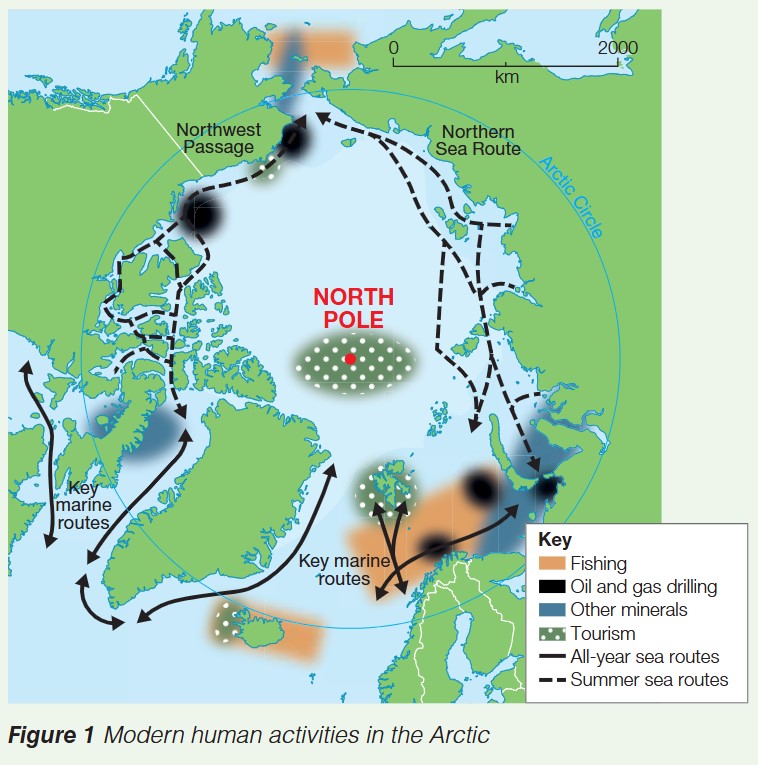
Modern human activities threatening the Arctic include:
- Fishing: Commercial fishing operations target Arctic fish stocks
- Mineral exploitation: Mining companies extract valuable minerals from Arctic regions
- Oil and gas drilling: Energy companies drill for fossil fuels beneath the Arctic Ocean
- Shipping routes: Both year-round and seasonal summer shipping lanes cross Arctic waters
- Tourism: Increasing numbers of visitors travel to experience the Arctic environment
Note
The map above shows how these activities are distributed across the Arctic region, with key shipping routes, fishing zones, drilling locations, and mineral extraction sites. Notice how multiple activities often overlap in the same regions, creating cumulative pressures on the ecosystem.
The role of global warming
Climate change is having a profound impact on the Arctic:
- Rising global temperatures are causing Arctic sea ice to melt and disappear
- Loss of sea ice makes previously inaccessible areas available for exploitation
- Melting ice opens up new shipping routes that were previously blocked
- This creates additional pressures on an already vulnerable ecosystem
Important
A dangerous feedback loop: The disappearance of sea ice represents both a consequence of human activity and a factor enabling further exploitation of Arctic resources. As climate change melts ice, it creates opportunities for more fossil fuel extraction, which in turn accelerates climate change - creating a self-reinforcing cycle of environmental damage.
Threats from oil and gas exploration
Arctic oil and gas reserves
The seabed beneath the Arctic Ocean contains one of the world's largest remaining untapped reserves of oil and gas. This makes the region highly attractive to energy companies seeking to extract fossil fuels.
Why oil drilling is particularly dangerous in the Arctic
Oil and gas extraction poses especially severe risks in the Arctic environment due to unique polar conditions:
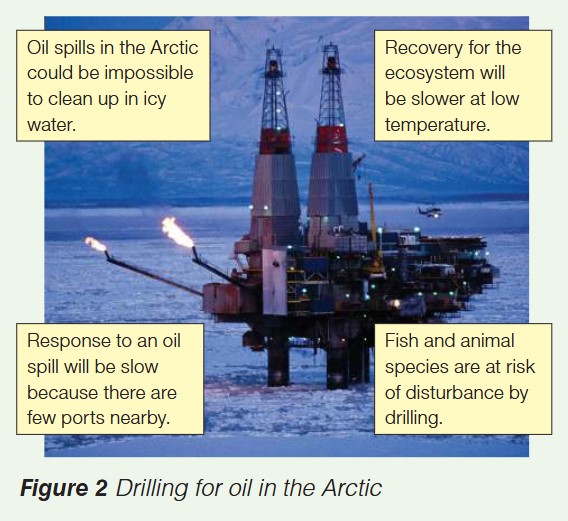
1. Impossible oil spill cleanup
Oil spills in Arctic waters would be extremely difficult or impossible to clean up effectively because:
- Icy water conditions make standard cleanup methods ineffective
- Oil can become trapped under ice sheets
- Cold temperatures prevent oil from breaking down naturally
- Remote locations make deploying cleanup equipment challenging
Note
In temperate waters, oil naturally biodegrades as bacteria break it down, and cleanup crews can use dispersants and skimmers. However, Arctic conditions render these methods largely ineffective, meaning oil pollution could persist for decades.
2. Slow ecosystem recovery
The Arctic ecosystem would recover very slowly from any oil spill damage because:
- Low temperatures slow down all biological processes
- Cold conditions mean bacteria that break down oil work much more slowly
- Arctic species have slow reproduction rates
- The short growing season limits ecosystem regeneration
3. Limited emergency response
Responding quickly to an oil spill in the Arctic faces major obstacles:
- Very few ports exist in the region
- Remote locations mean emergency teams are far away
- Extreme weather conditions can delay response efforts
- Limited infrastructure makes mobilizing cleanup resources difficult
- Ships and aircraft may be unable to reach affected areas quickly
Important
The Golden Hour Problem: In oil spill response, the first 24-48 hours are critical for minimizing damage. In the Arctic, it could take days or even weeks for response teams to reach a spill site, by which time the oil will have spread extensively and potentially become trapped under ice.
4. Threats to marine wildlife
Oil drilling operations put Arctic marine species at risk through:
- Direct disturbance from drilling noise and activity
- Risk of oil contamination affecting fish and marine mammals
- Disruption to feeding and breeding grounds
- Long-term damage to food chains if spills occur
- Threats to species already vulnerable due to climate change
Note
Many Arctic species, such as polar bears, seals, and Arctic cod, are already under stress from climate change and habitat loss. Additional pressure from oil drilling could push some populations toward critical decline or local extinction.
Exam guidance
Important
How to answer exam questions:
When asked to explain threats from human activities in the Arctic, you should:
- Identify the specific activity (e.g., oil drilling)
- Describe what the threat is (e.g., oil spills)
- Explain why it is particularly dangerous in Arctic conditions (e.g., impossible to clean up in icy water)
- Consider the consequences for ecosystems and species
When asked to assess or evaluate impacts, you should also:
- Consider the scale of the threat
- Compare different types of impacts
- Discuss both short-term and long-term consequences
- Weigh economic benefits against environmental costs
Remember!
Summary
Key points to remember:
- Inuit people lived sustainably in the Arctic for hundreds of years, hunting and fishing without overexploiting ecosystems
- From the 18th century, European commercial hunting nearly drove some seal and whale species to extinction
- Modern threats to the Arctic include fishing, mineral exploitation, oil and gas drilling, shipping routes, and tourism
- Global warming is causing Arctic sea ice to disappear, enabling more exploitation
- Oil drilling is particularly dangerous in the Arctic due to impossible cleanup in icy conditions, slow ecosystem recovery at low temperatures, limited emergency response infrastructure, and risks to marine wildlife
Key terms:
- Sustainable living: Meeting human needs without damaging ecosystems or depleting resources for future generations
- Overexploitation: Using natural resources faster than they can be replaced, leading to depletion or extinction
- Marine ecosystem: The community of living organisms and their environment in ocean waters
- Untapped reserves: Resources that have not yet been extracted or exploited
- Ecosystem recovery: The process by which damaged ecosystems gradually return to their original state
Critical processes to understand:
- How human activities have changed from sustainable Inuit practices to large-scale industrial exploitation
- The link between global warming, sea ice loss, and increased Arctic exploitation
- Why oil spills are especially difficult to manage in polar environments
- The cumulative impact of multiple human activities on fragile Arctic ecosystems