Invest in Zambia (OCR GCSE Geography B (Geography for Enquiring Minds)): Revision Notes
📚Revision Notes
Invest in Zambia
Zambia's economic context
Zambia is experiencing rapid economic development. The country has one of the fastest-growing economies in Africa, with an average growth rate of approximately 6% per year. This strong economic performance shows that Zambia's economy is expanding and becoming more productive.
However, Zambia faces significant challenges with inequality. Despite the economic growth, almost half of the country's population lives in poverty. This means that the benefits of economic development are not being shared equally across society, and many Zambians struggle with low incomes and limited opportunities.
Important
Development Paradox
While Zambia achieves impressive 6% annual economic growth, nearly 50% of the population remains in poverty. This illustrates a critical challenge: economic growth alone does not guarantee equal distribution of benefits across society.
The Zambian government recognises these challenges and has set an ambitious development target. It aims to transform Zambia into an Emerging and Developing Country (EDC) by 2030. This goal reflects the government's vision of 'a better Zambia for all', where economic growth benefits more citizens and reduces poverty levels.
Why foreign investment matters to Zambia
Foreign investment plays a crucial role in Zambia's development strategy. When large international companies bring their business operations to Zambia, they bring several benefits that support economic development.
Note
Key Benefits of Foreign Investment
Foreign companies contribute to Zambia's development in three main ways:
- Job creation - Reducing unemployment and poverty through new employment opportunities
- Technology and expertise transfer - Bringing modern technology, business knowledge, and management skills
- Tax revenue generation - Providing government funds for essential public services like education and healthcare
To achieve its goal of becoming an EDC by 2030, the Zambian government actively encourages foreign investment. The government has created various policies and conditions designed to make Zambia an attractive destination for international businesses. Understanding these factors helps explain why companies might choose to invest in Zambia rather than other African countries.
Eight key factors attracting investment to Zambia
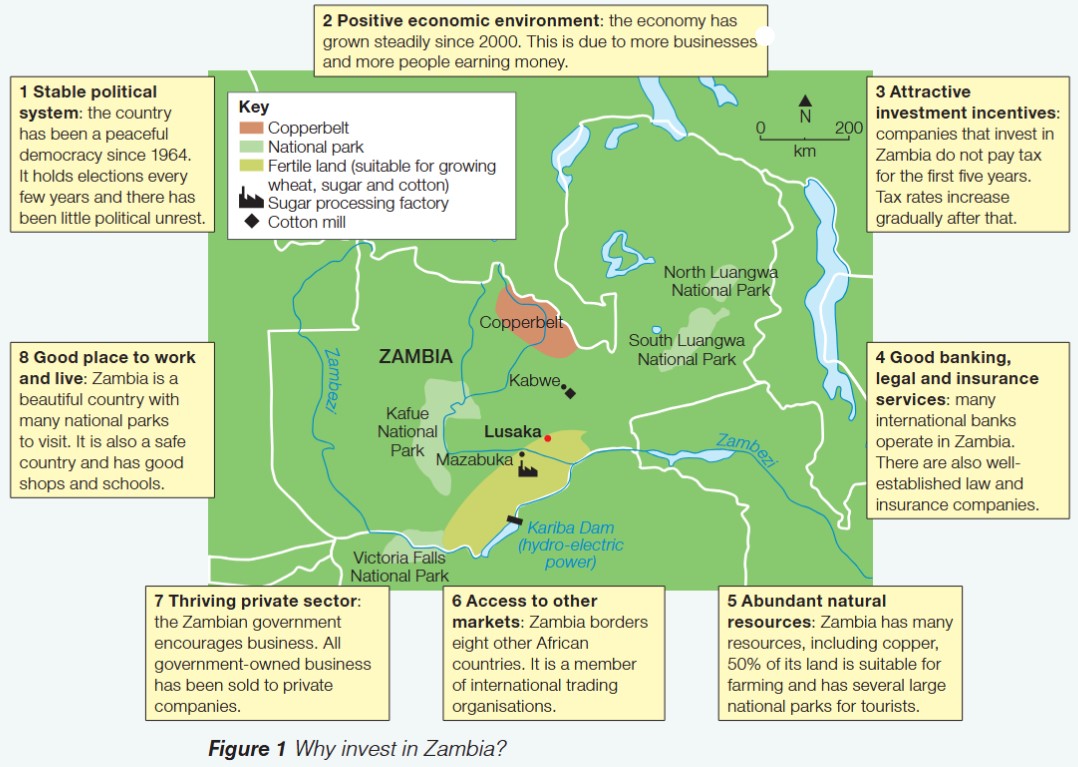
Important
The map and surrounding information boxes highlight eight main reasons why Zambia appeals to foreign investors. Each factor addresses different aspects of the business environment, from political conditions to practical living standards.
Political stability
Zambia has maintained a stable political system since gaining independence in 1964. The country operates as a peaceful democracy with regular elections and transfers of power. Over recent decades, there has been minimal political unrest or conflict, which is important because businesses need predictable and secure operating conditions.
Political stability means that companies can make long-term plans without worrying about sudden changes in government policy or civil disturbance. For investors, this reduces risk and makes Zambia a safer choice compared to countries experiencing political tensions.
Positive economic environment
Zambia's economy has grown steadily since 2000. This consistent growth indicates that the business environment is improving, with more businesses operating successfully and more people earning money that they can spend on goods and services.
Note
The Growth Cycle
A growing economy creates a positive cycle of development:
- Economic growth creates business opportunities
- More people earn money and become potential customers
- Increased demand attracts further investment
- Additional investment drives more economic growth
Attractive investment incentives
The Zambian government offers significant tax incentives to encourage companies to invest. Companies that establish operations in Zambia receive a tax holiday for their first five years of operation, meaning they do not pay any tax during this initial period. After five years, tax rates increase gradually rather than all at once.
Important
Tax Incentive Structure
- Years 1-5: 0% tax (complete tax exemption)
- After Year 5: Tax rates increase gradually, allowing businesses to adjust to operating costs
This makes investing in Zambia particularly profitable during the establishment phase when companies may not yet be generating large profits.
Good banking, legal and insurance services
Zambia has well-developed financial and legal infrastructure. Many international banks operate in the country, which makes it easier for foreign companies to manage their money, transfer funds internationally, and access banking services they are familiar with.
The country also has established law and insurance systems. This means businesses can rely on legal contracts being enforced and can protect their assets and operations through insurance policies. These professional services create a business-friendly environment similar to what companies experience in more developed countries.
Abundant natural resources
Zambia is rich in natural resources that can support different types of businesses. The most famous resource is copper, with the Copperbelt region in the north being a major mining area. Copper mining has historically been central to Zambia's economy and continues to attract significant investment.
Approximately 50% of Zambia's land is suitable for farming, making agriculture another major opportunity. The fertile land supports growing wheat, sugar cane, and cotton. These agricultural products are processed in local facilities, including sugar processing factories and cotton mills, which create additional jobs and economic value.
Note
Diverse Resource Base
Zambia's natural resources span multiple sectors:
- Mining: Copper extraction in the Copperbelt region
- Agriculture: Wheat, sugar cane, and cotton on 50% of land area
- Energy: Kariba Dam hydro-electric power station providing renewable electricity
- Tourism: Multiple national parks (North Luangwa, South Luangwa, Kafue, Victoria Falls)
This diversity reduces dependence on any single resource and creates opportunities across different industries.
Infrastructure resources include the Kariba Dam hydro-electric power station, which generates renewable electricity. Reliable power supply is essential for industrial operations and makes Zambia more attractive for manufacturing and processing businesses.
Access to other markets
Zambia's geographic location provides excellent access to regional markets. The country shares borders with eight other African nations, which means companies based in Zambia can easily trade with neighbouring countries. This strategic position makes Zambia an effective base for businesses wanting to serve the wider African market.
Additionally, Zambia is a member of international trading organisations. These memberships provide preferential access to markets in other regions and help reduce trade barriers. Being part of these organisations makes it easier and cheaper for Zambian-based businesses to export their products internationally.
Thriving private sector
The Zambian government has actively encouraged private sector development by selling government-owned businesses to private companies. This privatisation process creates a more dynamic and competitive business environment.
Note
A thriving private sector means there are many established businesses already operating successfully in Zambia. This creates networks of suppliers, service providers, and business partners that new investors can work with. It also demonstrates that the business environment works well and can support profitable operations.
Good place to work and live
Zambia offers a high quality of life that makes it attractive for international staff who might relocate to work for foreign companies. The country is considered safe and secure, with low levels of violent crime compared to some other African nations.
The natural environment is beautiful, with many national parks providing recreational opportunities. Cities have good shops, schools, and other facilities that make daily life comfortable for both local and expatriate workers. These quality of life factors help companies attract and retain skilled staff, which is essential for successful business operations.
Geographic distribution of opportunities
The map reveals how economic opportunities are distributed across Zambia. The Copperbelt region in the north-central area contains the major copper mining operations that have historically driven the economy. This region includes cities like Kabwe and areas of intensive mining activity.
Agricultural development concentrates in areas with fertile land, particularly in the southern and central regions. Sugar processing factories operate in places like Mazabuka, while cotton mills process cotton grown in suitable areas. The capital city, Lusaka, serves as the commercial and administrative centre.
Note
Infrastructure and Tourism Distribution
The Kariba Dam, located in the south near the border, provides hydro-electric power that supports industrial development throughout the country. Major national parks are distributed across Zambia, with Victoria Falls in the south and Kafue, South Luangwa, and North Luangwa in other regions, creating tourism opportunities that span the entire nation.
Remember!
Summary
Key Points to Remember:
-
Zambia's economy grows at approximately 6% annually, making it one of Africa's fastest-growing economies, though nearly half the population still lives in poverty
-
The Zambian government aims to achieve Emerging and Developing Country (EDC) status by 2030 by attracting foreign investment from large international companies
-
Eight key factors attract investment:
- Political stability since 1964
- Positive economic growth since 2000
- Attractive tax incentives (five-year tax holiday)
- Good banking and legal services
- Abundant natural resources
- Access to eight neighbouring markets
- Thriving private sector
- High quality of life
-
Natural resources include the Copperbelt copper mining region, fertile agricultural land covering 50% of the country for wheat, sugar and cotton production, and multiple national parks supporting tourism
-
Zambia's strategic location bordering eight African countries and membership in international trading organisations provides excellent market access for businesses operating in the country