Uneven Development and Climate Change (OCR GCSE Geography B (Geography for Enquiring Minds)): Revision Notes
📚Revision Notes
Uneven Development and Climate Change
Understanding the link between climate change and development
Climate change is likely to worsen the existing inequalities between countries at different stages of development. While climate change affects the entire planet, its impacts are distributed unevenly across the globe. This creates a situation where those countries that have contributed least to causing climate change often suffer the most severe consequences.
The relationship between climate change and development is particularly important because lower-income countries typically lack the financial resources, technology, and infrastructure needed to adapt to changing environmental conditions. This makes them more vulnerable to the physical effects of climate change and less able to protect their populations and economies.
Note
This creates a deeply unfair situation: the countries that industrialized early and produced most historical carbon emissions are generally better equipped to deal with climate change, while nations that contributed least to the problem face the worst impacts.
Global effects of climate change
Climate change produces a range of environmental impacts that affect different parts of the world in various ways. These effects create challenges for all countries, but particularly for those with fewer resources to respond and adapt.
The main physical effects of climate change include:
- Gradual rise in sea level – As ocean waters warm, they expand, and melting ice sheets add more water to the oceans. This threatens low-lying coastal areas and island nations.
- Stronger cyclones – Warmer ocean temperatures provide more energy for tropical storms, making cyclones more powerful and destructive.
- Warmer days and nights – Average global temperatures are rising, leading to more frequent and intense hot periods.
- More unpredictable rainfall and drought – Climate change disrupts traditional weather patterns, making rainfall less reliable. Some areas experience more intense rainfall and flooding, while others face longer periods without rain.
- Hotter and longer heatwaves – Extended periods of extreme heat become more common, particularly affecting urban areas and vulnerable populations.
Note
These physical changes don't occur in isolation. They trigger wider social, economic, and environmental consequences that create cascading effects throughout human populations and ecosystems. Understanding these interconnections is crucial for comprehending the full impact of climate change.
Why consequences are worse in LIDCs and EDCs
Lower-income countries face disproportionately severe impacts from climate change compared to more developed nations. This inequality exists because Low Income Developing Countries (LIDCs) and Emerging and Developing Countries (EDCs) lack the resources necessary to adapt to climate change effectively.
The consequences of climate change in these countries include:
- Increased hunger – Changes in rainfall patterns, droughts, and extreme weather events damage crops and reduce food production. Many LIDCs depend heavily on agriculture, so climate change directly threatens food security.
- More conflict – Competition for scarce resources like water and productive land can increase tensions between communities and countries, potentially leading to conflict and instability.
- Migration – As areas become less habitable due to sea level rise, drought, or extreme weather, people are forced to move. This creates climate refugees and increases pressure on urban areas.
- Worse poverty – The combined effects of reduced agricultural productivity, property damage from extreme weather, and increased health problems push vulnerable populations deeper into poverty.
The historical context of carbon emissions
An important factor in understanding this inequality is the historical pattern of carbon emissions. Advanced Countries (ACs) have produced carbon emissions for over 200 years through their industrial development. In contrast, LIDCs emit relatively small amounts of greenhouse gases. Despite contributing least to the problem, LIDCs are more likely to suffer from the impacts of climate change because they cannot afford the infrastructure, technology, and systems needed to protect their populations.
Important
Historical Responsibility vs. Current Impact
This creates one of the most significant ethical challenges of climate change: those who caused the problem are not those suffering most from it. Advanced Countries built their wealth through industrialization that produced carbon emissions, but LIDCs now face the worst consequences despite their minimal contribution to global emissions.
Regional impacts of climate change
Climate change creates different challenges in different parts of the world, depending on geography, climate, and level of development.
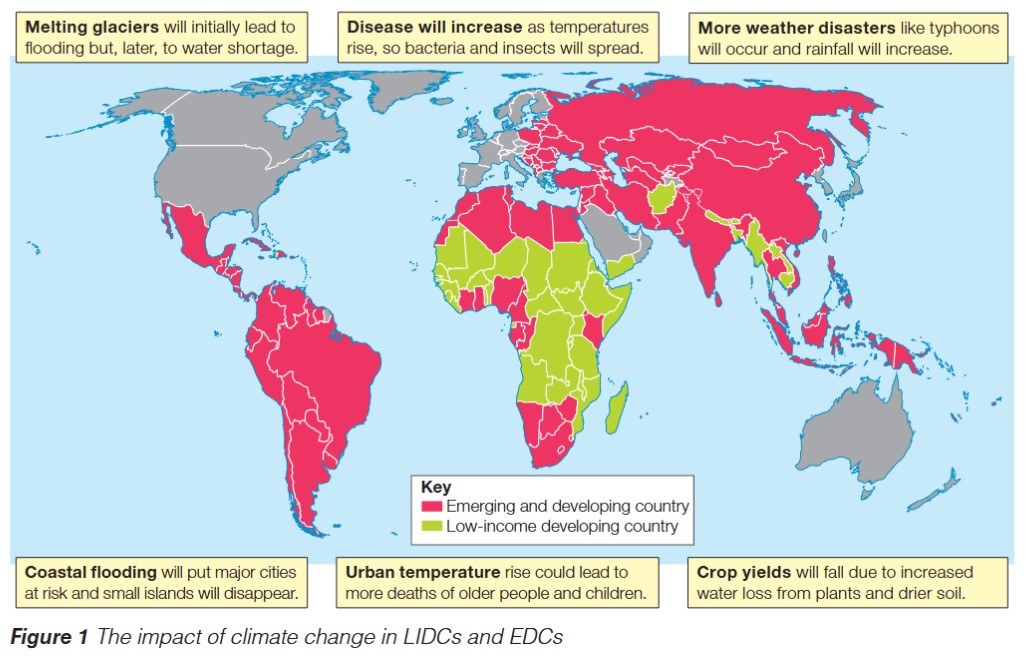
Melting glaciers
In mountainous regions, particularly in Asia and South America, glaciers are melting at accelerating rates. Initially, this leads to flooding as meltwater flows downstream. However, in the longer term, communities that depend on glacial meltwater for their water supply face severe water shortages. This affects drinking water, agriculture, and hydroelectric power generation.
Note
The impact of melting glaciers has a two-stage effect: short-term flooding followed by long-term water scarcity. Communities in the Himalayas and Andes, which depend on glacial meltwater during dry seasons, face an uncertain future as these "water towers" disappear.
Disease spread
Rising temperatures allow disease-carrying organisms to survive in areas that were previously too cold for them. Bacteria and insects like mosquitoes can now spread to new regions, bringing diseases such as malaria and dengue fever to populations that have no natural immunity. This increases pressure on already limited healthcare systems in LIDCs and EDCs.
More weather disasters
Tropical regions, particularly in Asia and the Caribbean, experience more frequent and intense weather disasters including typhoons, hurricanes, and cyclones. These extreme weather events destroy homes, infrastructure, and crops. They also cause loss of life and set back economic development. Additionally, changes in rainfall patterns lead to more severe flooding in some areas.
Note
The economic cost of weather disasters can erase years of development progress in a matter of hours. A single major cyclone can destroy infrastructure that took decades to build, pushing countries backward in their development journey.
Coastal flooding
Rising sea levels threaten major cities and small island nations across the world. Coastal flooding puts millions of people at risk, damages property and infrastructure, and can make entire islands uninhabitable. Low-lying countries like Bangladesh and island nations in the Pacific and Indian Oceans face the most severe threats.
Urban temperature rises
Cities tend to be warmer than surrounding rural areas due to the urban heat island effect. Climate change intensifies this, causing urban temperatures to rise even higher. This increased heat is particularly dangerous for vulnerable groups, including older people and children, leading to increased mortality during heatwaves. The urban poor in LIDCs and EDCs often live in informal settlements with inadequate housing, making them especially vulnerable.
Crop yield failures
Changes in temperature and rainfall patterns, combined with soil degradation from drought and water loss, reduce agricultural productivity. Crops fail more frequently, and traditional farming practices become less reliable. This threatens food security and livelihoods, particularly in regions where most people depend on farming for their income and food supply.
Important
Agriculture and Development
In LIDCs and EDCs, agriculture often employs the majority of the population and provides most people's food. When climate change disrupts farming, it doesn't just reduce food availability – it destroys livelihoods, increases poverty, and threatens the entire economic foundation of these countries.
Exam guidance
When answering questions about climate change and uneven development:
- Describe questions require you to identify and outline the effects without explanation. List specific impacts and their characteristics.
- Explain questions need you to give reasons why climate change worsens development inequalities. Focus on the lack of resources in LIDCs and EDCs to adapt.
- Assess or evaluate questions require you to weigh up different factors. Consider both the severity of impacts and the capacity of countries to respond. Don't forget the historical context of who caused the problem versus who suffers most.
Important
Common Mistake to Avoid
Always use geographical terminology correctly, distinguishing between:
- LIDCs (Low Income Developing Countries)
- EDCs (Emerging and Developing Countries)
- ACs (Advanced Countries)
Don't confuse these terms or use outdated classifications like "developing countries" without specification.
Remember!
Summary
Key Points to Remember:
-
Climate change worsens existing inequalities between countries, with the poorest nations suffering most despite contributing least to the problem.
-
The main global effects include sea level rise, stronger cyclones, warmer temperatures, unpredictable rainfall patterns, and more intense heatwaves.
-
LIDCs and EDCs face worse consequences (increased hunger, conflict, migration, and poverty) because they lack the resources necessary to adapt to climate change.
-
Advanced Countries produced carbon emissions for over 200 years, but LIDCs are more likely to suffer from climate change impacts.
-
Regional impacts vary but include melting glaciers threatening water supplies, disease spread to new areas, more frequent weather disasters, coastal flooding, dangerous urban heat, and reduced crop yields.