Tanzania’s Current Bid for Food Security (OCR GCSE Geography B (Geography for Enquiring Minds)): Revision Notes
📚Revision Notes
Tanzania's current bid for food security
Introduction to SAGCOT
Tanzania is working to improve its food security through a major development project called the Southern Agricultural Growth Corridor of Tanzania (SAGCOT). This initiative was launched in 2010 and focuses on transforming agriculture across a large area of southern Tanzania. The project aims to modernise farming, improve infrastructure, and link small-scale farmers to commercial markets, ultimately helping Tanzania feed its growing population.
The Southern Agricultural Growth Corridor of Tanzania
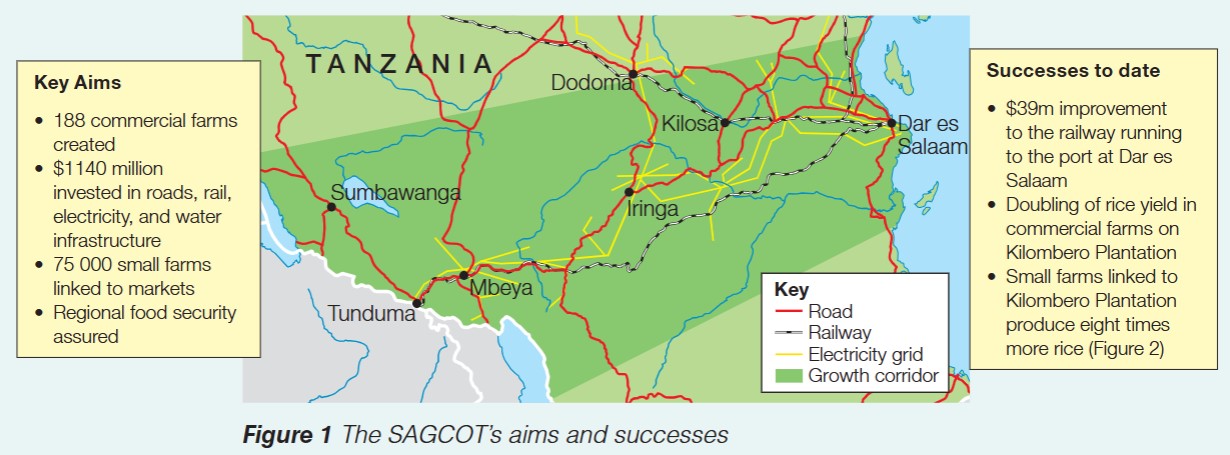
SAGCOT targets a specific region stretching across southern Tanzania, creating a development corridor with improved transport links, electricity supply, and agricultural production. The project involves substantial investment in both commercial farming operations and support for smallholder farmers.
Key aims of SAGCOT
The project has set several ambitious targets to transform agriculture in the region:
- Commercial farm development: Establish 188 large-scale commercial farming operations to demonstrate modern agricultural techniques and create economic hubs.
- Infrastructure investment: Invest $1,140 million in essential infrastructure including roads, railways, electricity networks, and water systems to support agricultural development.
- Smallholder farmer integration: Connect 75,000 small-scale farms to commercial markets, enabling them to sell their produce more effectively and access better resources.
- Regional food security: Ensure the wider East African region has reliable food supplies by increasing production in Tanzania.
Successes to date
SAGCOT has already achieved some notable results:
Note
Early Achievements of SAGCOT
-
Transport improvements: $39 million invested in upgrading the railway line running to Dar es Salaam port, making it easier and cheaper to transport agricultural products to market.
-
Increased productivity: Rice yields on commercial farms at Kilombero Plantation have doubled, demonstrating the potential of modern farming methods.
-
Market access: Small farms have been successfully connected to the Kilombero Plantation hub, enabling them to produce eight times more rice than previously possible.
The hub and out-grower model
SAGCOT uses an innovative approach called the hub and out-grower model to develop agriculture while supporting both large and small farms.
How the model works
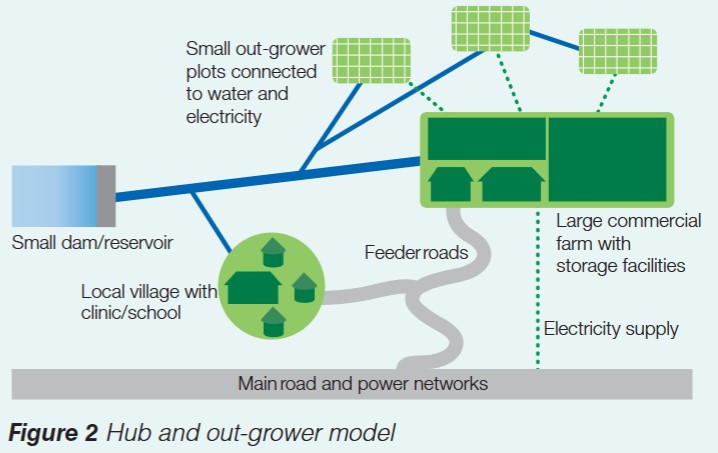
Large commercial farms function as central 'hubs' that provide essential services and infrastructure. These hubs invest in improvements such as:
- Electricity supply networks
- Road connections (feeder roads)
- Irrigation systems and water storage (dams and reservoirs)
- Storage facilities for crops
Small farms in the surrounding area link to these hubs as 'out-growers'. They benefit from the infrastructure and can access:
- Reliable electricity and water supplies
- Better transport links to get crops to market
- Technical expertise and advice from commercial farmers
- Improved local services such as clinics and schools
Note
The model creates a partnership where commercial farms provide the capital investment and infrastructure, while small farms increase their productivity and income by using these facilities. This collaborative approach aims to benefit both parties while modernising agriculture across the region.
Benefits of the hub and out-grower model
This approach offers several advantages:
- Infrastructure sharing: Small farms gain access to expensive infrastructure they could not afford independently.
- Knowledge transfer: Out-growers learn modern farming techniques from the commercial hub operations.
- Market connections: Small farmers can sell their produce through established commercial networks.
- Community development: Infrastructure improvements benefit entire villages, including services like healthcare and education.
Criticisms of SAGCOT
Despite its aims and early successes, SAGCOT faces significant criticism:
Important
Critical Issues Facing SAGCOT
-
Unequal investment: The majority of funding has been directed towards large commercial farms rather than supporting small-scale farmers directly.
-
Land rights issues: Nomadic tribes and some small landowners have lost access to land they traditionally used, as it has been allocated to commercial farming operations.
-
Delayed benefits: Investment has been promised but not all funds have been delivered yet, leaving some communities waiting for improvements.
-
Top-down approach: The project has been designed and implemented by government and international organisations without sufficient consultation with local small landowners and communities.
Evaluating SAGCOT's effectiveness
The question of whether SAGCOT will successfully improve Tanzania's food security remains open:
Positive indicators
- The hub and out-grower model represents an innovative approach to agricultural development.
- Some early successes demonstrate the potential of the project, particularly the rice yield increases at Kilombero.
- Infrastructure improvements are creating long-term benefits for the region.
Concerns and uncertainties
- Too early to judge: The project is still in relatively early stages, making comprehensive evaluation difficult.
- Who benefits?: Some observers argue that transnational corporations (TNCs) producing crops for export may gain more than small landowners trying to feed local communities.
- Food security vs. profit: There are questions about whether SAGCOT will prioritise feeding Tanzania's population or generating export income for commercial operators.
- Sustainability: The long-term success depends on whether small farmers genuinely benefit or whether commercial interests dominate.
Summary
Key Points to Remember:
-
SAGCOT is a major agricultural development project launched in 2010 to improve food production across southern Tanzania through infrastructure investment and modernised farming.
-
The hub and out-grower model connects large commercial farms (hubs) with small-scale farms (out-growers), allowing small farmers to access infrastructure, expertise, and markets.
-
Key achievements include railway improvements worth $39 million, doubled rice yields on commercial farms, and 75,000 small farms gaining market access.
-
Main criticisms focus on unequal investment favouring commercial farms, land rights issues affecting nomadic tribes, and the top-down nature of the project with limited local consultation.
-
Effectiveness remains uncertain: while early successes are promising, concerns exist about whether the project will primarily benefit TNCs and export markets rather than improving food security for Tanzania's own population.