Motives for Spanish expansion into the Caribbean and central America (OCR GCSE History B (Schools History Project)): Revision Notes
📚Revision Notes
Motives for Spanish expansion into the Caribbean and central America
The Age of Discovery
Note
The Age of Discovery, which occurred between the early-15th to the mid-17th century was led by European powers in navigation, Spain and Portugal. Spain dominated much of the Americas while Portugal succeeded in its conquest of West Africa.
Among the factors which led to the Age of Exploration dominated by Spain and Portugal were:
- Power of Spain and Portugal
- Search for new routes to Asia
- Trade and Religion
- Technological advances
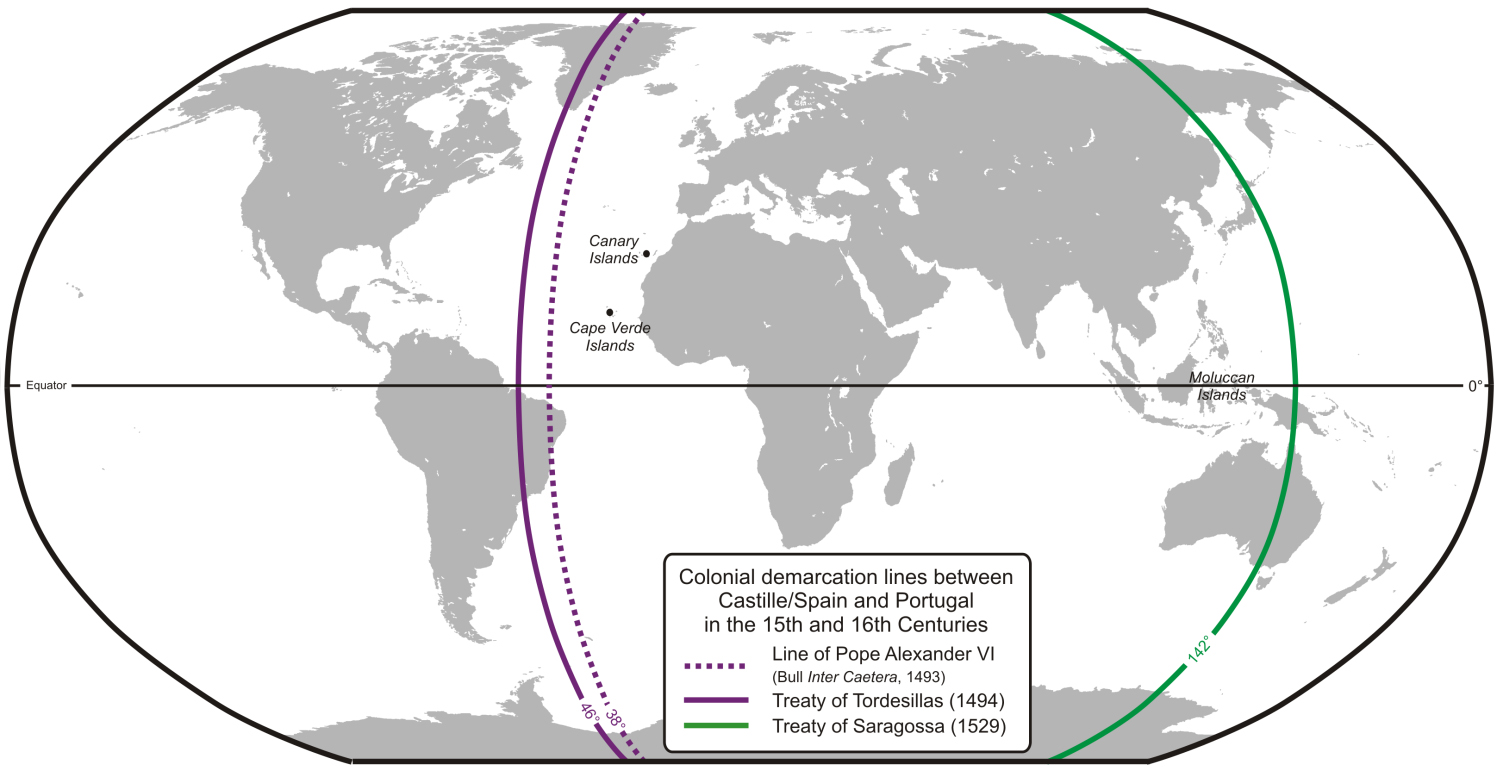
Map showing the Line of Demarcation, 1493
Key evidence of the rivalry between the navigation powers of Portugal and Spain was the Line of Demarcation dividing the world, which was established through the Treaty of Tordesillas (1494).
In order to solve the claims of both Portugal and Spain over the Moluccas, commonly known as the Spice Islands, they agreed on the Treaty of Tordesillas revised through the Treaty of Saragossa which divided the world with a Line of Demarcation
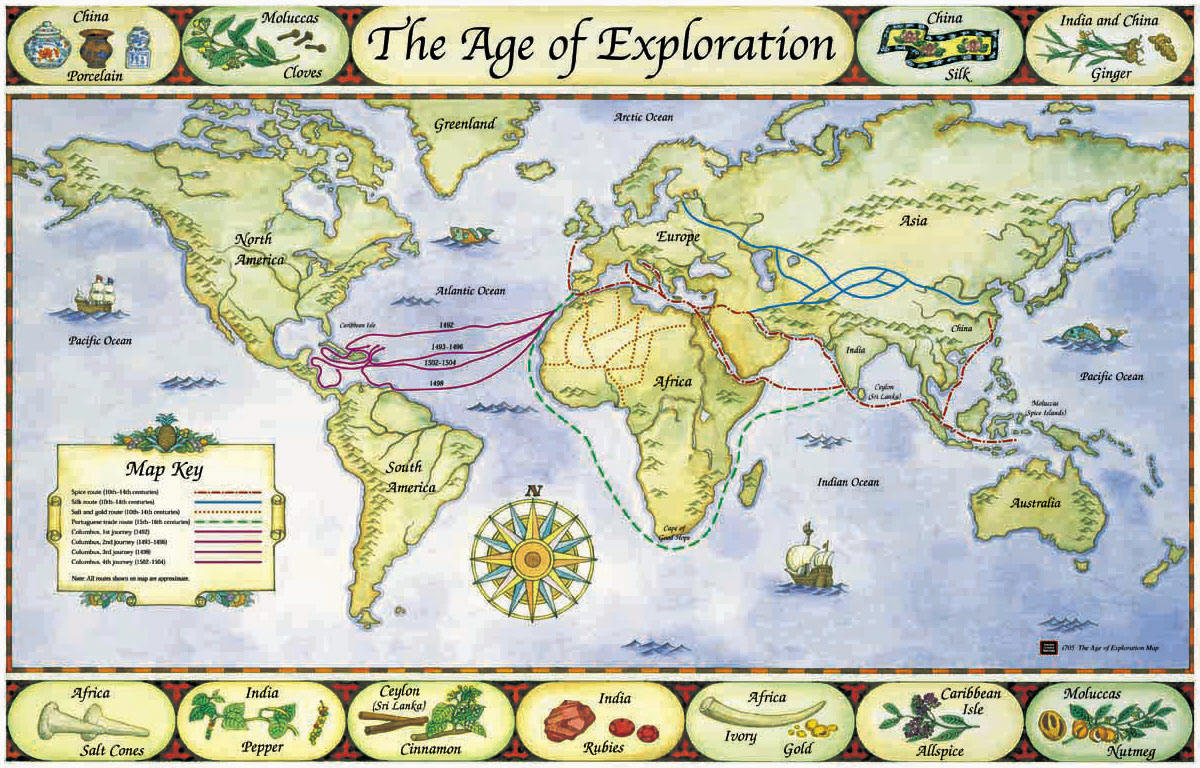
Examine the map
Note
His request for funding from the monarchs of England and France were also declined. After seven years of looking for a patron to fund his voyage to Asia by sailing west, King Ferdinand and Queen Isabella of Spain sponsored Columbus with the help of Friar Juan Pèrez.
Background: Voyage of Columbus
Columbus was born in Genoa, part of modern-day Italy. He owned a copy of Marco Polo's book, which inspired him to pursue sailing and exploration.
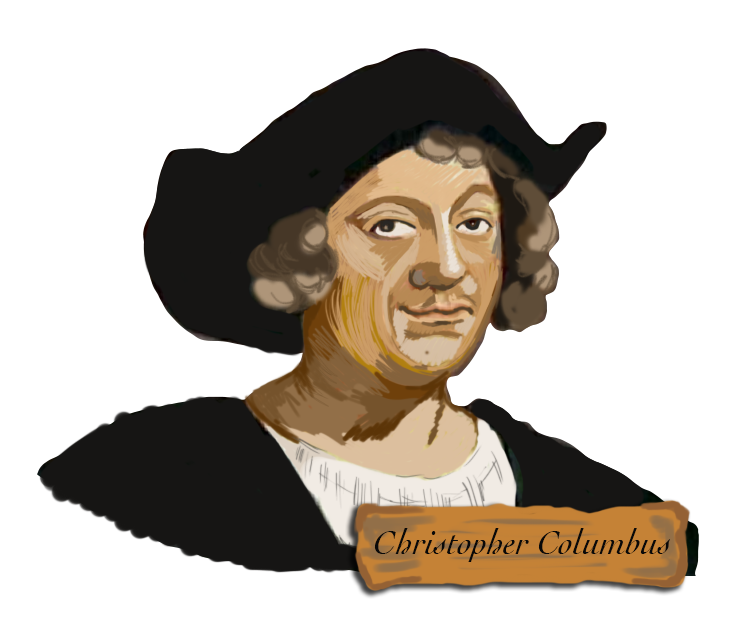
In the mid-15th century, while Portugal was at the height of discovering new trade routes to Asia, Columbus went to King John of Portugal to launch an expedition but was turned down.
The following events led the search for new routes to Asia:
- Crusaders went back to Europe with a great variety of goods from Africa, the Middle East, and Asia.
- With the defeat in the crusades, Muslims and Italians controlled trading in the Mediterranean.
- Monarchs and merchants in Europe wanted to break this trade control.
- It increased the desire of Europeans for trade.
- Europeans saw existing trading of goods both expensive and difficult.
Note
On September 6, 1492, 87 men and three ships, the Pinta, Niña, and Santa Maria (flagship) were under Columbus' command. He headed west of Spain across the Atlantic and sighted a small island he named San Salvador and the native population as the Guanahani.
Upon the first sighting, Columbus believed that he had discovered Asia, but it was actually the Caribbean. After exploring the islands of the Bahamas, Columbus made it to Cuba (which he named Juana). He thought that it was part of China and the Indies, thus calling the natives 'Indians'. Columbus sent men to look for the Great Khan and they obviously failed. Instead, they contacted the native Taino village, where they observed tobacco smoking.
Note
On December 5, he reached an island he called La Española, which was later renamed Hispaniola. Columbus called the natives 'Haitians'.
The spread of Christianity
Note
After the Crusades, Christian Europeans had the desire to spread Christianity to the unknown parts of the world through missionaries travelling with explorers.

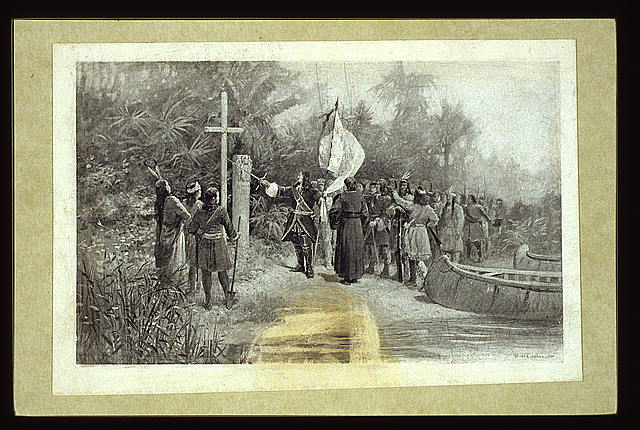
Explorer claims the New World for Spain and for Christianity
Aside from the Crusades, another factor that influenced monarchs and explorers to set sail on voyages was the idea of culture and enrichment brought by the Renaissance.
Missionaries who travelled with the explorers preached to the natives on how to achieve religious enlightenment and salvation. They intended to convert thousands of native people to Christianity.
Following the failure of the Crusades,
Christians saw the redemption of believers
as a victory against the Muslims.