Centre of empire: the splendour of Tenochtitlan (OCR GCSE History B (Schools History Project)): Revision Notes
📚Revision Notes
Centre of empire: the splendour of Tenochtitlan
The ruins of Tenochtitlán lie beneath the centre of modern-day Mexico City.
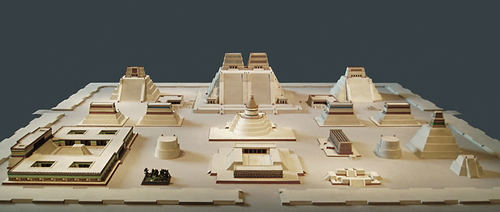
A model of reconstructed Tenochtitlán at the National Museum of Anthropology in Mexico City
Note
Tenochtitlán or the city of Tenoch was the capital of the Aztec civilisation founded in 1325 AD and flourished until 1521. It was located on an island on Lake Texcoco and served as the cultural, political, and economic centre of the empire.
Architectural Features
The city was built with causeways and canals enabling travel to and from the island using canoes.
Bridges were movable for people to cross the city, while small boats could pass under it. In times of attack, bridges were removed.
Templo Mayor, the tallest building, was built at the heart of the city. The Aztecs believed that it was the closest place to the gods.
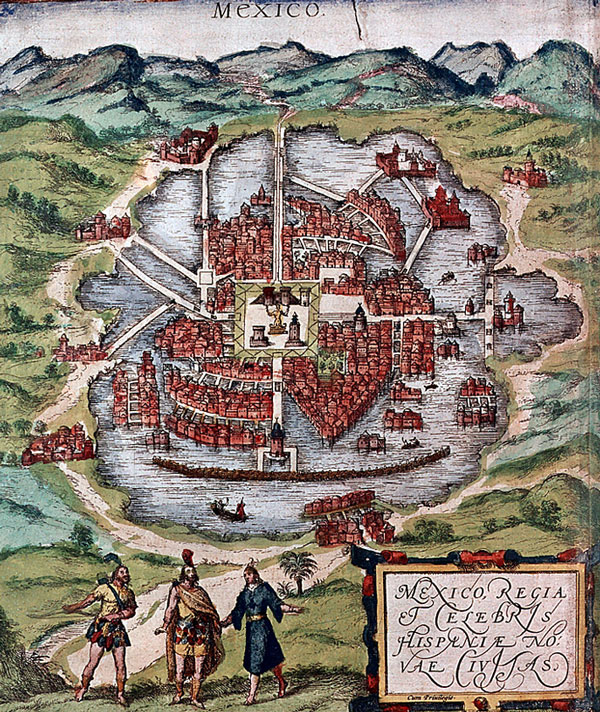
16th-century painting of Tenochtitlán, most likely based on the sketches of Hernán Cortés
Based on archaeological evidence, I-shaped ball courts were built for games called Ulama.
Near the temple district were palaces of Aztec Emperors built in stone with gardens and ponds.
The city-state was divided into four zones called campan and sub-divided into 20 calpullis or districts.
Each district had marketplaces in addition to the main marketplace called Tlatelolco, which could accommodate 60,000 people weekly.
Public buildings including the Eagle's House, Sun Temple, and the temple of Quetzalcoatl were all associated with the ancient Aztec rulers and gods.
There were also a number of gladiatorial sacrifice platforms used in rituals.
A vast number of sacred precincts were built inside the city.
High-ranking nobility and valiant warriors were the only ones allowed to build houses with a second floor.
Note
Aztec architecture included palaces, temple-pyramids, ballcourts, and store-houses built using simple stone tools. Sacred animals such as jaguars and eagles were sculpted in stone. Tenochtitlan was the central gathering place for various kinds of people like traders, diplomats, pilgrims, farmers, nobles, warriors, and craftspeople.
Monumental buildings were the site of Aztec culture, sacrifices, and rituals.
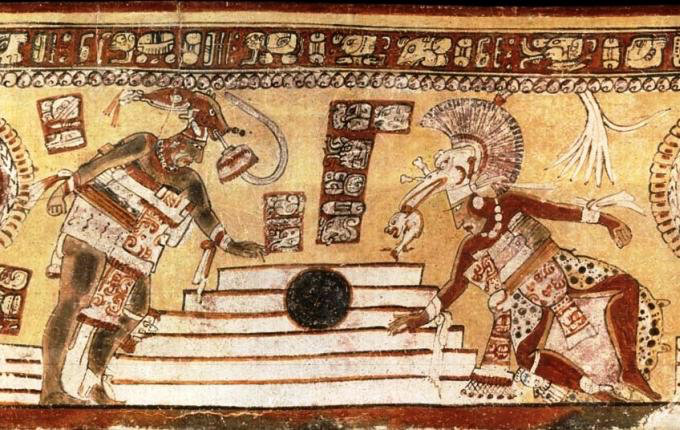
Image showing the Mesoamerican ball game
Exam Practise
Task 1: Analysis
Note
The Aztecs were known for their collection of codices that depicted their way of life. Now, analyse the source and describe the emergence of the Aztecs as one of the leading Mesoamerican civilisations.
Source A
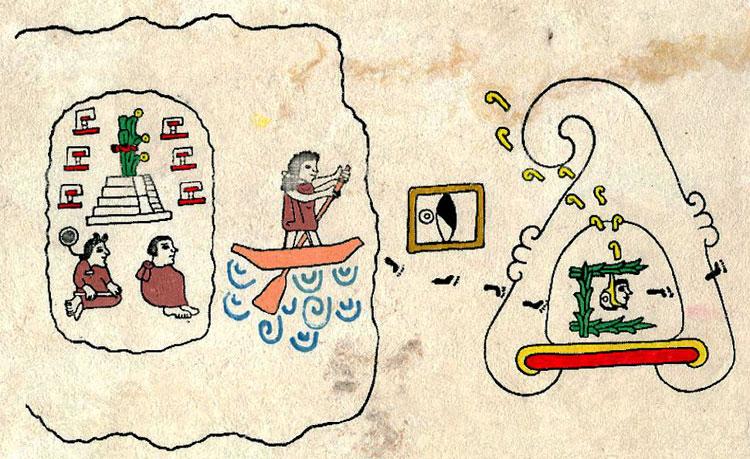
The Mexica (Aztecs) left their mythical homeland Aztlan in the year 1-Flint; hand-painted copy of the Codex Boturini
Task 2: Questioning
Note
Given your knowledge and historical understanding of the Aztec Empire, answer the questions below in detail.
- Discuss the structure of the Aztec society.
- How would you describe the Aztec nature of rule and government?
- How significant were codices to the Aztec empire? Compare the codex with other forms of historical records.
- Draw and describe agricultural technology used by Aztecs.
Task 3: Interpretation
Note
Using the sources provided, make your own interpretation of the capital city of Tenochtitlan.
Source B
"The city is as big as Seville or Cordoba. The main streets are very wide and very straight; some of these are on the land, but the rest and all the smaller ones are half on land, half canals where they paddle their canoes...sixty thousand people come each day to buy and sell...ornaments of gold and silver, lead, brass, copper, tin, stones, shells, bones and feathers …
- Mary Wiesner-Hanks, An Age of Voyages: 1350-1600
Source C
"they will learn religion and correct comportment. They are to do penance, lead hard lives, live with strict morality, practice for warfare, do physical work, fast, endure disciplinary measures, draw blood from different parts of the body, and keep watch at night..."
- Translation by Doris Heyden