The extent and nature of Moctezuma’s Aztec empire in 1519 (OCR GCSE History B (Schools History Project)): Revision Notes
📚Revision Notes
The extent and nature of Moctezuma's Aztec empire in 1519

Note
The Aztec people pre-Columbian Mesoamerican natives of central Mexico who established a great empire from the 14th century until the 16th century.
Brief History of the Aztec People
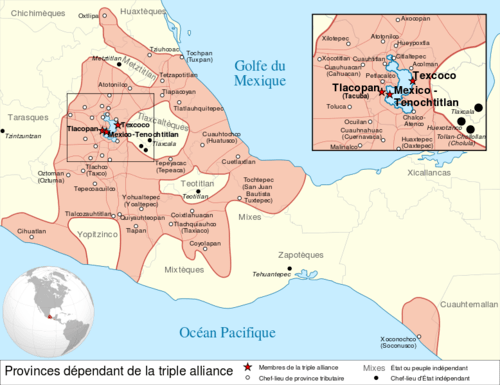
Map showing the vast territory of the Aztec Empire its height
Little is known about the exact origin of the Aztec people due to a lack of records. Through oral tradition, it's understood that they were hunter-gatherer people of the Aztlan or White land located in northern Mexico.
In the 12th century, the Mexica people travelled the Valley of Mexico to find a settlement wherein no one would expel them. They found swampy land in Lake Texcoco where they settled. In 1325 AD, they started draining the swampy land by building artificial islands, which would later be the foundations of Tenochtitlan, the capital city.
Founding of the Aztec Empire
Note
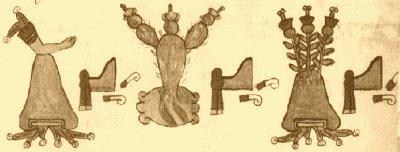
In the early 14th century, a leader named Tenoch led his people to find a place of refuge as instructed by Huitzilopochtli, the god of war. They found swampy land at Lake Texcoco where they built the city of Tenoch.
In order to strengthen their power over the region, ruler Itzcoatl established a triple alliance in 1428.
Note
In 1376, after the death of Tenoch, they had to select an emperor to rule them. Acamapichtli, whose lineage can be traced back to the great Toltec ruler Quetzalcoatl, became the first emperor of the Aztecs.
Nature of Aztec Rule
Using social classes, the Aztec Empire was governed in a hierarchical structure.
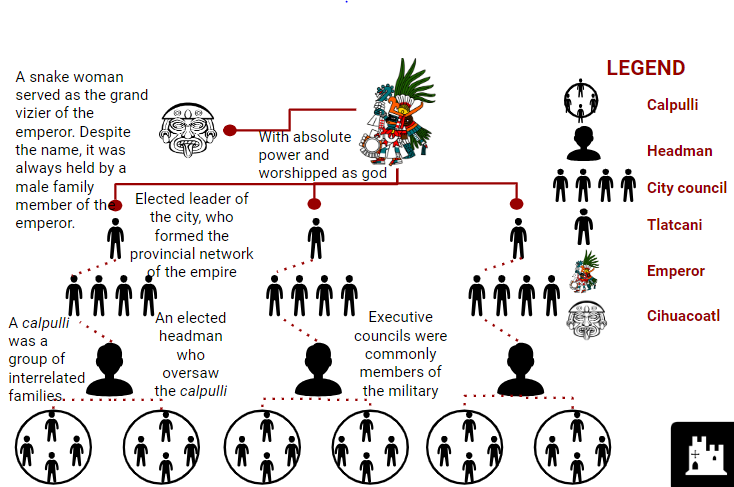
Aztec Social Structure
Similar to many ancient civilisations, the Aztecs lived in a social hierarchy or class.
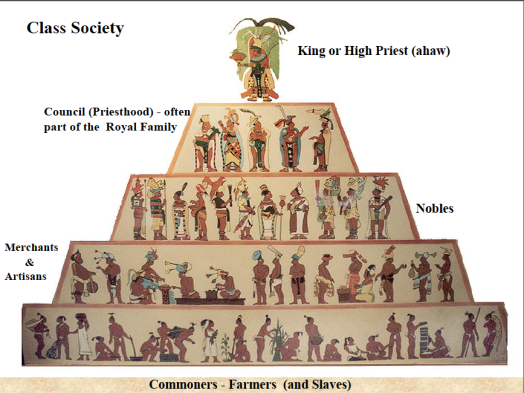
Emperor or Huey Tlatoani had the divine right to rule and was often chosen by the high ranking nobles
Nobles or pipiltin was composed of high-level priest, and military and government leaders
Lords or tecuhtli were landowners and members of the military
Commoners or macehualtin were farmers, artisans, and merchants
Slaves or serfs were a status not passed down through lineage
Most of the time, the new emperor was related to the previous one.
They received tributes from commoners through labour, goods, or services.
Noble status was passed down through lineage.
Farmers could own land, while merchants and artisans possessed more wealth.
A form of punishment