The wealth of empire: agriculture, crafts and trade (OCR GCSE History B (Schools History Project)): Revision Notes
📚Revision Notes
The wealth of empire: agriculture, crafts and trade
Note
At the height of the Aztec Empire, its capital Tenochtitlan was believed to be inhabited by around 200,000 people with an additional 300,000 people from smaller towns. Tenochtitlan was about 4,5 square miles in size and was known as the 'garden city' and 'twin-city state' of Tlatelolco.
Agriculture
Farming plots called chinampas connected the island with canals. The Spanish called this network 'floating gardens'.
In the marketplace, foodstuffs, common items and luxury goods, like precious feathers, jade, and turquoise jewellery were brought by canoe from conquered places.
Aztecs had a number of specialised professions including cloth manufacturers, scribes, feather workers, stonemasons, astronomers, midwives, priests, priestess, and musicians.
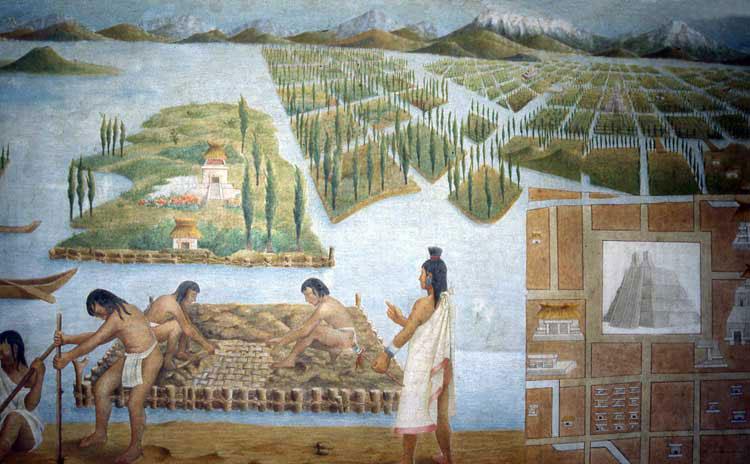
Farming on the chinampas, Tenochtitlan; oil painting by José Muro Pico, National Museum of Anthropology, Mexico City
In addition to trading, the Aztecs farmed the land during the rainy season.
Note
Aztec agriculture provided its people with maize, beans, squash, chillies, tomatoes, avocados, turkey, chia seeds, cactus fruit, pineapples, and cocoa.
Prior to Spanish conquest, the Aztec civilisation recorded their history and culture in codices made of pictograms. They did not have written documents and preferred to pass traditions down orally. Pre-Columbian codices were amended with Latin script during the colonial era.
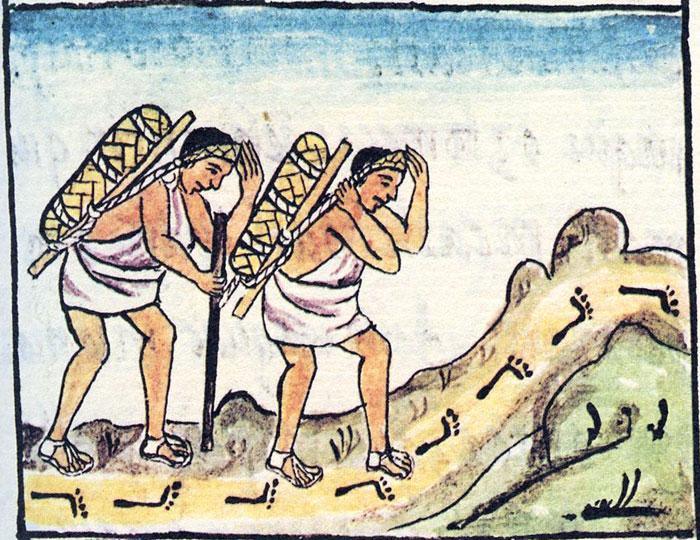
Image of Aztec porters crossing rough terrain depicted in the Florentine Codex
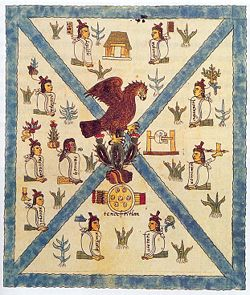
Example of the Mendoza codex, 1541
Among the other codices made during the colonial era include the Florentine Codex, Codex Ozuma, Codex Aubin, Codex Magliabechiano, Codex Borgia, and Codex Xolotl. Most Aztec codices were written by codex painters or tlacuilo, which were compiled when the empire was colonised.