The role and conduct of the Church (OCR GCSE History B (Schools History Project)): Revision Notes
📚Revision Notes
The role and conduct of the Church
Note
After the conquest, priests and missionaries populated Central Mexico to set up the Catholic Church. They forcibly baptised and converted the Aztecs to Christianity despite Church regulations.
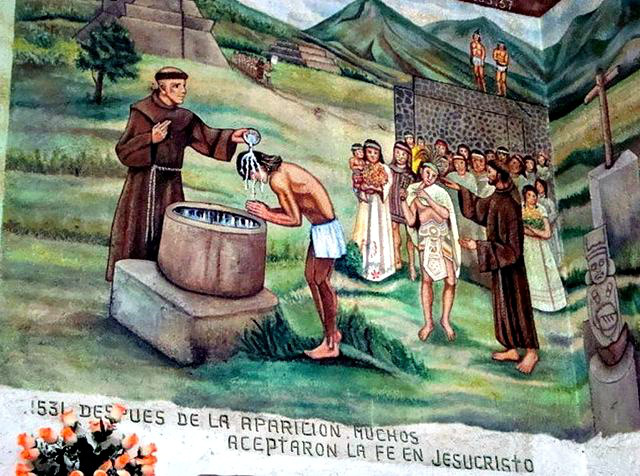
Depiction of conversion of the Aztecs after the conquest
To convert the Aztecs, European missionaries imposed social pressure through ostracization and the necessity of salvation before the end of the world.
The Aztecs' sacred objects were replaced by crosses and churches. The transition was made easier for the natives through architecture (congregations were built facing the mountains since the Aztecs were used in worshipping outside).
Missionaries who initially came to Central Mexico arrived in groups of twelve in accordance to the apostles of the New Testament
- Franciscans in 1524
- Dominicans in 1526
- Augustinians in 1533
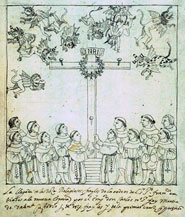
The arrival of the twelve Franciscan apostles (Diego Muñoz Camargo, 'Descripción de la ciudad y provincia de Tlaxcala',
Natives were converted to Christianity through the following methods.
-
For several years, the missionaries learned the Nahuatl spoken language and pictograms.
-
Clergymen interacted with young boys by playing games to gain their trust.
-
Aztecs were prohibited from the ritual of human sacrifice.
-
Codices and other religious images were destroyed.
-
They dismantled religious pyramids and temples, and reused the materials to build churches.
-
Ritual substitution was employed, wherein hubs of religious practices were converted to entertainment centres for religious dramas.
-
Conversion centres were built on top of former Aztec religious sites.
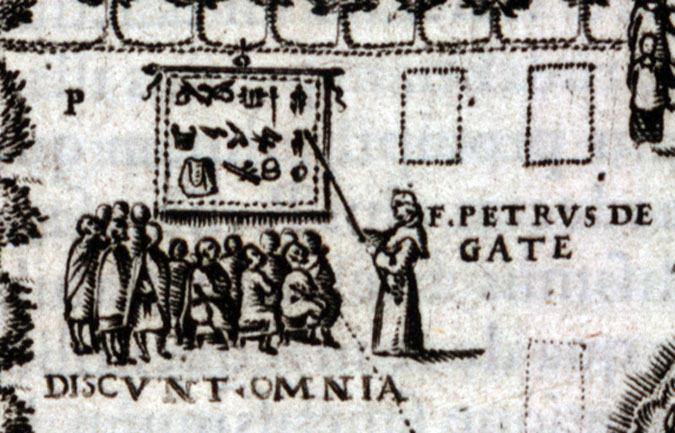
Image of Brother Pedro de Gante instructing Indians on the use of European tools based on Diego Valadés, 'Rhetorica Christiana'
Note
Creation of pocket catechism involving Aztec youth.
- Use of native sacred objects like feathers, jewellery, and flowers in the conversion process.