The Holocaust, including the Einsatzgruppen, ghettos and the death camps (OCR GCSE History B (Schools History Project)): Revision Notes
📚Revision Notes
The Holocaust, including the Einsatzgruppen, ghettos and the death camps
Note
The outbreak of World War II extended Jewish persecution by the Nazi regime. Not only in Germany, Jews living in territories under Nazi rule were also subjected to massive persecution. The Nazi persecution was divided into three phases.
Phase 1
In the autumn of 1939, the conquest of Poland brought about 3 million Jews under the control of Hitler. Hundreds of thousands of Polish Jews were confined to camps and suffered terrible conditions which led to starvation and disease.
Note
In 1941, many believed that Hitler ordered the extermination of 11 million Jews in Europe, which later became known as the 'Final Solution'.
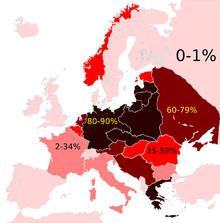
Map showing the Jewish Holocaust death toll as a percentage of the total pre-war Jewish population
Phase 2
In June 1941, a special SS unit known as Einsatzgruppen was created and was tasked to round up and execute Jews and Communist officials in the USSR. Victims were executed and buried in mass graves. Approximately 1.2 million Jews were killed by the Einsatzgruppen.
Phase 3
Note
In January 1942, Reinhard Heydrich led the transfer of all Jews under German rule to camps in Poland. About six camps were built in Poland which were specifically used for forced labour and murdering millions of Jews. Among the most notorious death camps was Auschwitz-Birkenau, where about 2.5 million Jews were exterminated.
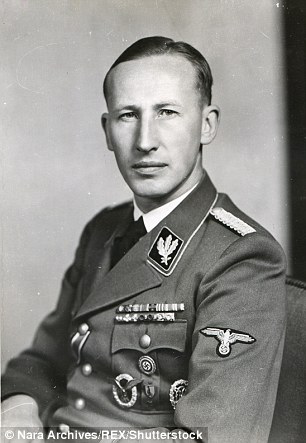
Image Reinhard Heydrich, head of the Sicherheitsdienst
Note
The Holocaust is considered the most infamous event of the Second World War. It is believed to be the most notorious act of genocide in contemporary history. Under the order of Adolf Hitler, the policy of the Holocaust began in 1933.
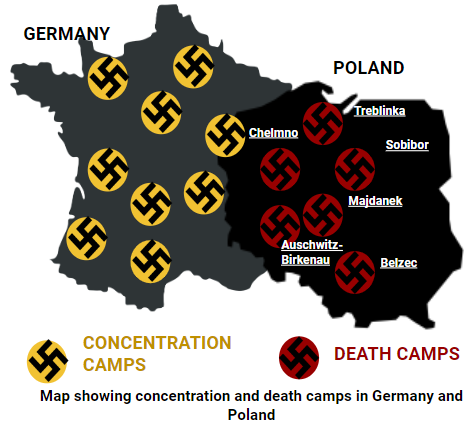
With the invasion of Poland in September 1939, six concentration camps existed in the Greater German Reich, including Dachau, Sachsenhausen, Buchenwald, Flossenbürg, Mauthausen and Ravensbrück. Death camps were then built at Treblinka, Chelmno, Sobibor, Majdanek, Belzec, and the most infamous, Auschwitz-Birkenau.
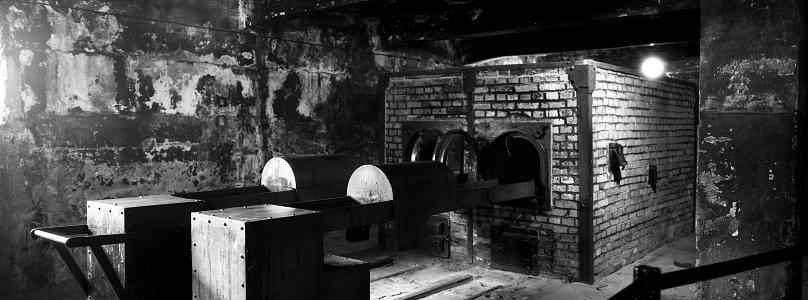
Image of the crematorium near gas chamber one
Gas experiments were carried out in the autumn of 1941. From there, the German Camp Administration installed four permanent gas chambers at Birkenau.
In the summer of 1944, extermination and death camps in Poland, specifically at Auschwitz, reached their peak. More than 430,000 Hungarian Jews were transported to Auschwitz and the majority were murdered.
By 1943, the installations became operational, which included underground undressing rooms, gas chambers and a crematorium.
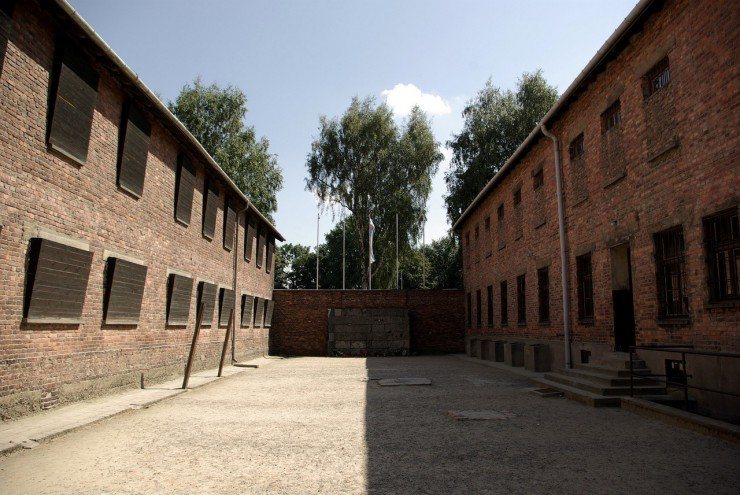
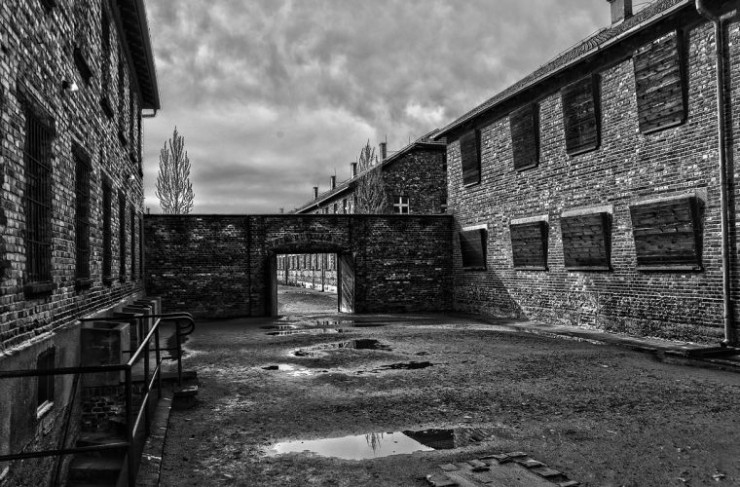
Then and now, images of the execution wall located between Blocks 10 and 11
Note
At the Auschwitz complex alone, over 1.1 million prisoners were killed. In addition to gas chambers and a crematorium, prisoners were shot, hanged, or died of disease, famine and exhaustion. Some also committed suicide. Initially, prisoners were shot at pits near the camp. Between 1941 and 1943, many were executed in the courtyard of Block No. 11 in Auschwitz I. Many of them were Poles sentenced by the Gestapo summary court.
From September 1941, about 2,000 Soviet prisoners of war were executed at Auschwitz through poisonous gas. In 1944, Poles who were sentenced by the summary court were executed through gas chambers. Some were hanged in public, mostly during roll call. Historians believed that about 80% of the prisoners brought to Auschwitz were gassed just a few hours after their arrival. Some were selected to work, and those individuals likely only survived 3 months. To justify the Holocaust, the Nazis believed that the Aryan race was superior to all other groups and it should remain pure.
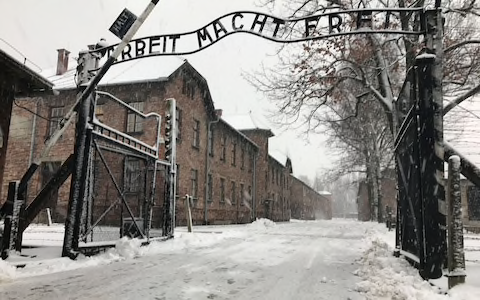
Image of Auschwitz concentration camp entrance gate
Note
The main entrance was inscribed with the phrase "Arbeit Macht Frei" or "Work Makes You Free".