The characteristic features of medieval Britain: an overview (OCR GCSE History B (Schools History Project)): Revision Notes
📚Revision Notes
The characteristic features of mediaeval Britain
The Catholic Church
During the mediaeval period, the Catholic Church became the most dominant and powerful institution in Europe, influencing the monarchs. One example of this was when Pope Leo III named Charlemagne the Holy Roman Emperor in 800 CE. Moreover, it was the Catholic Church that manoeuvred military expeditions to Jerusalem, commonly known as the Crusades, during the late 11th century.
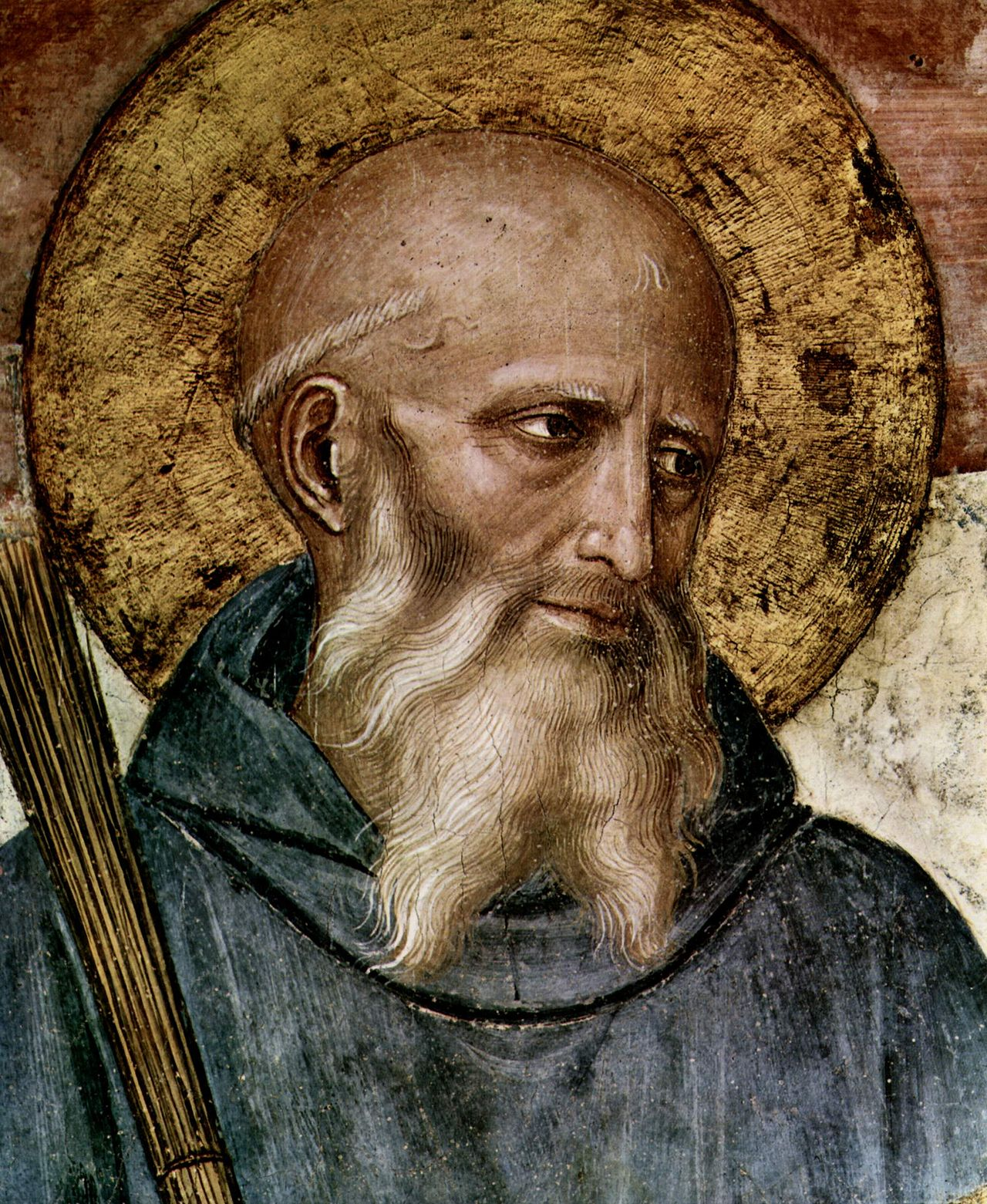
Saint Benedict, father of western monasticism
In 1095, Pope Urban II called every Christian in Europe to expel the Muslims (infidels) from the Holy Land. The on and off crusades lasted until the end of the 15th century, bringing European culture to Jerusalem and Muslim culture to Europe.
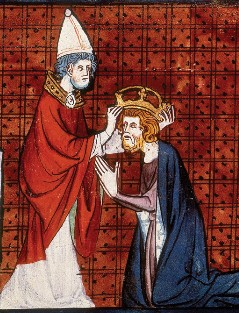
Pope Leo III crowning Charlemagne
Feudal System
The Middle Ages were defined by a feudal system in much of Europe. This system consisted of kings, lords, knights, vassals and peasants. The people who were part of the church played an important part too. When a person was born into a certain group, they rarely moved to another level.
During the Middle Ages, feudal society worked as the king granted vast lands called fiefs to noblemen and bishops. These landowners needed peasants to plant and harvest their lands. In exchange, peasants were allowed to live on the land with protection from local lords in case of invasion.
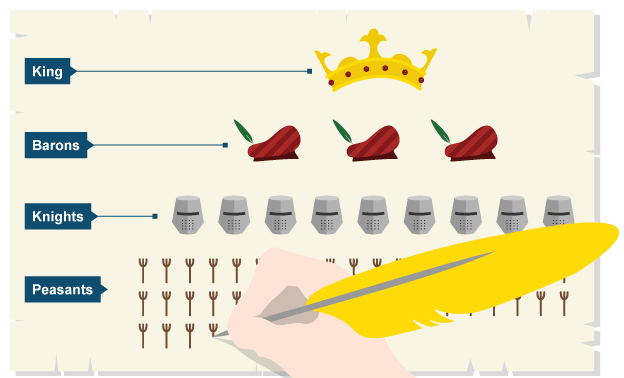
The organisation of feudal society in Norman England
MEDIEVAL PEASANTRY
During the mediaeval period, peasants were mostly farmers who worked on vast lands owned by lords. They belonged to the lowest class of the mediaeval social hierarchy. If an individual was born into this social class, s/he would remain there until death.
Aside from farmers, some peasants were tradesmen, millers and tavern owners.
Some peasant farmers leased their land and paid taxes to the lord and to the king. Most were serfs, others were freemen.
Peasants were also determined by their clothing. They usually wore rough wool or linen. Most only had one set of clothing and almost never washed. Women wore long dresses, while men were in tunics and long stockings made of wool. Common colours were brown, red and grey. Both sexes wore clogs made of thick leather.
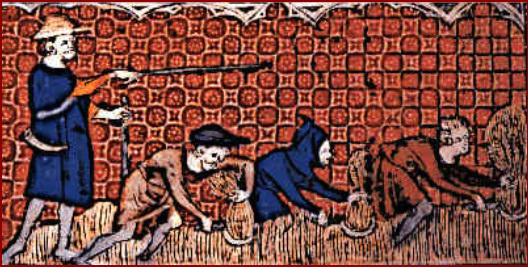
Peasant farmers during the Middle Ages
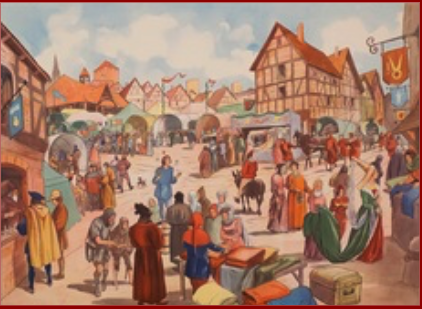
Artist depiction of a mediaeval town
Such towns were known as cathedral cities for being the religious and trade centres of the kingdom. Both traders and pilgrims were attracted to these towns.
Most mediaeval towns emerged at a crossroads or river where people could meet easily. These towns were usually guarded with fences for security, especially at night. Some were heavily walled with bricks, like the towns of Canterbury and York.
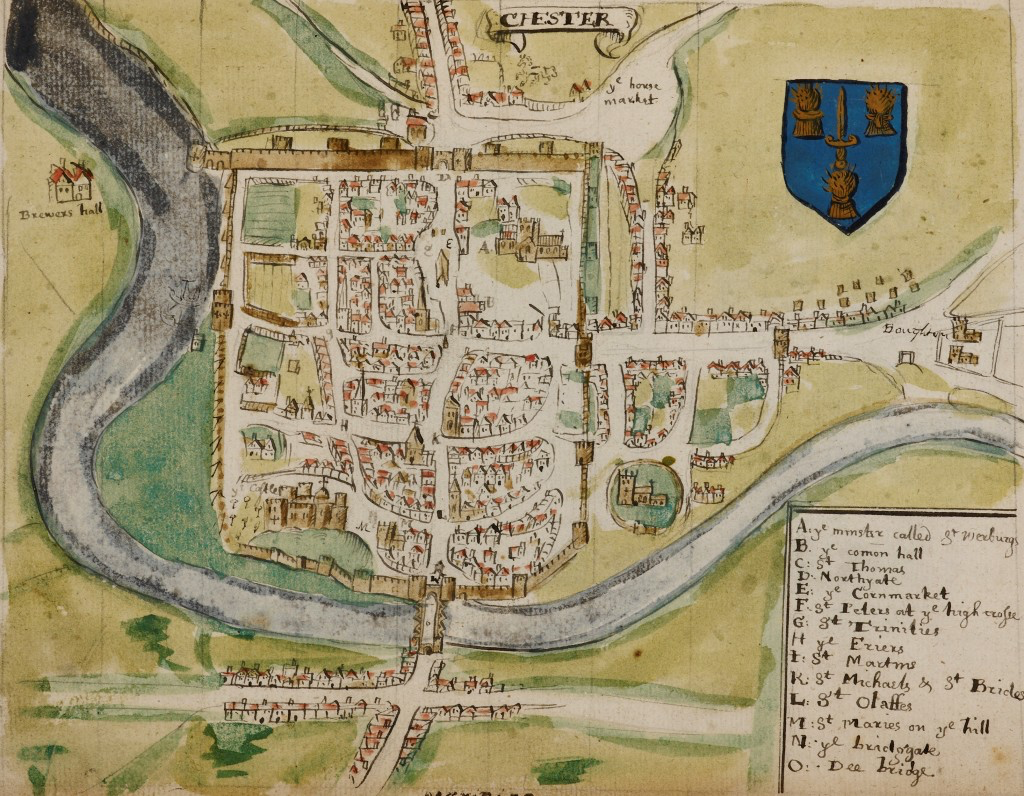
Map of Chester, a Mediaeval town
Aside from villages populated by peasants, few towns existed in mediaeval England. Aside from London, towns in England included Lincoln, Chester, Canterbury, York and Hereford.
Towns served as the kingdom's economic centre as many merchants and traders from villages and other kingdoms came for business. More merchants meant more trade and more taxes to be collected by a sheriff.
The mediaeval and early modern era in Britain faced serious challenges when it came to protecting individuals, communities and populations from disease. These included:
SOCIETY High numbers of peasants meant high rates of poverty. Malnutrition was common, increasing the risk of disease - 30% of children died before the age of seven. Peasants couldn't afford to see doctors and relied on monasteries for help.
FOOD SECURITY Famine was a constant threat. The Great Famine of 1315-17, for example, killed 10% of Britain's population. The famine saw a period of extreme levels of crime, disease, mass death and even cannibalism and infanticide.
WAR In mediaeval times, war was frequent and close-range combat was brutal, often leading to death from injuries. In the Battle of Towton, for example, 50,000 men fought in the battle and as many as 28,000 died, which represented 1% of the English population.
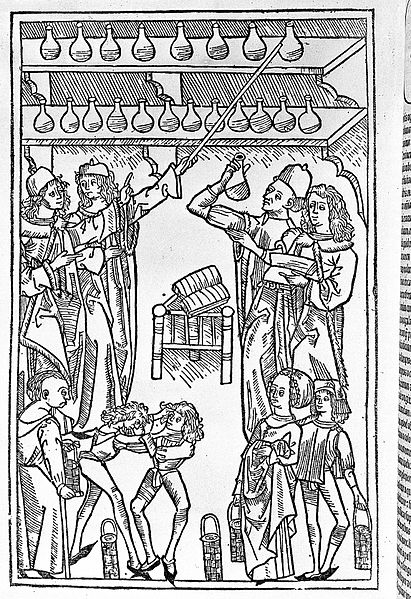
Etching of a mediaeval doctor examining a patient's urine, c.1491