Poverty: its causes, Elizabethan explanations and responses (OCR GCSE History B (Schools History Project)): Revision Notes
📚Revision Notes
Poverty: its causes, Elizabethan explanations and responses
Causes and Elizabethan explanations
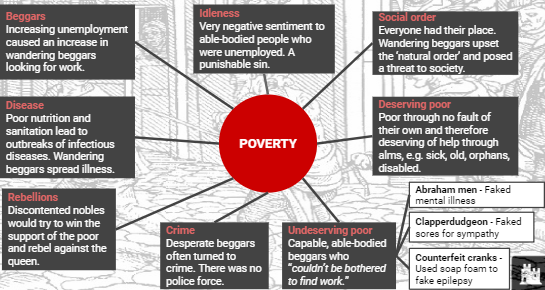
Poverty was a major problem of Elizabeth's reign. Unemployment grew considerably, as did negative attitudes towards the unemployed as they were considered 'lazy'.
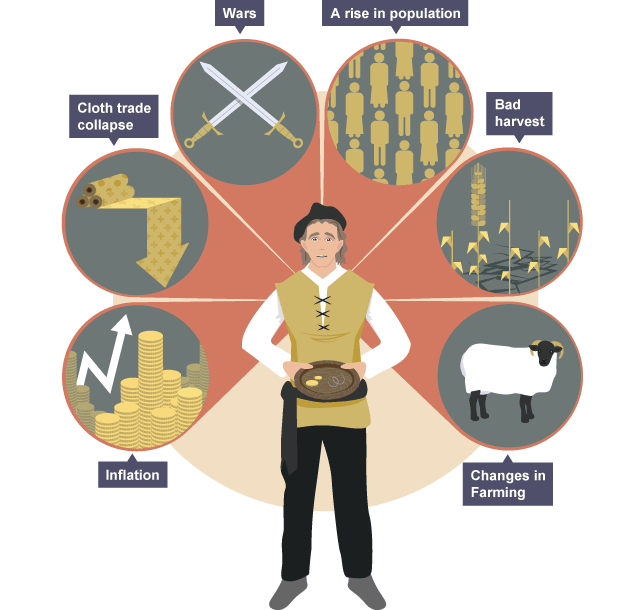
| FACTORS | WHY? |
|---|---|
| Population | Population grew by a million, straining resources. |
| Inflation | More workers meant lower wages to buy more expensive resources. |
| Cloth trade | Decline in wool exports collapsed the industry, leading to unemployment. |
| Wars | Cost of war demanded an increase in taxes. |
| Bad harvests | 1590 bad harvest caused starvation and high food prices. |
| Farming changes | Land used for sheep rather than crops required less labour. |
Responses
Elizabethan England dealt with poverty and unemployment harshly.
Note
Understanding poverty:
The mechanisms of poverty were not well understood and the poor were believed to be lazy and unwilling to work.
Measures Taken
Note
Statute of Artificers
Boys were to serve a seven-year apprenticeship. The aim was to create employment and keep potential beggars off the streets.
1563
Note
Act for the Relief of the Poor
Houses of Correction were built in counties. Refusing work or refusing to pay poor rate meant time there.
1576
Note
Act for the Relief of the Poor
All had to pay a compulsory poor rate to support the poor. Work was found for able-bodied people.
1598
Note
Act for the Punishment of Rogues
Death penalty was reinstated. Beggars were whipped and returned to their parish, or sent to a House of Correction.
1598
The 1601 Poor Law
- The Elizabethan Poor Law of 1601, combining elements of the previous laws, was enacted and remained in effect for over 200 years.
- It set up a legal framework for the poverty problem.
- Almshouses were encouraged and supported by donations for serving the "deserving poor".
- Vagabonds sent to Houses of Correction didn't address the root cause of poverty.
Note
Dissolution of monasteries:
When Henry VIII dissolved monasteries, the poor had nowhere to go for shelter.

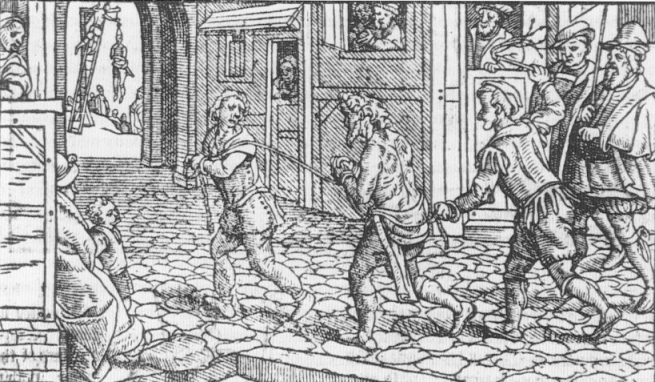
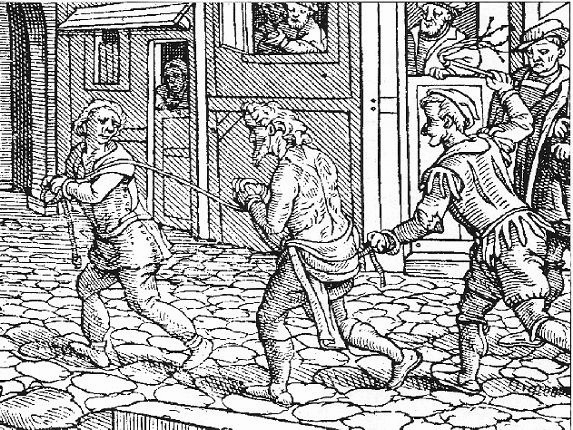
Etching depicting punishment of a beggar
Note
Discussion: Compare and contrast poverty in the Elizabethan era with a modern example. Has the root cause of poverty changed? Do the attitudes of deserving and undeserving poor persist?
Glossary of terms
Nobility
A social class normally ranked immediately below royalty
Gentry
People of good social position, from families of long descent, and connected to landed estates or the upper levels of the clergy
Yeoman
A man holding and cultivating a small landed estate
Husbandman
A free tenant farmer, or a small landowner
Nuclear family
A family group that consists only of parents and children
Kinship
Family relationship
Almshouses
Houses built originally by a charitable person or organisation for poor people to live in
Poor Law
A system of poor relief in England
Exam Practise
Task 1
Note
Examine the sources carefully and write about their implications about the difference between lives of rich and poor Elizabethans. Include also a comparison of housing and food between the rich, the middling and the poor in Elizabethan England.
SOURCE A
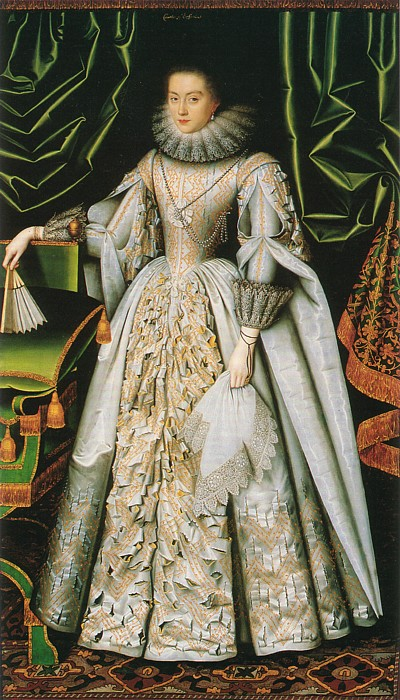
Portrait of Lady Diana Cecil
SOURCE B
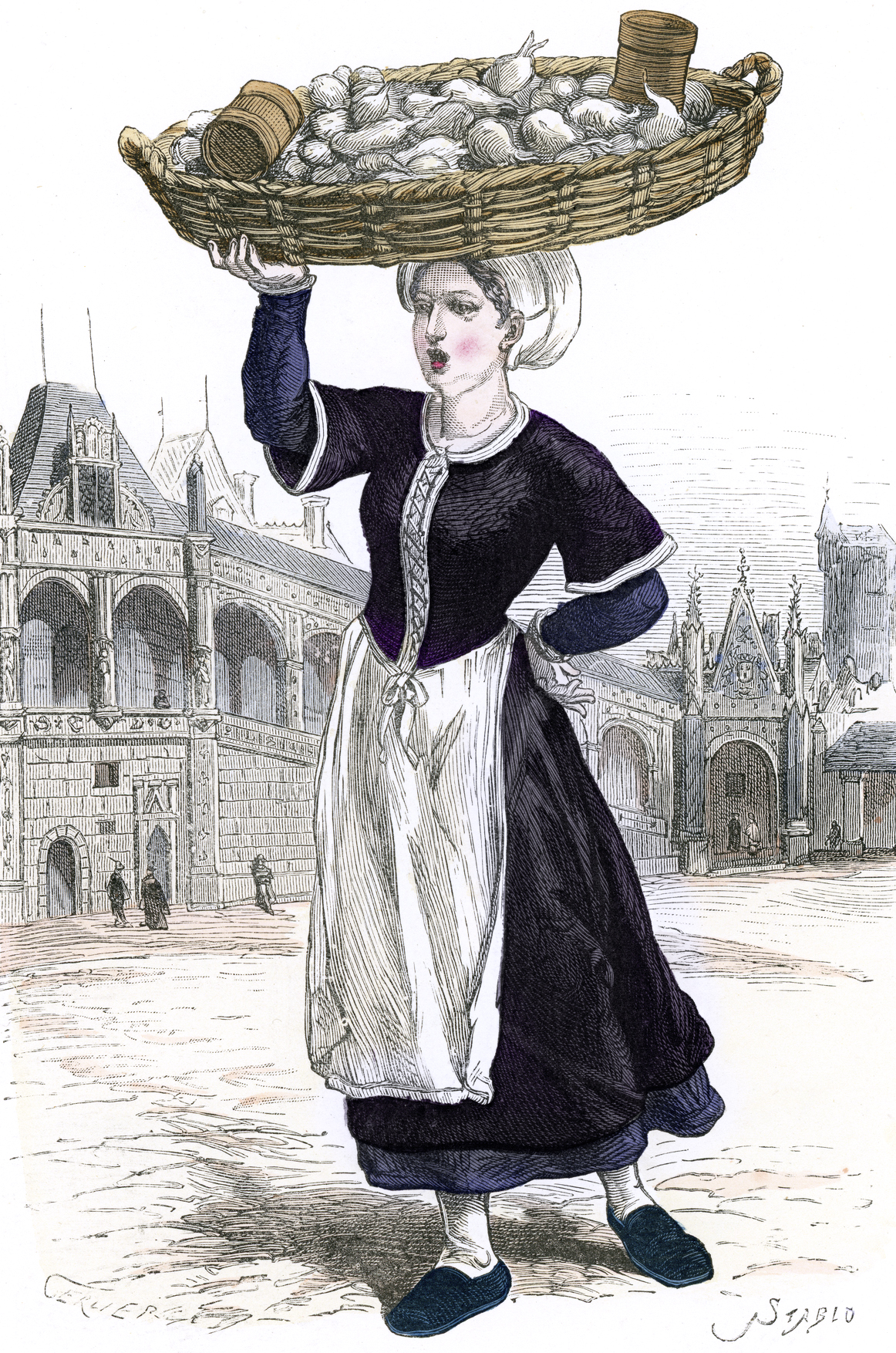
Elizabethan peasant
Task 3
Note
Using your knowledge and analysis, examine the attitudes towards the poor and unemployed and then discuss the effects of the various Poor Laws that were enacted. Consider the historical impact of Henry VIII's dissolution of monasteries.
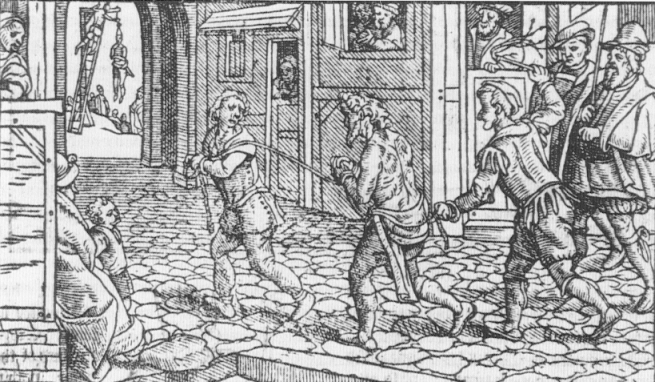
Etching depicting punishment of a beggar