Joining the First Crusade: who went and why (OCR GCSE History B (Schools History Project)): Revision Notes
📚Revision Notes
Joining the First Crusade: who went and why
Note
Not all who responded to the Pope's call did so out of piety. Here are some of the factors which led to the enormous participation of the Crusading movement.
Papal Indulgence
- Pope Urban II offered indulgences to all who vowed to make an armed pilgrimage in order to save the Holy Land.
- Some crusaders believed that they should reach Christ's tomb in order to receive the Crusade indulgence.
- A reward for a penitent's imitation of Christ's sufferings. The concept of indulgence dramatically evolved during the Middle Ages. It was closely tied to the practice of pilgrimage, veneration of saints and relics, conceptions of purgatory, and the sacrament of penance. Papal indulgence during the Crusade promised salvation of souls.
Militant Christianity
Note
Many religious Christian knights and fanatical believers of the faith saw the Crusade as a religious duty and right to fight for the Cross.
- Compared to papal indulgence, crusaders under this motif saw war for penance and not penance for war.
- They aimed to rescue the Holy Land from the infidels instead of undertaking pilgrimage to it.
During the Middle Ages, Western Europe was mostly comprised of warriors. The knightly class believed that it was a battle for the Church against heathens and unbelievers (in this case, the Muslims).
Individual Motives
Note
European nobles went on the Crusade to increase land holdings and wealth.
- Some were drawn with the promise of tax exemption and anticipation of plunder.
- Traders searched for a new enterprise.
- Peasants hoped for a better life.
- Feudal and family loyalty among the upper ranks.
Note
Some young nobles became crusaders due to the Law of Primogeniture, or the right of succession belonging to the first born.
- Submission and obedience of women accompanying their fathers and brothers.
Holy Places
Note
The tradition of pilgrimage to the Holy Sepulchre in Jerusalem means an effective path to salvation for Christians.
- Since pilgrimage was considered the highest spiritual act for Christians, Holy Places including Rome, Santiago de Compostela, Bethlehem, Nazareth and Jerusalem needed protection.
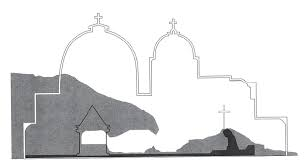

Since the 6th century, European Christians had travelled to the Holy Land located in the Middle East for pilgrimage, but when the Seljuk Turks conquered the sacred spot, Christian pilgrims were horrified.
Note
In late 1095, Peter the Hermit, one of the most charismatic holymen in France, set out from Berry to Germany until he reached Cologne in 1096. He preached the Crusade and gathered thousands of men, women and children - mostly unarmed and untrained. His band became known as the People's Crusade or Peasants Crusade due to the lack of organisation and training.